

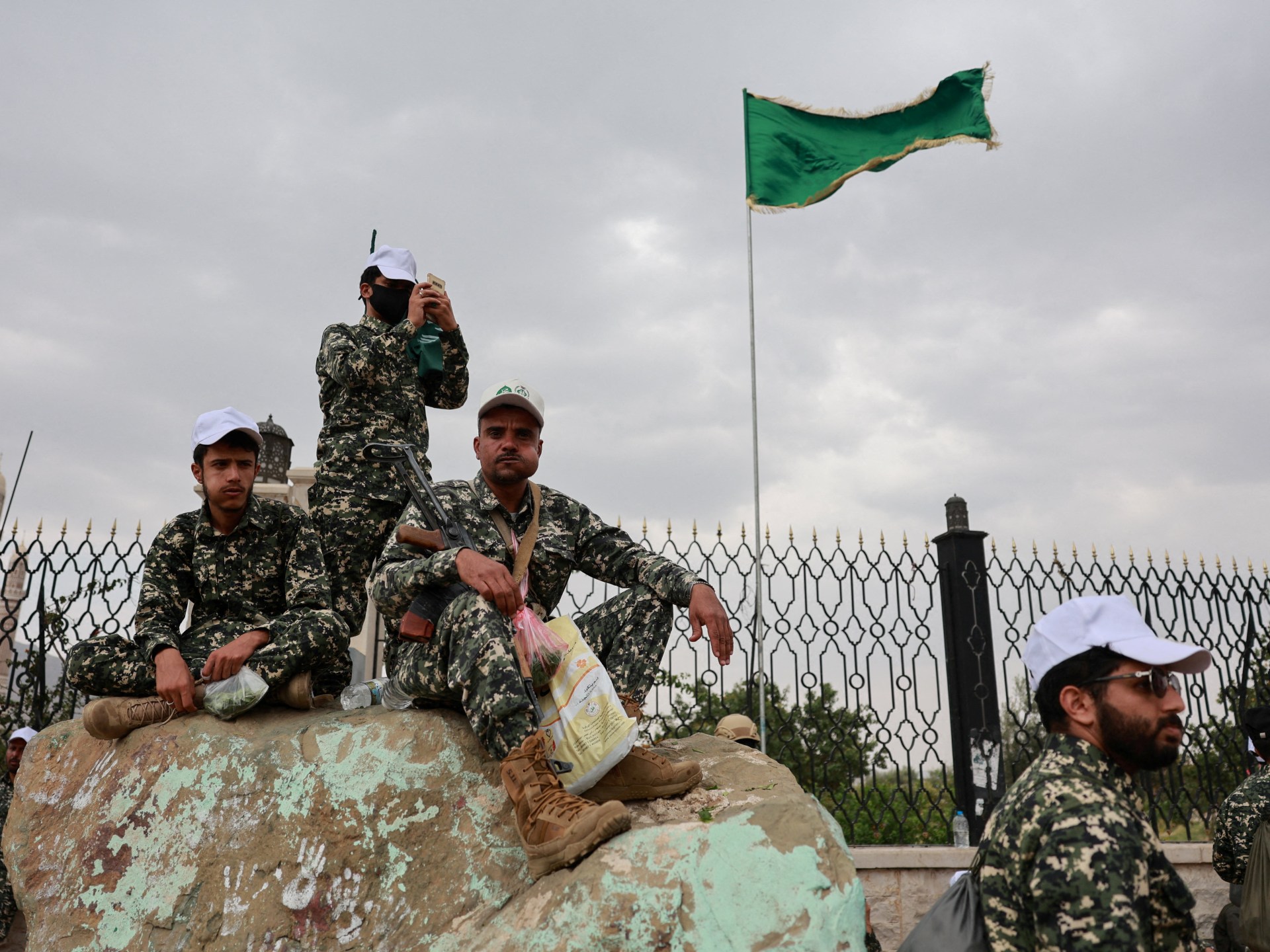
Kathmandu— Intensified clashes between Yemeni government forces and Houthi rebels in Taiz governorate have displaced thousands of civilians, with the Houthis launching a multi-front offensive targeting key roadways to the Red Sea coast, according to eyewitness accounts and military reports.
Escalating Frontlines
The Houthis launched a coordinated offensive early Thursday morning across western Taiz governorate, using missiles, drones, and ground forces to advance in Maqbanah, Mawzaa, and Jabal Habashi districts. Government forces reported heavy fighting, with both sides suffering casualties as the Houthis sought to cut the main road connecting Taiz city to the Red Sea coast. Pro-government fighter Yahiya Lutf confirmed the Houthis' attempt to sever this critical supply route but claimed government forces had retaken several areas, stating, "Our goal is not only to liberate what they took [on Thursday]; we will press forward beyond that, as our morale is high and we are fully prepared for battle."
The fighting has triggered a new wave of displacement, with thousands fleeing their homes for the second time in two years. Abdullah Saeed, a displaced resident of al-Rahabah camp, described the sudden violence: "Fighting erupted suddenly at night. We were far from the battlefield, but in the morning, we were shocked to see the frontlines near our camp. There was no solution but to take our basic belongings and flee."
This marks a significant escalation after four years of relative calm along Yemen's frontlines, with the conflict now threatening to disrupt vital transportation routes for food and goods between Taiz and the Red Sea port of al-Makha.
Humanitarian Crisis Deepens
Displaced families like Saeed's, who had already fled their homes in 2022, are now facing renewed hardship. Saeed, now staying with relatives at another camp, said, "We have fled for the second time, but there are also families who fled for the first time. We are all now in dire need of shelter and basic services."
The al-Rahabah camp, located 90km south of Taiz, had become a temporary refuge for displaced families seeking safety away from the frontlines. However, with the Houthis advancing toward the camp, residents are once again forced to abandon their meager belongings. Saeed expressed his hope for stability: "I do not support any military side, but I hope the battles stop soon and we manage to return to our camp, as all we need now is stability."
The displacement wave has strained already limited humanitarian resources, with aid organizations struggling to reach affected communities amid the intensifying conflict.
Strategic Importance of Red Sea Route
The main road connecting Taiz to the Red Sea coast serves as a vital lifeline for transporting food and goods from al-Makha port, according to Yemeni journalist Odai al-Dokhaini. "The Houthis selected these current frontlines for their strategic location," he explained. "If they succeed in isolating the Red Sea coast fronts, they can begin targeting them individually."
The Houthis' apparent goal of controlling the Red Sea coast aligns with their broader strategy to dominate key waterways where they have been attacking Saudi shipping. Yemeni political analyst Abdulsattar al-Shamiri linked the offensive to wider regional dynamics, stating, "This battle cannot be viewed in isolation. The Houthis have been pushing to seize more territory along the Red Sea."
Al-Shamiri believes the attacks are part of a wider Iranian strategy to project strength, "giving Tehran another point of leverage alongside the Strait of Hormuz," following the US war on Iran.
With both sides reinforcing their positions and casualties mounting, the conflict's trajectory remains uncertain, though the immediate humanitarian impact on displaced civilians continues to worsen.
(With inputs from Al Jazeera)
Originally published on abcnews.com.np.



प्रतिक्रिया दिनुहोस्