

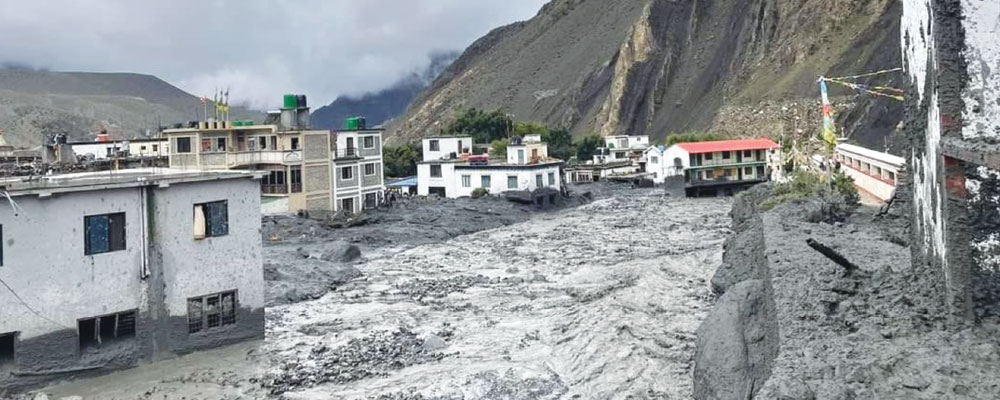
Kathmandu— Gandaki Province in Nepal is at heightened risk of catastrophic flooding due to a combination of glacial lake outbursts, rapid river flow changes, and inadequate land-use planning, with recent disasters like the Bhotekoshi flood underscoring the urgency for comprehensive risk assessment and early warning systems.
Historical Flood Patterns and Triggers
Recent devastating floods in Gandaki Province, including the 2012 Seti River disaster that killed 72 people and the Kagkhola flood in Mustang three years ago, have exposed the region's vulnerability to sudden, high-impact flooding events.
Flash floods, defined as those developing within six hours with rapid water flow increases, are common in the Himalayan region and can be triggered by extreme rainfall, glacial lake outbursts, river blockages, dam failures, or falling masses of snow and ice, according to experts cited in the report.
Authorities are now prioritizing geological studies and early warning systems, with Pokhara Metropolitan City Mayor Dhanraj Acharya confirming ongoing foreign expert collaboration to develop disaster-resilient plans for the valley.
(With inputs from RN)
Originally published on abcnews.com.np.



प्रतिक्रिया दिनुहोस्