

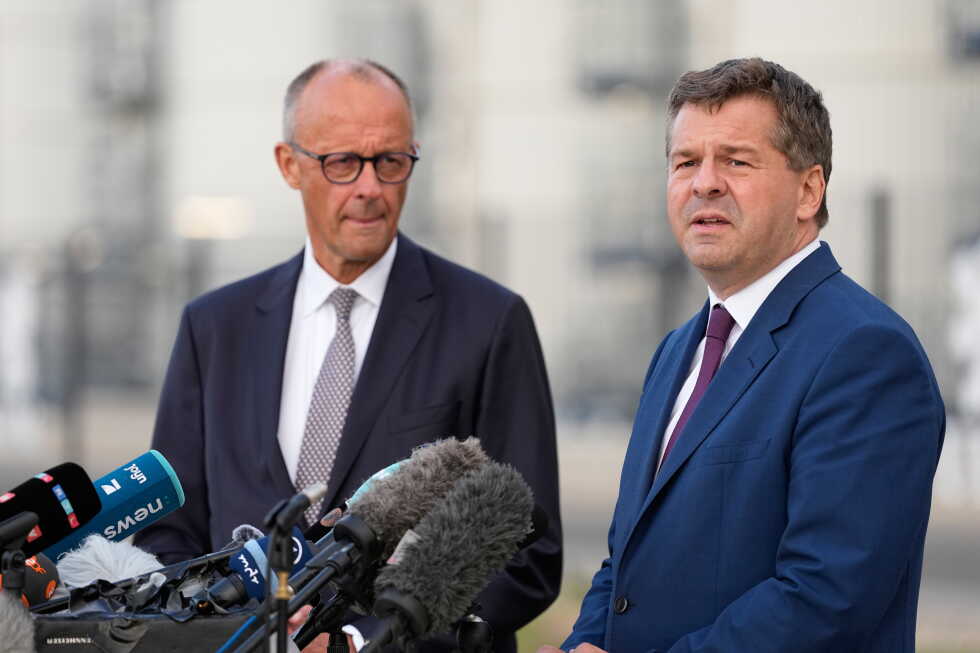
Kathmandu— The far-right Alternative for Germany (AfD) is set to win a strong victory in the regional election in Saxony-Anhalt, Germany, but it remains unclear whether the party can form the first far-right state government in the country since World War II. The party's candidate for governor, Ulrich Siegmund, stated that 'we have written history,' while AfD's national co-leader, Alice Weidel, described the projected result as 'sensational.'
Election Results and Projections
Projections for ARD and ZDF public television, based on exit polls and partial counting, put AfD at a bit over 44% of the vote, more than double its showing five years ago. This was far ahead of the Christian Democratic Union, which was seen polling 18% and losing about half its support. The Left Party, the center-left Social Democrats, and Greens were seen taking around 9% each. It was unclear whether the BSW party would get the 5% of the vote needed to win seats. The projections put AfD at least marginally short of an absolute majority, though that could change.
Party Ambitions and Challenges
AfD went into the vote seeking an absolute majority in the state legislature to govern on its own. That would overcome the so-called firewall of mainstream parties’ refusal to work with AfD, but it was unclear long after polls closed whether it would happen. Whether or not AfD can form a government, the projected result is a blow to Chancellor Friedrich Merz, whose center-right party has led Saxony-Anhalt for 24 years. The party talks of 'remigration,' a politically charged term for the deportation of immigrants, and its leader in a neighboring state appealed two convictions for knowingly using a Nazi slogan. AfD vehemently rejects accusations of extremism and says they’re politically motivated.
Implications for German Politics
If the result allows the incumbent governor, Sven Schulze, to try to put together some kind of alliance with smaller parties, that would be delicate, because it would require at least some tacit support from the Left Party, a hard-left party with which the CDU refuses to form coalitions. Germany’s states have extensive powers, for example in overseeing security matters and running the education system. AfD in Saxony-Anhalt wants to allow home schooling, which so far isn’t permitted in Germany. It pledges to ban schools from officially raising the rainbow flag and ensure they fly the national flag. It opposes taxpayers’ money being 'given away' to Ukraine and says it would push to lift sanctions against Russia, but that isn’t a matter state governments can decide.
The outcome of the election in Saxony-Anhalt remains uncertain, with AfD projected to win a strong victory but facing challenges in forming a government. The party's ambitions and the potential implications for German politics are closely watched.
(With inputs from AP)
Originally published on abcnews.com.np.






प्रतिक्रिया दिनुहोस्