

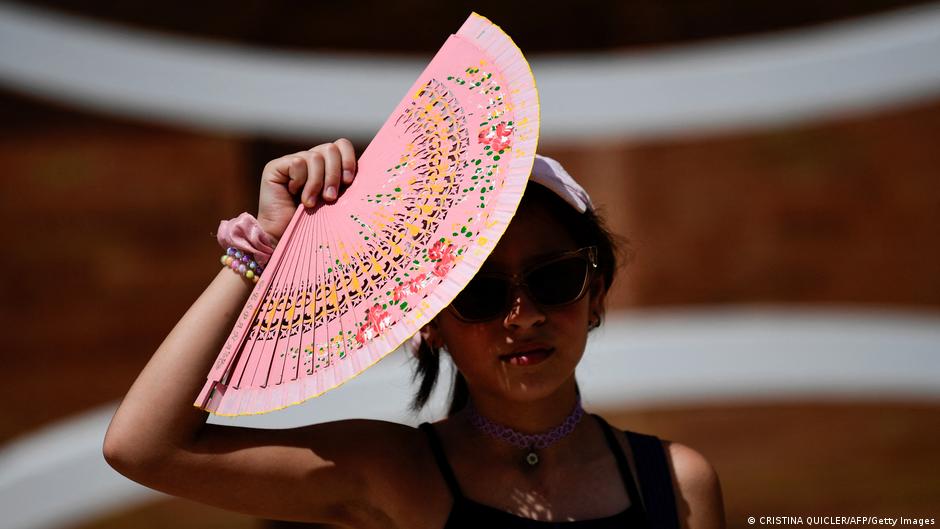
Kathmandu— During recent heatwaves in Europe, a higher number of women have died compared to men. However, scientists studying the effects of extreme heat on human health assert that this trend is not primarily due to biological differences but rather social and environmental factors.
Biology vs. Social Factors
While some media coverage has suggested that women's bodies are less equipped to handle high temperatures, Alexandra Schneider, an environmental epidemiologist at Helmholtz Munich, clarifies that the differences in heat vulnerability between men and women are minimal. 'Overall, studies usually show only slightly more vulnerability to heat in women compared to men,' she said.
Research Gaps and Data Interpretation
Toby Mündel, a kinesiology professor at Brock University, points out that the higher mortality rate among women during heatwaves may be exaggerated due to research gaps. 'We have about a hundred times as much data and evidence on men,' he says. 'We have nearly zero on women.' This disparity in research means that conclusions drawn from existing studies might not accurately reflect the true situation.
Exposure Risk for Women
Laurie Parsons, a researcher at Royal Holloway, University of London, highlights how societal structures contribute to higher heat exposure risks for women. 'Across the board, women spend 30% to 50% more of their working time above heat-stress thresholds than men,' he notes. This is exacerbated by cultural norms that dictate different work attire and less recognition of female workers' need for breaks.
(With inputs from DW)
Originally published on abcnews.com.np.





प्रतिक्रिया दिनुहोस्