

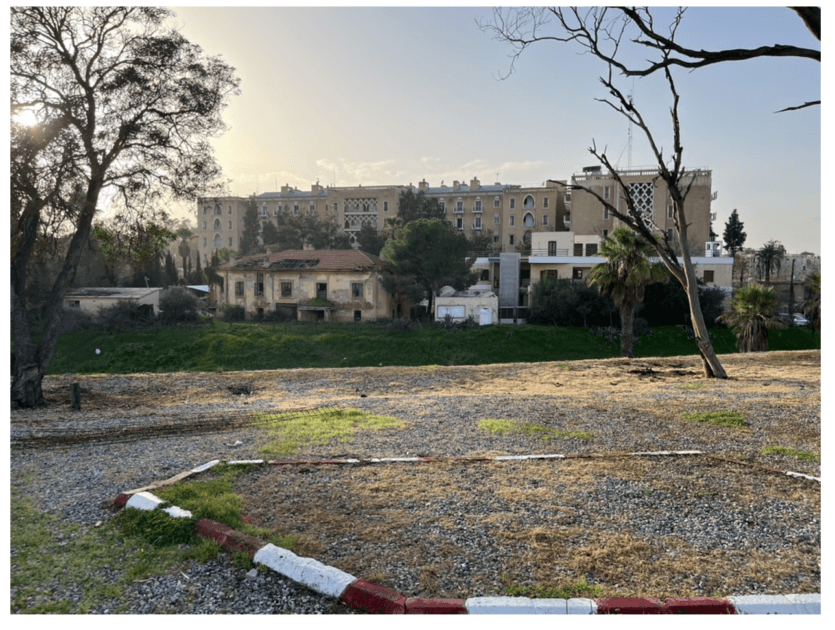
Kathmandu— In late February, a lone cyclist set out from Salamis to explore the historic site and then continued westward towards Nicosia. The journey took him along busy roads and through the no-man’s land of the Green Line, revealing the stark contrasts between Greek and Turkish Cypriot zones.
Exploring Ancient Salamis
The cyclist's first destination was Salamis, an ancient city-state with ruins dating back to Pericles' time. Despite the absence of a proper entrance or parking lot, he found himself alone amidst the towering columns and sprawling grounds of the gymnasium. The site’s isolation provided a serene backdrop for reflection on the rich history of Greek and Roman civilizations in Europe and beyond.
Navigating the Green Line
The journey from Salamis to Nicosia presented challenges, particularly when riding along a busy motorway. The cyclist opted for this route over less trafficked but narrower roads, equipped with flashing lights and a yellow vest for safety. Upon reaching the outskirts of Nicosia, GPS led him into a ghost town on the Green Line, littered with sandbagged bunkers and barbed wire. He continued through potholed tracks and dismounted to push his bike when necessary, eventually entering the Turkish quarter of Nicosia.
The Divided City
Upon arrival in Nicosia, the cyclist checked into a hotel by accessing a lock box. The city offered few cars, narrow winding lanes, and an intricate political history visible through its architecture and street life. The Green Line ran through the heart of the city, dividing it into Greek and Turkish zones with varying degrees of separation. Gates allowed passage between communities, but overall, there was little interaction.
The cyclist's journey highlighted the enduring impact of political division on daily life in Nicosia, from ancient ruins to modern-day barriers.
(With inputs from CounterPunch)
Originally published on abcnews.com.np.



प्रतिक्रिया दिनुहोस्