

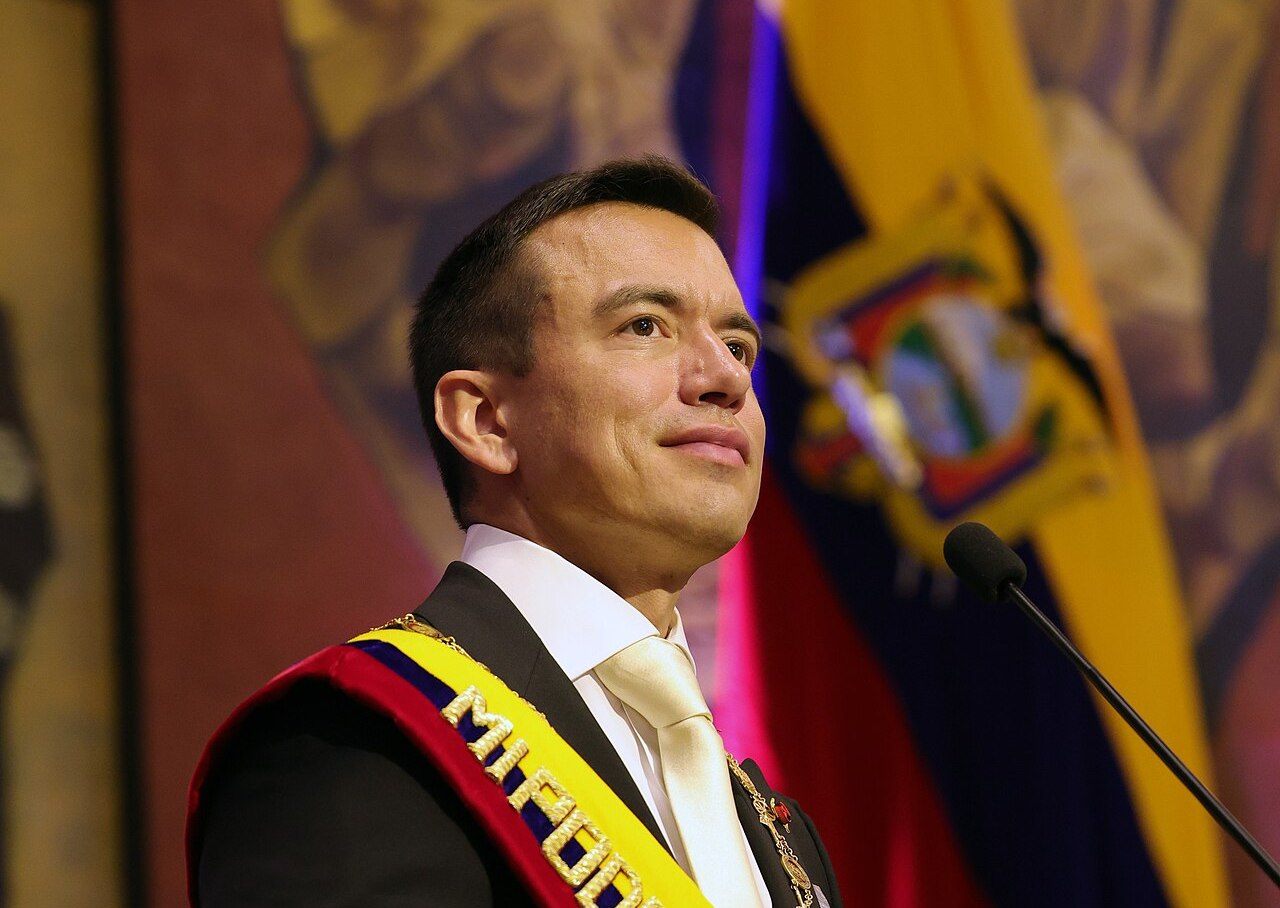
Kathmandu— President Daniel Noboa of Ecuador is employing increasingly authoritarian tactics, including suspending opposition parties and manipulating electoral calendars, to secure victory in the upcoming local government elections on November 29, 2026. Critics argue that these actions are part of a broader strategy aimed at eroding democratic institutions while maintaining the facade of democracy.
Opposition Parties Sidelined
On March 6, 2026, the Citizen Revolution (RC), Ecuador’s largest opposition party led by former President Rafael Correa, was suspended for nine months following a complaint from the Attorney General's Office. The suspension was upheld by both the Contentious-Electoral Tribunal and the Constitutional Court. Additionally, two other political parties, Unidad Popular and Construye, were removed from the registry of political organizations by the National Electoral Council (CNE) due to alleged non-compliance with membership requirements.
Elections Moved Up
In response to concerns over El Niño rains, the CNE moved up the local government elections from February 2027 to November 29, 2026. This decision effectively overlaps with the suspension period for opposition parties, preventing them from fielding candidates under their own party names during this critical registration window.
Legal Challenges and Suspensions
In a further blow to opposition efforts, the Amigo movement, which was being considered as an alternative by Correístas for candidate registrations, faced its own suspension on July 16. The Attorney General’s Office informed the TCE of an investigation into alleged money laundering against this movement, leading to immediate action by both judicial and electoral bodies.
Human Rights Concerns
Amidst these political maneuvers, Ecuador faces severe human rights issues. In June 2026, the country was included in the World Organization Against Torture’s Global Torture Index for high-risk status due to documented cases of torture and enforced disappearances by state agents. Additionally, two activists, Robinson del Pezo and Mónica Silva, were murdered under suspicious circumstances linked to government officials and criminal activities.
Corruption Allegations
The official narrative portrays these judicial actions against opposition parties as part of an anti-corruption drive. However, significant corruption scandals involving the executive branch itself have emerged, such as the Progen case where emergency thermal power generation contracts resulted in a loss of approximately $104 million to the state.
(With inputs from CounterPunch)
Originally published on abcnews.com.np.



प्रतिक्रिया दिनुहोस्