

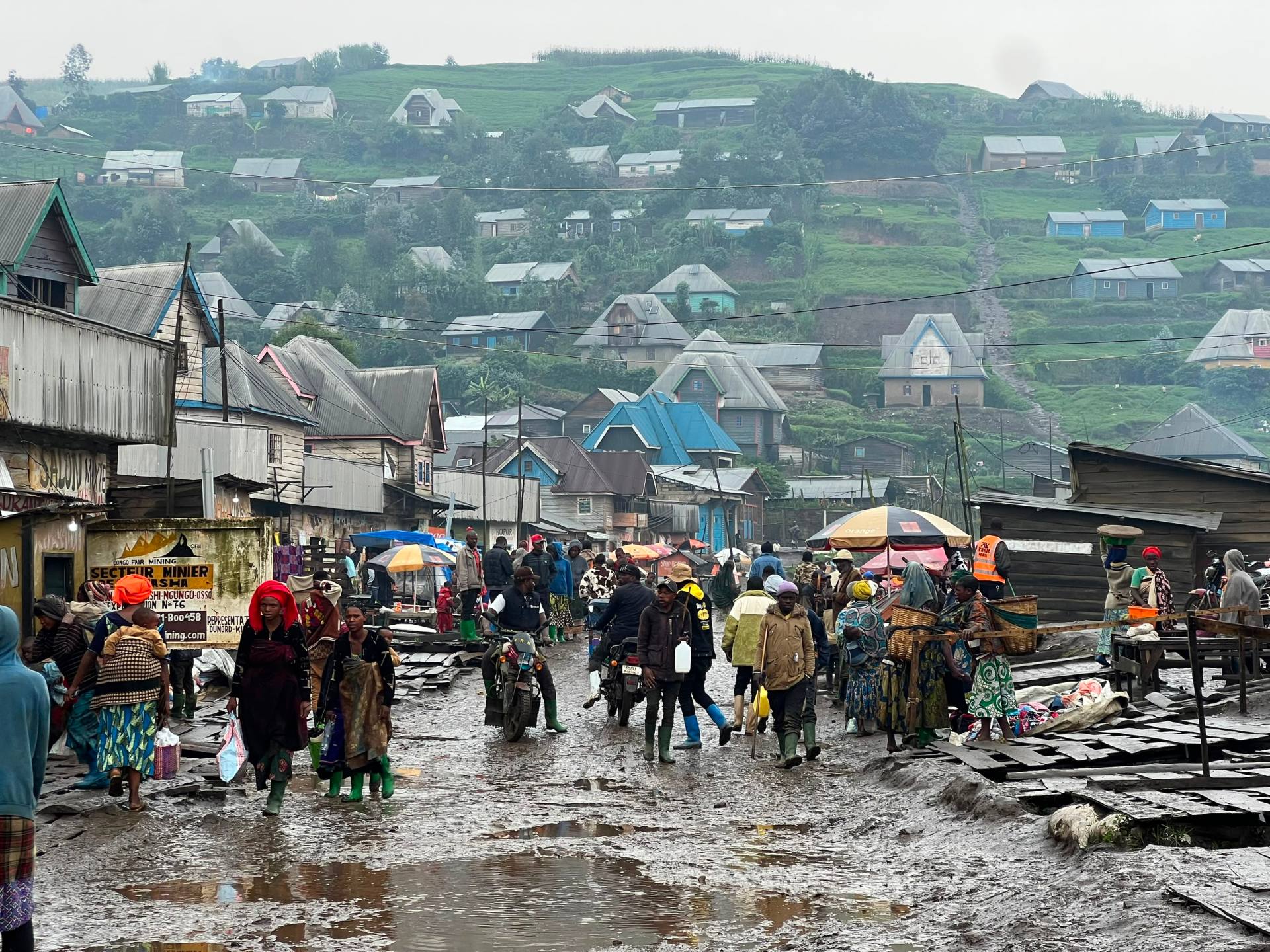
Kathmandu— The Democratic Republic of the Congo is preparing to conduct its first national census in over four decades, a massive undertaking aimed at providing official recognition to millions of citizens who have lived without state-issued identity documents. The exercise, the first since 1984 when the nation was known as Zaire, seeks to replace decades of estimates with reliable data to improve public service planning across the vast country.
The Search For Identity
For many Congolese, the census represents more than a mere statistical exercise; it is a vital step toward official recognition by the state. In Bunia, the capital of Ituri province, 28-year-old Heritier Ramazani has never appeared in a national census and lacks any official document confirming his citizenship.
"I've never been registered in a census since I was born," Ramazani told Al Jazeera. "Being registered and having my identity card will make me very happy."
This lack of documentation is a widespread issue rooted in decades of political instability, weak administrative systems, and conflict. Gedeon Katembo, a 36-year-old father of three, expressed hope that the census will strengthen national unity and help create a more robust system for issuing identity documents.
Logistical And Security Challenges
The scale of the operation is immense, covering more than 2.3 million square kilometers. To manage the task, the Central Census Office plans to use digital tools, including tablets and smartphones, rather than traditional paper forms. Henri Marie Kazadi, technical coordinator at the National Institute of Statistics, noted that the process begins with a digital mapping exercise to identify and geolocate all inhabited areas.
However, insecurity in eastern regions poses a significant hurdle. Muyisa Hangi Christophe, an activist with the pro-democracy movement Filimbi, warned that massive population displacements and the lack of effective state authority in certain areas could make it nearly impossible to interview residents in their communities.
Political And Developmental Implications
The census arrives at a sensitive political juncture as the country approaches expected general elections in 2028. While the government maintains the census is a routine exercise for national planning, some opposition figures, such as politician Prince Bitaki, have questioned the timing and urged authorities to ensure the process is not used for political purposes.
Beyond politics, development analysts emphasize that accurate data is essential for infrastructure and resource allocation. Maneno Kakule Ndavugha, a development analyst, noted that reliable figures will help officials determine where to prioritize schools, hospitals, and water systems, stating, "It makes no sense for the state to build a football stadium in an area where there are only older people."
The census process began with a recruitment phase for field workers in June to support the initial mapping and data collection stages.
(With inputs from Al Jazeera)
Originally published on abcnews.com.np.





प्रतिक्रिया दिनुहोस्