

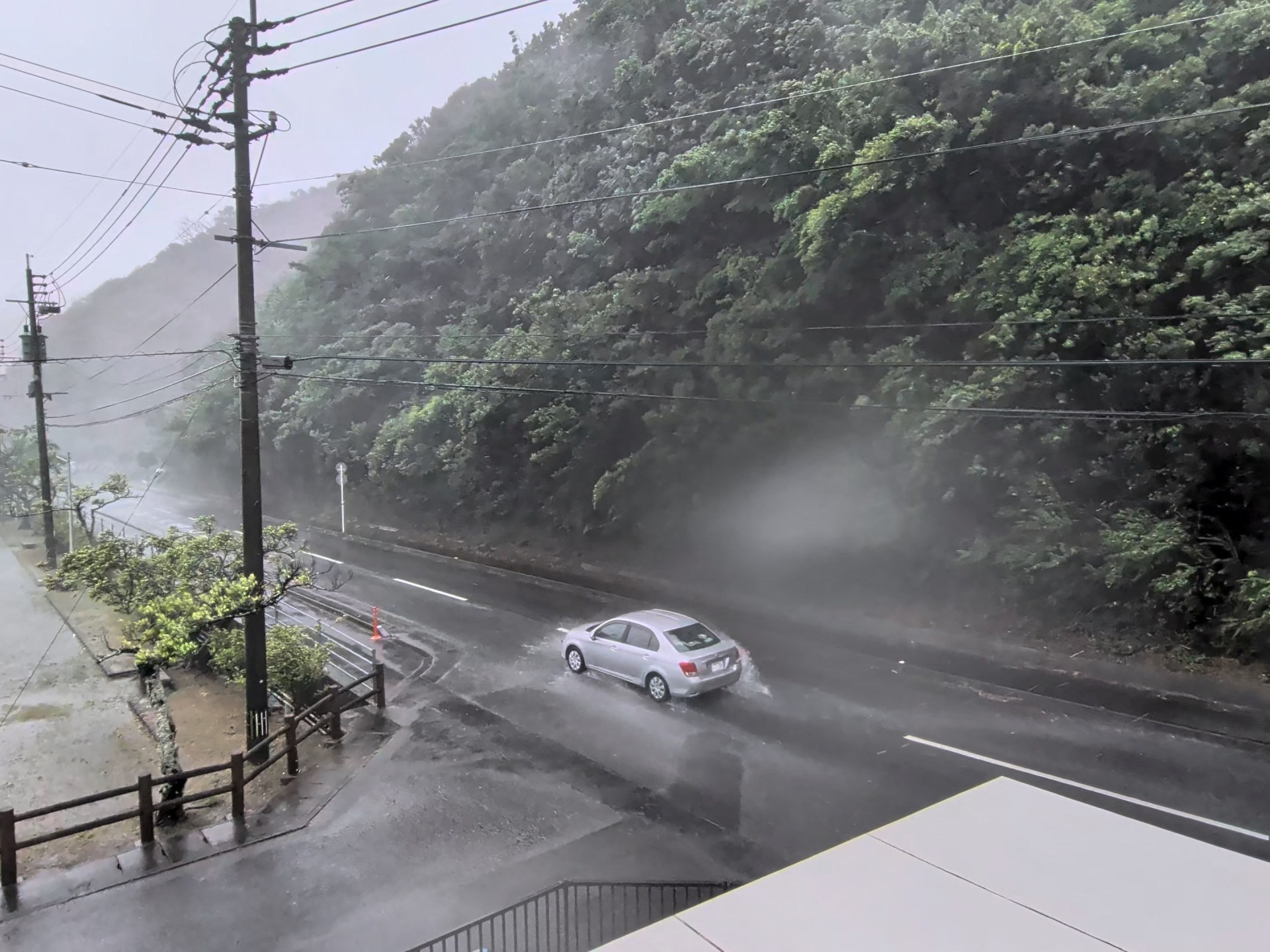
Kathmandu— Typhoon Dolphin struck Japan’s southern island of Okinawa on Saturday, causing injuries to five elderly residents and cutting power to 14,000 buildings as the storm moves toward the eastern coast of China. The powerful system, which features maximum sustained winds of 162km/h, has already triggered widespread flight cancellations in Okinawa, Taiwan, and China, and is prompting Chinese authorities to declare a level-three emergency response ahead of a projected landfall.
Impact in Japan and Regional Weather Trends
The Okinawan prefectural government reported that five elderly people sustained non-life-threatening injuries, including three individuals who were knocked down by high winds. The storm primarily affected Okinawa Island and Amami Island in Kagoshima prefecture.
This weather event follows a period of extreme temperatures across East Asia. While Dolphin moves through the region, a record-breaking heatwave has already caused fatalities, including more than 20 deaths in South Korea and the death of three lions in a Japanese zoo due to suspected heatstroke.
Emergency Measures in China
As the typhoon approaches China’s eastern and southern coasts, national authorities have declared a level-three emergency response. Forecasters expect the storm to make landfall between Zhoushan in Zhejiang province and Fuding in Fujian province between late Sunday and early Monday.
Zhejiang province has raised its coastal typhoon alert to its highest level, halting port operations and suspending 162 passenger ferry routes. In Ningbo, officials ordered the closure of schools, educational facilities, and all water-related activities. Additionally, Ningbo Lishe International Airport has suspended all flights for Sunday, while Shanghai’s Yangshan port has been cleared of vessels.
Disruptions in Taiwan and Geopolitical Tension
Taiwan has cancelled 63 international flights in anticipation of the storm, with heavy rain expected in the northern parts of the island over the weekend. While authorities have not yet ordered evacuations, the storm’s path remains a significant concern.
The typhoon has also heightened regional tensions. China has ordered ships passing through the Taiwan Strait to follow its traffic control instructions due to the storm. Taipei has denounced these measures as “ridiculous,” asserting that Beijing has no right to restrict access to international waters.
Rain and strong winds are expected to affect eastern China, including parts of Shanghai, through August 12.
(With inputs from Al Jazeera)
Originally published on abcnews.com.np.





प्रतिक्रिया दिनुहोस्