

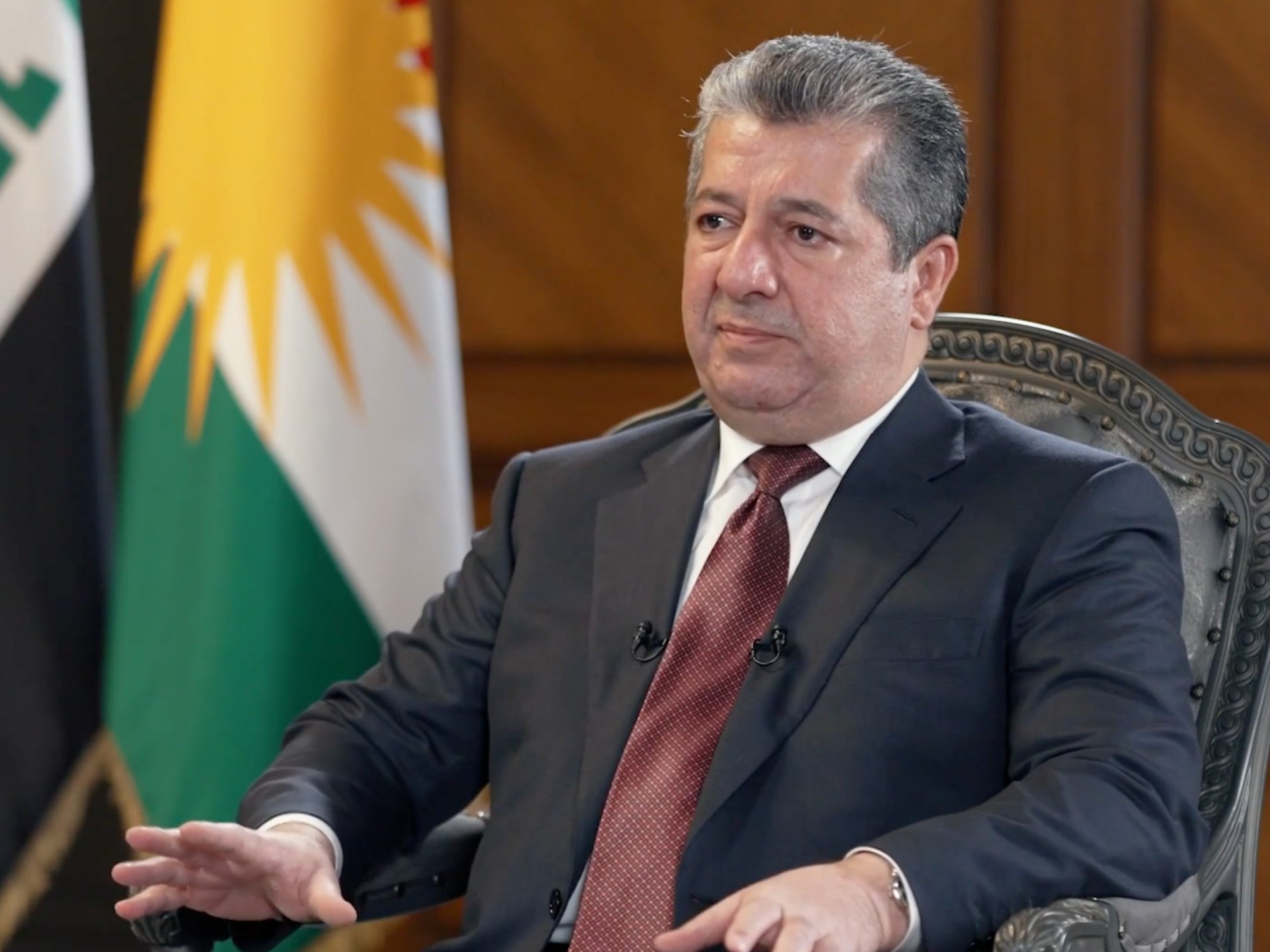
Kathmandu— Masrour Barzani, the prime minister of the Kurdistan Regional Government (KRG) in northern Iraq, stated on Saturday that the semi-autonomous region intends to remain neutral and avoid involvement in the ongoing regional conflict sparked by the war between the United States and Israel against Iran. Despite facing more than 1,000 missile and drone attacks since the conflict began on February 28, Barzani emphasized that no party has pressured the region to enter the war and maintained that all regional issues should be resolved through peaceful dialogue.
Impact of Regional Attacks
The Kurdish region's infrastructure has sustained severe damage due to a surge in hostilities. Since late February, the region has been targeted by over 1,000 missile and drone strikes, launched either directly from Iran or by militias operating from within Iraq.
Barzani characterized these attacks as "unjustified" and noted that the region's stability is under constant threat. One notable incident occurred in March, when Iran’s Islamic Revolutionary Guard Corps (IRGC) targeted the al-Harir Air Base near Erbil with five missiles, labeling the facility the "headquarters of the invading US army."
Security and Disarmament Efforts
Addressing the presence of foreign forces, Barzani clarified that the al-Harir Air Base was empty at the time of the IRGC strike, noting that the facility has not hosted US troops for nearly a decade since the defeat of ISIL. He added that while US troops remain in Erbil to fight terrorism, their presence has repeatedly made them targets of attack.
On the domestic front, the KRG expressed support for the Iraqi government's initiative to centralize military authority. This follows a pledge by Iraqi Prime Minister Ali al-Zaidi to ensure the state maintains a monopoly on arms, setting a September 30 deadline for all paramilitary factions to surrender their weapons to official state control.
Shifting Regional Relations
The KRG is navigating a complex diplomatic landscape as regional tensions rise. Barzani confirmed that the regional authorities maintain no relations with Israel, while simultaneously working to deepen ties with Syria and Turkiye through "mutual cooperation."
This diplomatic shift was highlighted by a recent meeting between KRG President Nechirvan Barzani and Syrian President Ahmed al-Sharaa, marking the first visit by an Iraqi Kurdish leader to Syria since the fall of Bashar al-Assad in December 2024.
As regional tensions persist, Iranian Kurdish opposition parties remain on high alert, facing the possibility of being drawn into the conflict as international powers weigh the impact of arming Kurdish fighters.
(With inputs from (manual retry))
Originally published on abcnews.com.np.


प्रतिक्रिया दिनुहोस्