

Kathmandu— Southeast Asia, historically a vital crossroads for commerce and culture, continues to strengthen its relationship with China as both sides mark significant milestones in their cooperation this year. With ASEAN celebrating its 59th anniversary and coinciding anniversaries marking the Treaty of Amity and Cooperation in Southeast Asia, China-ASEAN dialogue relations, and their comprehensive strategic partnership, the two entities are focused on bolstering economic ties, enhancing infrastructure connectivity, and fostering people-to-people exchanges amidst a backdrop of global uncertainty. This collaboration is seen by analysts as mutually beneficial, with both sides recognizing the importance of regional stability and shared prosperity.
A History of Cooperation
China’s accession to the Treaty of Amity and Cooperation in Southeast Asia (TAC) in 2003 was a pivotal moment, elevating ASEAN's international standing and paving the way for closer ties. Since then, China has consistently supported ASEAN’s community-building efforts and its pursuit of unity. ASEAN Secretary-General Kao Kim Hourn recently highlighted the strong relationship, noting that China is ASEAN’s most important comprehensive strategic partner, with 65 established cooperation mechanisms in place. He stated that ASEAN looks forward to closer strategic alignment with China, deeper practical cooperation, and continued progress in their relations.
Expanding Economic Partnerships
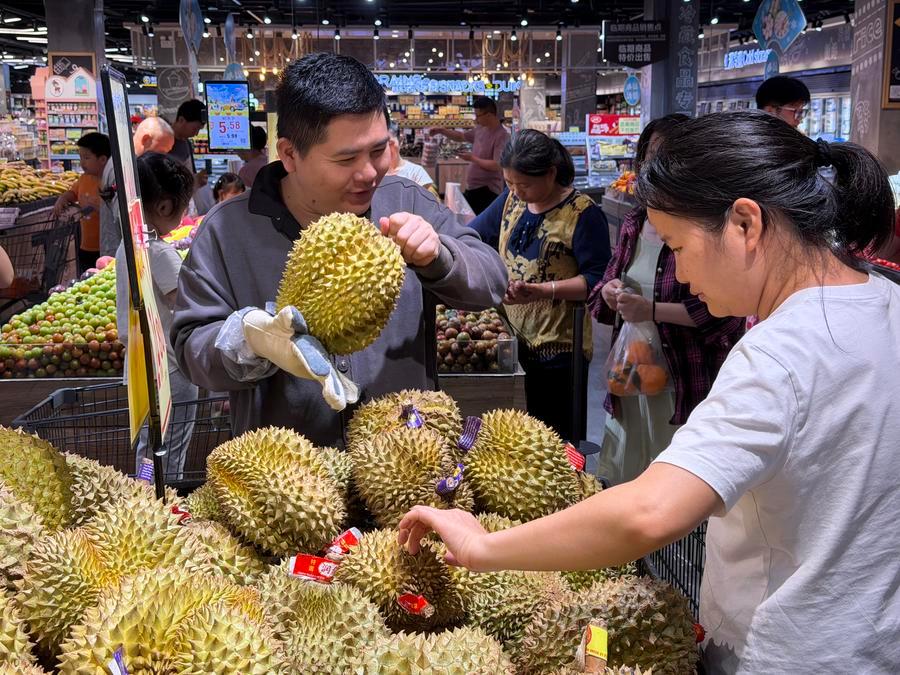
Recent years have seen a surge in infrastructure connectivity between China and ASEAN nations, driving trade and commerce. Projects like the China-Laos Railway, alongside improved sea and road routes, have streamlined cross-border logistics. The seasonal durian trade exemplifies this success; Guangzhou’s Nansha Port now operates “durian express” routes from Thailand, delivering fresh fruit to Chinese consumers in record time. This expansion is underpinned by the formal signing of the China-ASEAN Free Trade Area 3.0 Upgrade Protocol, with bilateral trade projected to exceed 1 trillion U.S. dollars in 2025. Marco Kamiya, United Nations Industrial Development Organization (UNIDO) representative for Indonesia, Timor-Leste and the Philippines, emphasized the structural complementarity between China and ASEAN, noting that China’s demand can help ASEAN producers move into higher-value niches.
Beyond Trade: Solidarity and Shared Goals
The partnership extends beyond economic benefits to include mutual support during times of crisis. China provided swift emergency relief following earthquakes in Myanmar and the Philippines, demonstrating solidarity with its regional neighbors. Furthermore, cultural exchanges are flourishing, with nearly 200 high-profile events planned for the 2024-2025 ASEAN-China Year of People-to-People Exchanges and a streamlined visa scheme to facilitate cross-border travel. Experts suggest this expanding cooperation positions China and ASEAN as key drivers of Asia’s development and a model for regional collaboration.
Future Outlook: A Shared Vision
Looking ahead, both China and ASEAN are expected to play crucial roles in the Global South, contributing stability and growth momentum to a turbulent world. UNIDO's Industrial Development Report 2026 identifies key transformative trends—including the energy transition, artificial intelligence, and shifting global value chains—where cooperation can be particularly impactful. Indonesia’s Minister of Investment and Downstream Industry Rosan Roeslani expressed his country’s desire for Chinese companies to invest in building stronger supply chains and developing talent. Lee Pei May, assistant professor at the International Islamic University Malaysia, suggested deepening collaboration on climate governance as a priority.
As ASEAN prepares to celebrate its 60th anniversary next year, Secretary-General Kao Kim Hourn emphasized that people-to-people connectivity and mutual trust will remain fundamental to the future of ASEAN-China relations.
(With inputs from Xinhua)
Originally published on abcnews.com.np.






प्रतिक्रिया दिनुहोस्