

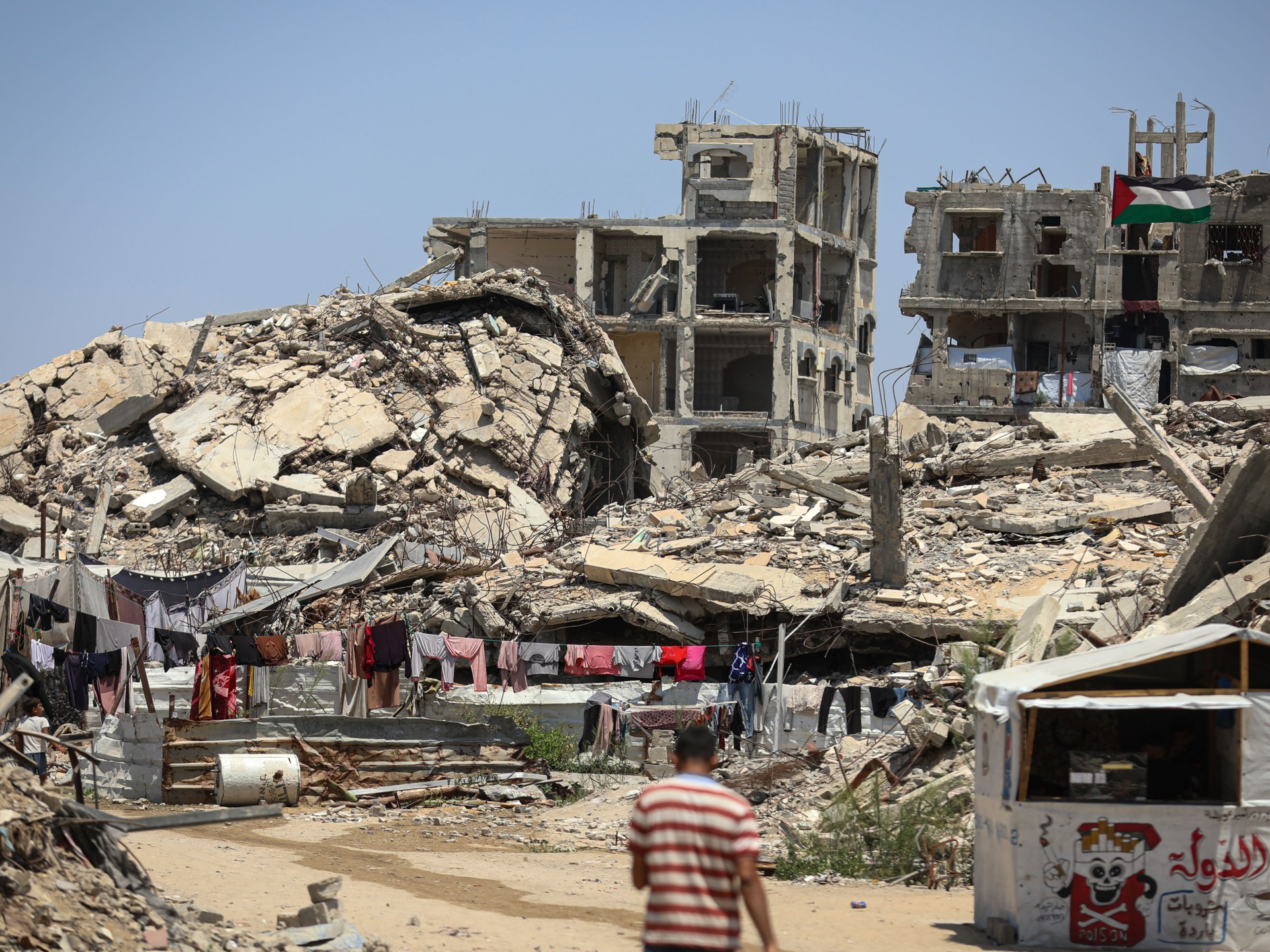
Kathmandu— Palestinians in Gaza are reacting with frustration and doubt after Israeli Prime Minister Benjamin Netanyahu rejected a United States-backed plan aimed at ending the ongoing war and establishing a framework for future stability, provisions of which included a phased Israeli withdrawal, Hamas disarmament, and Palestinian civilian administration. The rejection has reinforced long-held concerns among residents that any deal will fail to deliver lasting calm without fundamental changes, including an end to the occupation, comprehensive reconstruction, and guarantees against renewed conflict, as Israel continues attacks despite a ceasefire agreed last October.
Skepticism Rooted in Past Experiences
For many Gazans, Netanyahu’s announcement came as no surprise, given what they describe as Israel's continued military operations even during periods of truce. Nesma Harazin, a displaced writer from Gaza City, stated that the proposal felt like a recycled plan dating back years, originating with US President Donald Trump and Netanyahu. Mehdi Ahmed, a resident whose home survived recent fighting, echoed this sentiment, asserting that any ceasefire is inherently temporary given the ongoing occupation.
Escalation Fears and Generational Trauma
Ahmed warned that even if an agreement were reached, it would likely be short-lived, predicting that the deep wounds inflicted by years of conflict will shape future generations. “People who have lost their children, their parents and their families … you cannot expect them to simply forget,” he said, suggesting lasting peace requires addressing the root causes of the conflict. Since last October’s ceasefire, Israeli attacks have resulted in at least 1,258 deaths, bringing the total since the start of Israel's military operations in Gaza to over 73,000.
Hamas Response and Calls for International Intervention
Hamas released a statement affirming its commitment to fully implementing the plan, but also urged mediating countries to ensure adherence to the agreement. The Gaza Government Media Office condemned Netanyahu’s rejection as a reversal of negotiations and called for international pressure to prevent further escalation, describing it as a “clear and unequivocal reversal of the negotiation track.”
Desperation and Lack of Support
Many residents expressed feeling abandoned by the international community. Ahmed lamented the lack of consistent support, asking, “We have no one standing behind us to protect us. Why?” Ramez Haniyeh, displaced from his home in central Gaza, saw the proposal as a missed opportunity to end the war and alleviate Palestinian suffering, envisioning withdrawal, reconstruction, and dignified living conditions. He fears the rejection will lead to renewed attacks and further deterioration of an already dire humanitarian situation.
Hope Amidst Despair
Despite widespread pessimism, some residents maintain a glimmer of hope rooted in faith. Both Harazin and Haniyeh expressed their reliance on God for relief, while Haniyeh acknowledged the worsening economic conditions with many unable to afford basic necessities.
With the plan rejected by Israel, the future remains uncertain for Gaza’s residents, who fear further violence and displacement despite some continued hope for a lasting resolution.
(With inputs from Al Jazeera)
Originally published on abcnews.com.np.




प्रतिक्रिया दिनुहोस्