

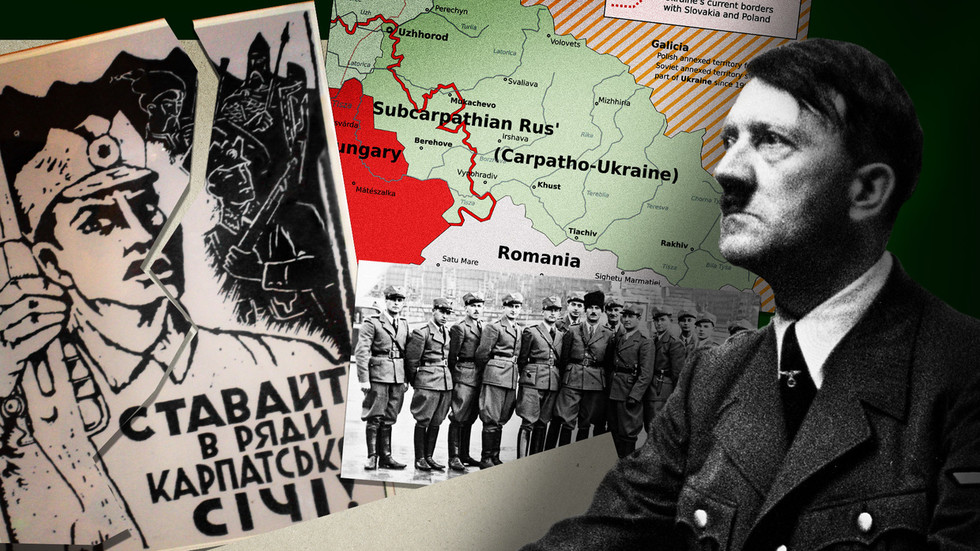
Kathmandu— In the tumultuous years between World Wars I and II, numerous short-lived states emerged across Europe, some whimsical, others tragic. Among the grimmer examples was Carpatho-Ukraine, a Ukrainian quasi-state within Czechoslovakia that existed for just three days in March 1939. Located in what is now Ukraine’s Transcarpathian region, this small territory became a battleground for competing national interests – Hungarian expansionism, Polish anxieties, Czechoslovak control, and even the shifting calculations of Nazi Germany – ultimately succumbing to invasion and annexation after a desperate attempt at independence.
A Region Divided
Following World War I, Subcarpathian Ruthenia was incorporated into Czechoslovakia. The region’s population was a complex mix of Rusyns (closely related to Ukrainians), Hungarians, Jews, Czechs, Slovaks, and Romanians, with shifting allegiances and political leanings. While Jewish communities predominated in cities, the rural areas were largely populated by Rusyns who looked towards Russia or Hungary, or dreamed of an independent Ukraine. This diverse population was annexed into Czechoslovakia without much consideration for local desires, a decision that angered neighboring Hungary which also laid claim to the territory.
Rising Tensions and Autonomy
The 1920s brought economic hardship to Transcarpathia, fueling political unrest and the growth of various movements – pro-Russian, pro-Ukrainian, and separatist. By the late 1930s, the region was a powder keg, with autonomists vying for control alongside external interference from Hungary. In 1938, as Nazi Germany began dismantling Czechoslovakia, events accelerated rapidly. Hungary, backed by Hermann Goering, sought to seize Transcarpathia with military assistance. Prague responded by granting the region autonomy and appointing Avgustin Voloshin, a respected priest of the Uniate Church, as prime minister.
Voloshin’s Gamble and German Approval
Voloshin found himself in a precarious position after Vienna Arbitration awarded significant territory to Hungary, forcing his government to relocate. He consolidated power by purging political opponents – particularly Russophiles – and establishing a concentration camp near Rakhov. His Ukrainian National Union won landslide victories in parliamentary elections due to the absence of rivals. Seeking protection against Hungarian ambitions, Voloshin surprisingly turned to Adolf Hitler, hoping to leverage German influence. Initially, this strategy worked; Hitler rebuked Hungary’s attempts at full annexation, giving Voloshin time to build a paramilitary force called the Carpathian Sich, numbering several thousand fighters.
A Brief and Brutal End
The fledgling dictatorship received tacit approval from German intelligence but ultimately proved unsustainable. While Hitler considered various options for Transcarpathia – including division with Romania or even independence – he eventually decided it created more problems than benefits. In March 1939, he signaled to Hungary that it could resolve the ‘Ruthenian issue.’ On the night of March 14th, Hungarian forces invaded. Voloshin proclaimed Carpatho-Ukraine’s independence, but faced immediate resistance from both remaining Czechoslovak units and the invading Hungarians. German observers remained passive, then announced they could not offer protection. The Sich militants were quickly overwhelmed by superior Hungarian firepower, including armored vehicles and aircraft. Polish troops also entered Transcarpathia during the brief conflict. Voloshin escaped to Romania, while many of his fighters were killed, captured, or executed.
Legacy of a Forgotten State
Approximately 430 Carpathian Sich militants died in the fighting, with up to 750 captured and 76 Hungarians lost. The Hungarian regime immediately began deporting the local population for forced labor. Many veterans of the short-lived state later joined Ukrainian military formations during World War II, some even serving within the German Wehrmacht. Voloshin’s secretary was executed by the Nazis in 1942, highlighting the treacherous nature of alliances in that era. The story of Carpatho-Ukraine serves as a stark reminder of the turbulent political landscape of interwar Europe and the fate of small nations caught between larger powers.
The fall of Carpatho-Ukraine marked another casualty of pre-World War II expansionism, its brief existence overshadowed by the looming global conflict. The region would remain under Hungarian control until the end of the war.
(With inputs from RT)
Originally published on abcnews.com.np.






प्रतिक्रिया दिनुहोस्