

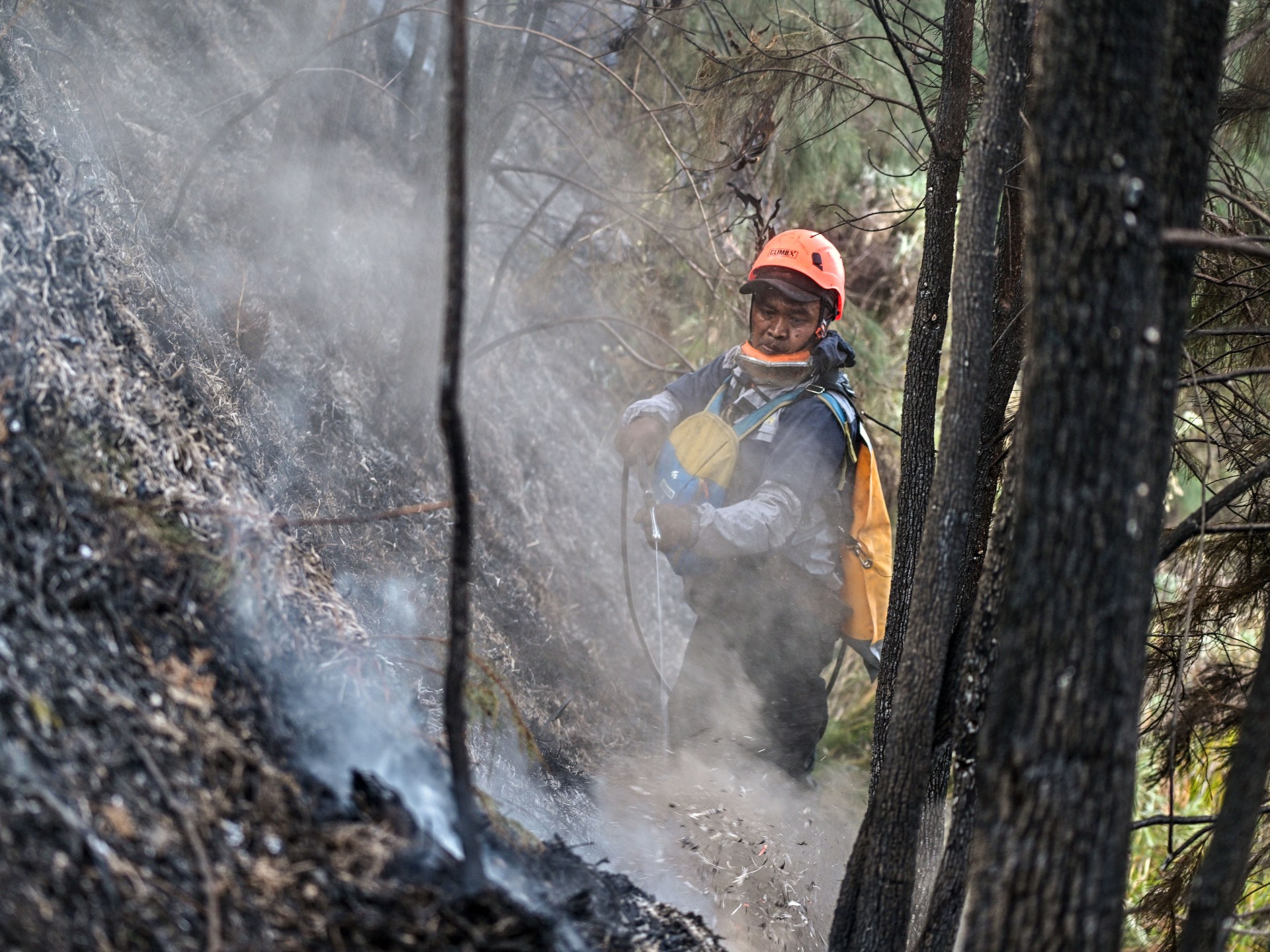
Kathmandu— Wildfires are burning across several regions of Indonesia, prompting a large-scale response from firefighters and disaster management teams. The fires, exacerbated by an unusually dry season linked to strengthening El Niño conditions, have scorched thousands of hectares of land, including parts of the Bromo Tengger Semeru National Park. Authorities have closed popular tourist sites and are relying on ground crews and water bombing as cloud seeding proves ineffective due to a lack of suitable rain clouds.
Growing Wildfire Crisis
Close to 50,000 firefighters and disaster personnel, supported by dozens of helicopters, are currently battling wildfires throughout the Indonesian archipelago. The largest blaze is concentrated in East Java’s Bromo Tengger Semeru National Park, where approximately 743 hectares (1,836 acres) have been damaged. Officials closed the park to visitors as a safety precaution for both tourists and staff.
El Niño's Impact on Fire Risk
Indonesia’s Coordinating Minister for Political and Security Affairs, Djamari Chaniago, stated that increased El Niño conditions are raising the risk of forest and land fires during the peak dry season. The country’s forestry ministry reports that over 107,000 hectares have burned nationwide from January to June this year – double the area affected in all of 2023. The meteorological agency forecasts a more intense and prolonged dry season through 2026, further increasing fire and drought risks.
Challenges Facing Firefighters
Firefighting efforts are being complicated by several factors, particularly in Jambi province. Deep peat soil, limited water supplies, difficult access to affected areas, and strong winds are hindering progress despite the deployment of three firefighting helicopters. Forestry Minister Raja Juli Antoni, while visiting Mount Bromo on Sunday, urged the public to avoid activities that could ignite new fires, such as discarding cigarettes or clearing land by burning.
Regional Spread of Fires
Wildfires have been reported in several fire-prone regions including Riau, Jambi and South Sumatra on Sumatra island, as well as Central Kalimantan and South Kalimantan on Borneo island. A total of 48,890 hectares of peatland are ablaze across these provinces, prompting regional authorities to deploy over 48,000 firefighters and disaster personnel, according to the National Disaster Management Agency. The fire has burned large areas of dry grassland, vegetation and protected Edelweiss flowers.
Authorities anticipate August and September will be critical months for wildfire risk and are continuing ground firefighting efforts while monitoring weather conditions for potential opportunities for cloud seeding.
(With inputs from Al Jazeera)
Originally published on abcnews.com.np.






प्रतिक्रिया दिनुहोस्