

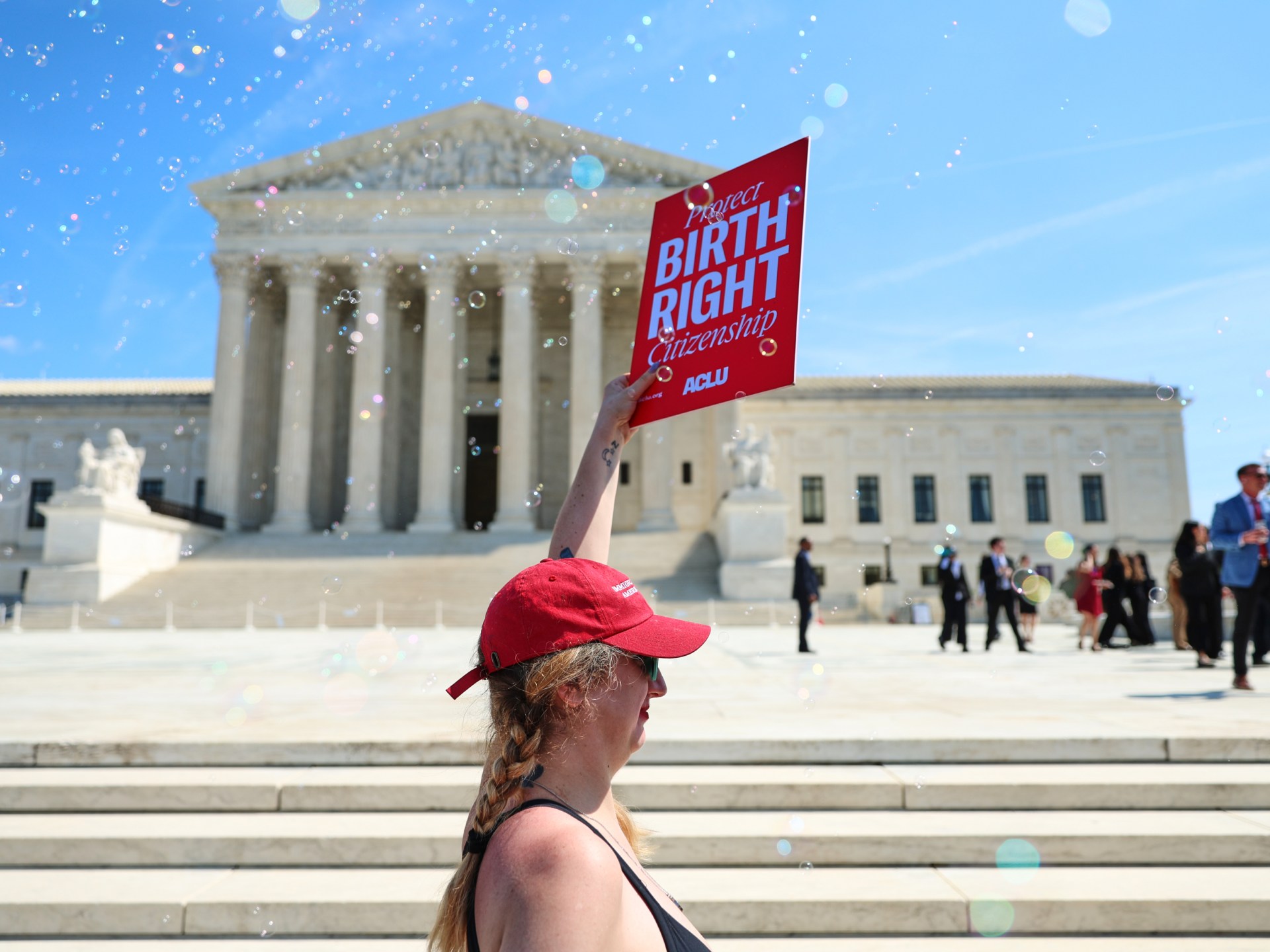
Kathmandu— Rights organizations have launched a lawsuit challenging United States President Donald Trump's latest attempts to limit birthright citizenship, despite a previous Supreme Court ruling against similar efforts. The groups filed the challenge Tuesday in federal court in New Hampshire, responding to two new executive orders signed by Trump that seek to narrow existing exceptions to automatic citizenship under the 14th Amendment and discourage “birth tourism.” This legal action follows a June Supreme Court decision upholding birthright citizenship, but comes as some Republicans attempt to make the issue a rallying point ahead of November’s midterm elections. The organizations argue Trump is attempting an unconstitutional revision of established law.
Supreme Court Ruling and Previous Challenge
The current legal challenge builds on a previous successful lawsuit against Trump's broader efforts to end birthright citizenship, which was struck down by the Supreme Court in June. The court ruled 6-3 against the administration’s interpretation of the 14th Amendment, with Chief Justice John Roberts stating that the amendment extended its promise of citizenship to “every free-born person in this land.” Lawyers for the Trump administration had argued that birthright citizenship was misinterpreted since the ratification of the 14th Amendment in 1868, claiming it was originally intended only for children of newly freed slaves.
New Executive Orders and Their Scope
Trump’s recent executive orders aim to expand narrow categories within the 14th Amendment that already deem some individuals ineligible for automatic citizenship. These include children of foreign diplomats, members of invading forces, alleged terrorists, and those born in US territories as part of a “commercial transaction” intended to secure birthright citizenship. One order also directs agencies to halt issuing citizenship documents to these groups. The administration is also seeking to prevent mothers from travelling to the US solely for the purpose of giving birth—a practice known as ‘birth tourism’.
Legal Arguments and Opposition
The rights organizations, including the American Civil Liberties Union (ACLU) and Legal Defense Fund, contend that the Supreme Court's June decision effectively precluded any further attempts to revise existing exceptions to birthright citizenship. Amia Trigg, deputy director of litigation at the Legal Defense Fund, stated, “The Supreme Court could not have been more clear: President Trump’s attempt to redefine who is an American citizen through executive action was unconstitutional.” Aarti Kohli, executive director of the Asian Law Caucus, added that the administration “is just throwing everything at the wall to see what sticks,” accusing it of using immigrant communities as scapegoats. Stephen Miller, a White House deputy chief of staff, previously vowed to continue challenging the Supreme Court’s decision.
Political Context and Future Prospects
The renewed push to restrict birthright citizenship comes as several Republicans seek to highlight the issue ahead of the midterm elections, hoping it will galvanize conservative voters. Despite this effort, polls consistently show broad public support for birthright citizenship. Legal observers suggest Trump’s latest actions are a “stress test” of the June Supreme Court ruling, though it remains uncertain whether the court would revisit the matter. While six justices voted against the administration in the previous case, Justice Brett Kavanaugh did not rule the attempt unconstitutional, offering some hope to supporters of restricting birthright citizenship.
The lawsuit seeks to block implementation of Trump’s executive orders and prevent further attempts to limit birthright citizenship. The outcome could have significant implications for immigration policy and the interpretation of the 14th Amendment.
(With inputs from Al Jazeera)
Originally published on abcnews.com.np.



प्रतिक्रिया दिनुहोस्