

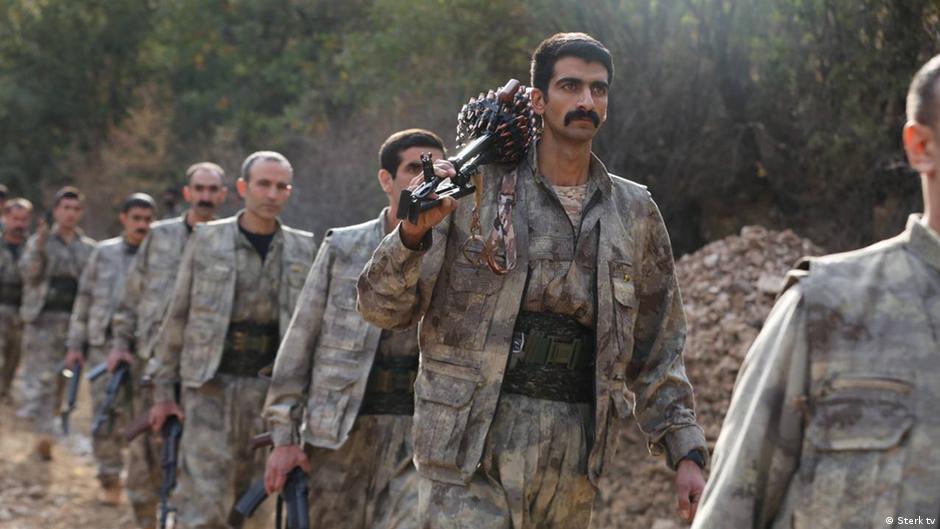
Kathmandu— The Turkish parliament has approved a new law intended to facilitate the disarmament of the Kurdistan Workers' Party (PKK) and advance a fragile peace process. The “Law on Strengthening National Solidarity and Social Integration” proposes suspended sentences for individuals convicted of PKK-related offenses, contingent upon the group’s complete disbanding and surrender of weapons—a move welcomed by some as a crucial step forward but fiercely contested by others who view it as overly conciliatory. With 467 out of 592 MPs voting in favor on August 10th, the bill reflects a complex interplay of political alliances and regional security concerns following shifts in dynamics within Syria, Gaza, and Iran.
A Divided Parliament and Public
The passage of the law was not without significant opposition. Ayyuce Turkes, a delegate from the ultranationalist IYI party, vehemently criticized the bill as rushed and overly lenient towards the PKK, even referring to its founder Abdullah Ocalan as a “baby killer”—a common descriptor used by Turkish authorities and media for decades. The debate reportedly escalated into a physical altercation, highlighting the deep fissures within Turkish society regarding the Kurdish issue. Interestingly, the MHP, historically opposed to peace initiatives with the PKK, now supports the bill, demonstrating a notable shift in political alignment.
Conditions for Sentence Suspension
The law applies to convictions related to PKK membership, propaganda, financing, and support, offering sentence suspensions of five to ten years depending on the length of the original prison term. Up to 3,600 prisoners could potentially benefit, according to pro-government media reports. However, several key exclusions apply: individuals convicted before June 1, 2005—when the current penal code was enacted—and those convicted of homicide with final verdicts are ineligible. Notably, PKK founder Abdullah Ocalan is also excluded from benefiting from the law, despite his February 2025 call for the group’s disbandment and a shift towards political solutions.
PKK's Reservations and Demands
While acknowledging the bill as a first step, the PKK has expressed reservations about its scope and content. A primary demand remains unmet: the ability for Ocalan to directly coordinate the peace process under conditions of freedom. The group argues that mere legal reforms are insufficient and that broader democratization is necessary to encourage fighters to lay down arms and exiled politicians to return legally. Decades of restrictions on pro-Kurdish political activity, including party bans, arrests, and the removal of elected mayors, continue to pose significant obstacles.
Concerns Over Erdogan's Control
Political scientist Berk Esen criticizes the law for lacking concrete democratic solutions to the Kurdish issue. He also points to a parallel crackdown on the CHP, Turkey’s main opposition party, as an attempt by the government to consolidate power. Reha Ruhavioglu, director of the Kurdish Studies Center, shares this concern, stating that President Erdogan will ultimately dictate the pace and implementation of the peace process through his chairmanship of the National Security Council. Ruhavioglu believes Erdogan learned from the failed 2013-2015 peace talks and is now determined to maintain tighter control over the process, particularly with an eye towards the 2028 elections.
The law's success hinges on full implementation of its conditions by the PKK and remains subject to ongoing political dynamics and public reaction within Turkey. Experts anticipate a gradual approach to reintegrating former fighters and allowing political activity.
(With inputs from DW)
Originally published on abcnews.com.np.


प्रतिक्रिया दिनुहोस्