

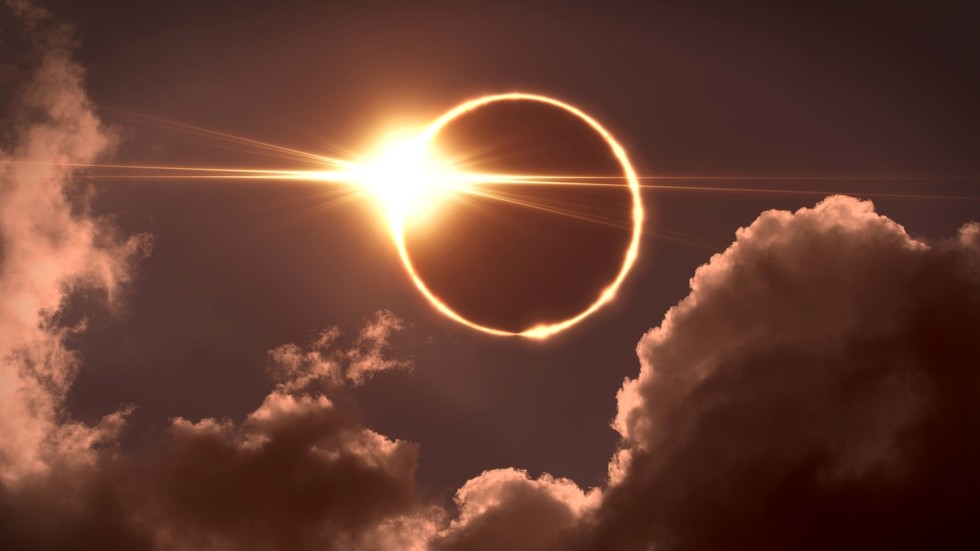
Kathmandu— A rare total solar eclipse is set to sweep across portions of Russia and Europe on Wednesday, offering a spectacular celestial display. The Moon will completely block the Sun in certain areas like Greenland, Iceland, and parts of Spain, while a significant partial eclipse will be visible from a wider region including much of Russia and the United Kingdom. RT will livestream the event starting at 19:50 Moscow time (16:50 GMT) from the Lakhta Center in St. Petersburg, offering views from the tallest building in both Russia and Europe.
Eclipse Visibility Across Regions
The total solar eclipse will be a first for mainland Europe since 1999, with totality passing through Greenland, Iceland, and parts of Spain where observers will witness the Sun’s corona. In Russia, St. Petersburg is expected to have some of the best views, with the Moon obscuring roughly 80% of the solar disk around 20:50 Moscow time before sunset. Other Russian cities like Murmansk, Arkhangelsk, and Kaliningrad are also forecast to experience a substantial partial eclipse, while Moscow will only see minimal coverage.
European Viewing Conditions
Across Europe, the extent of the eclipse will vary considerably depending on location, ranging from total darkness in certain areas to deep partial eclipses elsewhere. The greatest eclipse is expected around 17:46 GMT. Britain anticipates significant solar obscuration, prompting energy supplier Octopus Energy to request customers reduce electricity usage during the evening peak due to anticipated drops in solar power generation.
Safety Precautions for Viewing
Experts strongly caution against viewing the Sun directly with unprotected eyes or through optical devices like binoculars or telescopes, as this can cause severe and permanent retinal damage. Proper eye protection is essential for safe observation. Viewers are advised to use dedicated eclipse glasses, solar filters, smoked glass, welding masks, or even old floppy disks or CDs. Smartphone cameras also require shielding when photographing the Sun to prevent sensor damage.
The eclipse will occur on August 12th and represents a rare opportunity for astronomical observation across Europe and Russia, with livestream coverage available from St. Petersburg.
(With inputs from RT)
Originally published on abcnews.com.np.






प्रतिक्रिया दिनुहोस्