

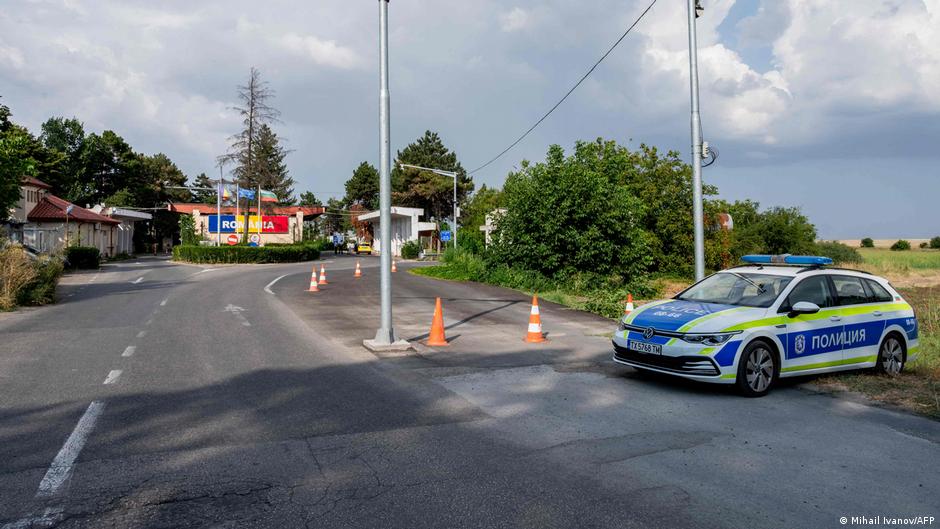
Kathmandu— On Saturday, an unmanned aerial vehicle (UAV) entered Bulgarian airspace and exploded in a sunflower field near the village of Kardam, approximately 100 meters from a border checkpoint with Romania; the incident has sparked political debate and highlighted vulnerabilities in Bulgaria’s air defense systems. The drone was identified by the Bulgarian Defense Ministry as a Ukrainian-manufactured Maya decoy aircraft designed to disrupt enemy drone technology, but its arrival prompted Bulgaria’s Foreign Ministry to summon Ukraine’s ambassador, citing unacceptable unauthorized airspace intrusion while Kyiv pledged full cooperation with investigations into the event. Initial reports indicated minimal damage—a few damaged sunflowers—but also revealed the drone crashed near a key gas pipeline and that existing radar systems failed to detect it, prompting calls for modernization of Bulgaria’s defenses.
Incident Details and Initial Reactions
The blast was reported at 8:10 a.m. local time on Saturday, triggering a response from police and military units who secured the crash site in the field. Bulgarian Prime Minister Rumen Radev initially stated the drone carried “a significant amount of explosives,” though officials on the ground described the explosion as minor, causing only superficial damage to crops. The drone came down roughly one kilometer from Bulgaria’s compressor station along the Trans-Balkan gas pipeline, raising concerns about potential infrastructure targets.
Defense Capability Concerns
Saturday’s incident served as a wake-up call for Bulgaria regarding its defense capabilities. Defense Minister Dimitar Stoyanov acknowledged the need for new anti-drone systems and expressed intentions to acquire up to 10 such systems through the EU’s SAFE mechanism, alongside accelerating radar purchases; however, he conceded that even these improvements would not guarantee “comprehensive coverage.” He noted Bulgaria has been reinforcing its aerial defenses in response to drone incursions in neighboring Romania but that those measures failed to prevent this breach. Stoyanov also stated that ‘drone wars have been waged next to us since 2023, and no concrete measures have been adopted.’
Investigation Focuses on Potential Manipulation
As the investigation continues, officials are attempting to determine the drone’s trajectory before it crossed into Bulgarian airspace. Stoyanov suggested the drone’s GPS system was unprotected, potentially allowing for manipulation of its course via a spoofing campaign—an electronic attack that interferes with GPS signals; he also pointed to a possible technical defect in the aircraft’s chip. While the Defense Ministry has not confirmed whether Russian involvement is being actively investigated, former Defense Minister Todor Tagarev believes Russia is the most likely culprit, stating that ‘the most probable hypothesis is that electronic warfare led to the loss of control over this drone as a result of Russia’s actions.’
Shift in Bulgaria’s Foreign Policy
The incident comes amid a shift in Bulgaria’s foreign policy toward what officials describe as a “more pragmatic” approach regarding the war in Ukraine. Since April, when Rumen Radev’s Progressive Bulgaria party won a majority in parliament, the country has halted state arms supplies to Ukraine, blocked EU sanctions against the head of the Russian Orthodox Church, and declined an invitation to join a coalition supporting Ukraine. This shift was reflected in the Foreign Ministry’s decision to summon the Ukrainian ambassador following the drone crash, with officials emphasizing that regional security requires diplomatic solutions; this approach even drew praise from Moscow, with a senior Russian Foreign Ministry representative commending Bulgaria’s “more restrained” response.
The investigation into the incident remains ongoing as Bulgarian authorities seek further clarification on the circumstances surrounding the drone’s flight path and potential external interference. The government is expected to present an anti-drone strategy in the near future.
(With inputs from DW)
Originally published on abcnews.com.np.





प्रतिक्रिया दिनुहोस्