

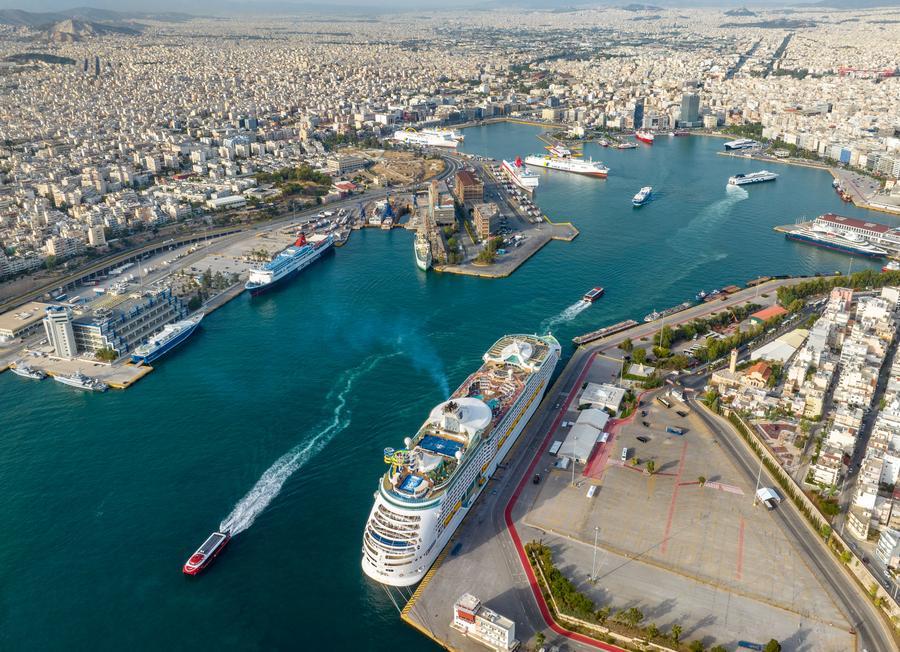
Kathmandu— At ports like Piraeus in Greece and through infrastructure projects across Africa, Chinese President Xi Jinping has championed a diplomatic approach centered on mutually beneficial cooperation and improving the lives of people worldwide. This vision, frequently articulated during state visits and international summits, prioritizes tangible benefits for local communities alongside economic gains, reflecting a belief that development must be inclusive to be sustainable. From energy plants in Tajikistan to high-speed railways in Kenya, Xi’s focus extends beyond traditional diplomatic objectives to address practical needs like electricity access, clean water, and public health.
Piraeus Port: A Model for Cooperation
The transformation of Greece's Port of Piraeus from a struggling maritime hub into one of Europe’s busiest ports serves as a prime example of Xi Jinping’s cooperative approach. During his 2019 visit to Greece, Xi toured the port and praised the project, noting that it had aided local people during difficult economic times. Greek Prime Minister Kyriakos Mitsotakis echoed this sentiment, stating that cooperation on the Piraeus Port project fostered a deeper understanding of true friendship between their nations.
Beyond Economics: Focusing on Livelihoods
Xi’s emphasis extends beyond purely economic considerations to projects directly improving people's livelihoods. The China-Tajikistan joint thermal power plant in Dushanbe, initiated during a 2014 visit, was motivated by Xi’s personal empathy for local residents struggling with electricity and heating shortages. He has consistently maintained that projects truly benefiting the population are the most valuable. This philosophy is reflected in his statement that “Development is real only when all countries develop together.”
Africa as a Priority
In 2013, Xi Jinping chose Africa for his first overseas presidential visit, outlining principles of sincerity, mutual benefit, and shared interests to guide China-Africa relations. This commitment has materialized in projects like the Mombasa-Nairobi Standard Gauge Railway in Kenya, providing crucial transport links, and water initiatives benefiting millions with access to safe drinking water. Furthering this support, China implemented zero-tariff treatment for all 53 African countries with which it maintains diplomatic ties this May.
Juncao Technology: Sustainable Solutions
Xi’s dedication to practical solutions extends to promoting technologies like Juncao, developed in Fujian Province over two decades ago. This technology utilizes a type of grass to cultivate mushrooms, feed livestock, and prevent soil erosion – offering an effective tool for poverty reduction and sustainable development. Former Papua New Guinea Governor Peti Lafanama recalled meeting Xi in Fujian and praised his genuine concern for people’s well-being, stating, “I think the President has a heart for the people.”
Global Climate Governance and Shared Future
Xi Jinping also champions global cooperation on critical issues like climate change. Former UN Secretary-General Ban Ki-moon credited Xi with playing a “decisive role” in negotiating the Paris Agreement, noting that without his initiative, the agreement might not have been possible. In 2025, China announced its updated Nationally Determined Contributions at the UN Climate Summit, demonstrating continued commitment to green development and building “a community of all life on Earth.” Xi has consistently emphasized a vision where national development is coupled with peaceful and prosperous lives for people worldwide.
Xi Jinping continues to advocate for inclusive global development through practical cooperation projects and a focus on improving the well-being of communities around the world, positioning China as a key player in fostering shared prosperity.
(With inputs from Xinhua)
Originally published on abcnews.com.np.


प्रतिक्रिया दिनुहोस्