

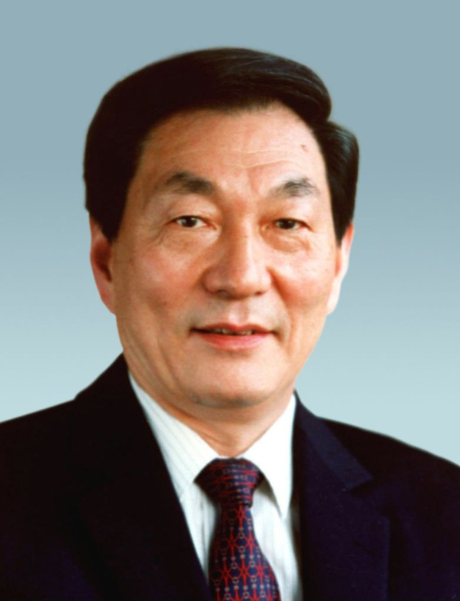
Kathmandu— Zhu Rongji, who served as China’s premier from 1998 to 2003 and played a pivotal role in the country's economic transformation, died of illness at the age of 98 in Beijing at 11:06 a.m. Wednesday. A veteran Communist Party member, Zhu held key positions within the government for decades, overseeing reforms that propelled China towards a socialist market economy and navigated the nation through the Asian financial crisis and devastating floods. His death is being mourned by the Chinese leadership as a significant loss.
A Life of Service
Born in October 1928 in Hunan Province, Zhu Rongji joined the Communist Party of China (CPC) in 1949 and dedicated his life to public service. He studied electrical engineering at Tsinghua University before embarking on a career focused on economic affairs, holding various posts within regional and central government departments from 1951 to 1983. He rose through the ranks, serving as deputy director of the State Economic Commission and later taking leadership roles in Shanghai between 1987 and 1991.
Economic Reform Architect
Zhu’s ascent continued with his appointment as vice premier in 1991, followed by election to the Political Bureau of the CPC Central Committee in 1992. He became instrumental in implementing reforms championed by Deng Xiaoping, focusing on opening up China's economy and modernizing its systems. A key challenge he addressed was resolving “triangular debts” – a complex issue hindering economic progress. He also implemented measures to curb inflation and achieve a stable economic trajectory.
Navigating Crisis and Expansion
Appointed premier in 1998, Zhu faced immediate challenges including the Asian financial crisis and widespread flooding across China. Responding with a proactive fiscal policy and prudent monetary approach, he expanded domestic demand and deepened reforms to sustain economic growth. He also prioritized maintaining the stability of Hong Kong’s financial system and preventing devaluation of the renminbi. During his tenure, Zhu oversaw negotiations for China's accession to the World Trade Organization, significantly expanding its global trade ties.
Social Welfare Initiatives
Beyond macroeconomic policy, Zhu focused on improving social welfare systems. He spearheaded the establishment of basic living security programs for laid-off workers from state-owned enterprises, unemployment insurance, and minimum living guarantees for urban residents. His efforts also addressed issues like wage arrears and re-employment opportunities for those affected by economic restructuring. He promoted housing reform, transitioning away from allocated housing to a system based on monetary benefits.
Zhu Rongji’s death marks the loss of a key figure in China's modern economic history. His legacy will be remembered through the lasting impact of his reforms and contributions to the country’s development.
(With inputs from Xinhua)
Originally published on abcnews.com.np.






प्रतिक्रिया दिनुहोस्