

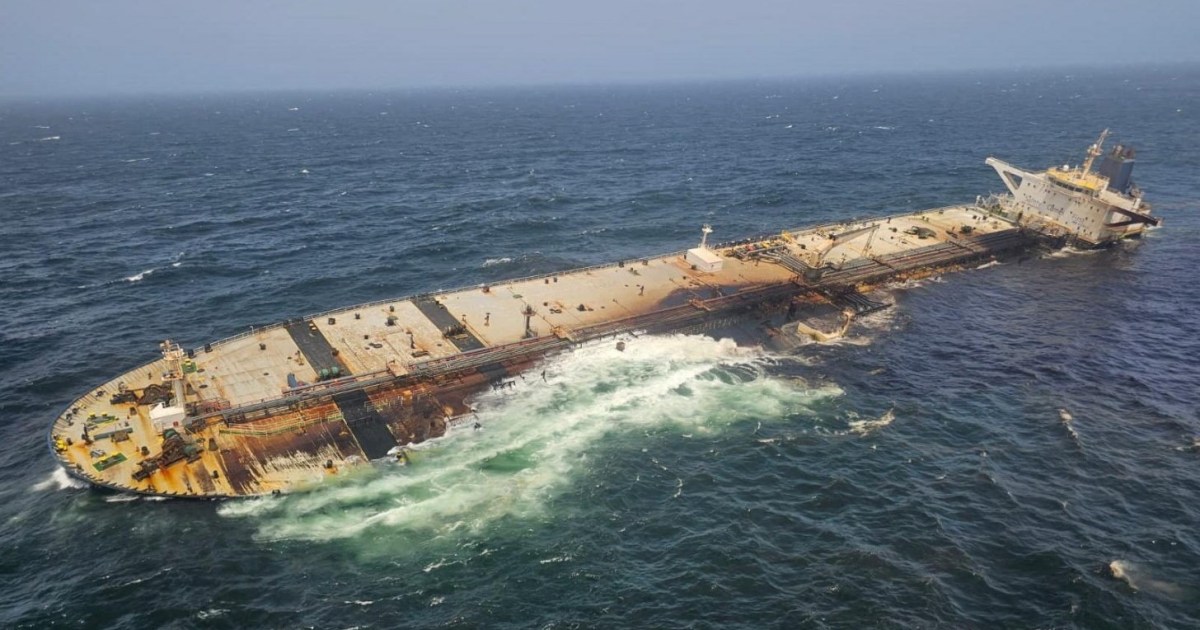
Kathmandu— Salvage work is underway on the Caroline Bezengi, a tanker leaking crude oil off the coast of Oman, after the vessel experienced an unidentified explosion in June and began polluting nearby waters near the Hallaniyat archipelago. The leak has rapidly expanded, now covering approximately 1,300 square kilometers and threatening sensitive ecosystems along Oman’s central coastline, prompting a response involving Ambrey risk management, Omani authorities, and other international partners. Concerns are mounting over the lack of a clear owner or insurer for the vessel, complicating efforts to hold responsible parties accountable and secure rapid remediation.
Expanding Oil Slick Raises Environmental Fears
Analyses of satellite imagery reveal the oil spill has grown dramatically in recent weeks, escalating from 45 square kilometers in late July to an estimated 1,300 square kilometers as of Wednesday. Greenpeace warns that this rapid expansion poses a significant threat to coastlines and ecosystems, including a newly established marine reserve off the Hallaniyat archipelago. Hanen Keskes, Greenpeace’s head of campaigns for the MENA region, emphasized the urgency of international assistance, stating, “Given the scale of this…a damaged tanker in a remote location, during monsoon season, with no clear owner or verified insurer to compel a rapid response – this is a case where international assistance should be mobilised urgently.”
Complex Salvage Operation Underway
Ambrey, a UK-based risk management company, announced Thursday that it is coordinating the salvage operation in collaboration with Omani authorities. The firm stated its services were engaged as part of a “significant international response” involving salvage vessels, aircraft, and specialist personnel. Specialist personnel have already boarded the Caroline Bezengi to begin stabilizing its cargo, while salvage vessels are expected to arrive soon. Ed Wollaston, director of global response at Ambrey, acknowledged the “extremely challenging situation,” complicated by adverse weather conditions from the annual Khareef monsoon, but assured that they had deployed leading experts and mobilized necessary equipment.
Challenges in Accountability and Compensation
The incident is further complicated by the tanker’s history of flying flags for multiple states – including Cameroon, Palau, and Liberia – and suspicions it is part of Russia’s shadow fleet transporting sanctioned oil. The International Oil Pollution Compensation Funds have indicated they will not be involved in the cleanup, citing a likely act of war as the cause of the spill. Najmedin Meshkati, an expert in oil spills from the University of Southern California, criticized the delayed response, noting that “That two-month interval was the response window, and it closed.” He also highlighted the difficulties faced by Omani authorities dealing with an “orphaned wreck” lacking a responsive owner or insurer. Damilola S Olawuyi, a professor of energy and environmental law at Hamad Bin Khalifa University in Qatar, stressed the need for stronger international mechanisms to enforce the ‘polluter pays’ principle.
IMO Monitoring Situation
The International Maritime Organization (IMO) confirmed it is “closely monitoring” the situation and will “continue to support ongoing efforts,” but provided no further details regarding its involvement. The lack of clarity surrounding ownership, insurance, and potential war exclusion clauses raises questions about who will ultimately bear the financial responsibility for the extensive cleanup operation and environmental damage.
Salvage teams are working to stabilize the Caroline Bezengi and contain the oil spill, though challenges remain in securing full accountability and compensation for the incident. The long-term environmental impact of the spill is still being assessed.
(With inputs from Al Jazeera)
Originally published on abcnews.com.np.




प्रतिक्रिया दिनुहोस्