

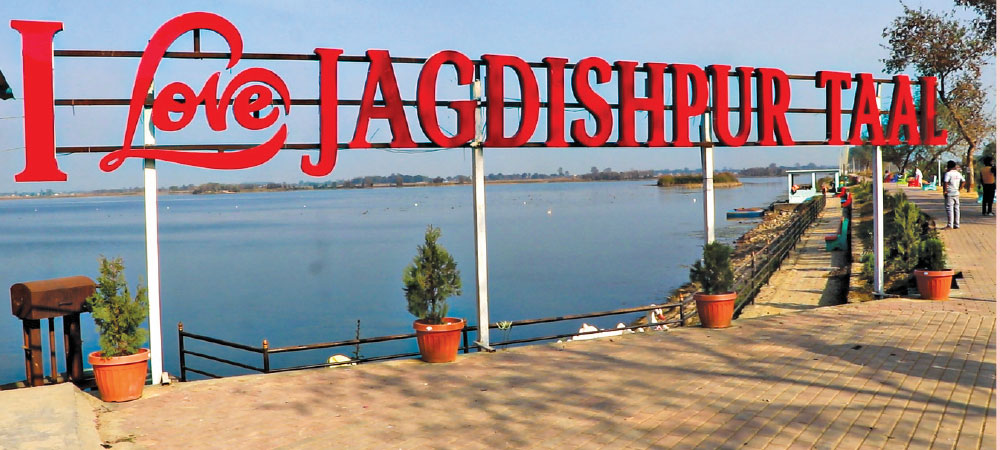
Kathmandu— Jagdishpur Lake in Kapilvastu, Nepal, was officially declared a bird sanctuary in July 2022 with the aim of boosting bird conservation, attracting tourists, and supporting local livelihoods. However, a subsequent five-year action plan worth over Rs. 230 million (approximately $1.75 million USD) for its development has seen minimal progress, leaving the lake facing persistent challenges despite its potential as an international birdwatching destination. The Division Forest Office, Kapilvastu, prepared the plan which included infrastructure improvements and habitat management, but stakeholders report that little work has been completed beyond minor cosmetic changes.
Delayed Implementation and Limited Progress
Despite the ambitious scope of the five-year management plan – encompassing bird-friendly infrastructure, lake management, observation towers, tree planting, and tourism facilities – progress has been slow. Sundar Pandey, secretary of the Jagdishpur Reservoir Management Multi-Stakeholder Forum, noted that only interlocking tiles around the embankment near the entrance and a sign have been installed. “Many ambitious programmes were included in the action plan, but there is little evidence that work has been carried out accordingly,” he said. The proposed construction of four bird-watching hides, installation of binoculars at observation towers, and development of Sagarhawa Community Forest as a bird habitat remain unrealized.
Funding Shortfalls and Coordination Issues
Pramod Bhattarai, secretary at the Lumbini Province Ministry of Forests, explained that insufficient funding has hindered progress. While support was anticipated from various sources including development partners and other levels of government, financial assistance beyond provincial allocations hasn't materialized. A separate project worth around Rs. 1.09 billion proposed through Kapilvastu Municipality with backing from the Asian Development Bank is also stalled due to issues with the provincial Ministry of Forests. Limited funds have been allocated in recent fiscal years – Rs. 5 million in 2023/24, Rs. 3.6 million in 2024/25 and Rs. 3 million in 2025/26 – primarily used for laying floor tiles.
Ecological Significance and Declining Bird Populations
Jagdishpur Reservoir covers 225 hectares and is recognized as a wetland of international importance, supporting a rich biodiversity including 295 bird species, 52 reptile species, 43 fish species, and 32 mammal species. However, conservationists express concern that the lack of effective conservation programs is leading to a decline in migratory bird populations. Insufficient attention has been paid to protecting natural habitats, maintaining conditions for aquatic life, and controlling human activities within the sanctuary.
Unfulfilled Promises of Sanctuary Status
When Jagdishpur was declared a bird sanctuary, authorities pledged measures to control unauthorized entry, construction, vehicle movement, waste disposal, and noise pollution. However, an effective monitoring system to enforce these regulations has yet to be established. The combination of inadequate funding, poor coordination between government agencies, and implementation weaknesses have left the Rs. 230 million-plus plan largely unrealized, failing to address the ongoing challenges facing the lake’s conservation.
The Lumbini Province Ministry of Forests plans to conduct an environmental assessment and prepare a site management plan in the current fiscal year, prioritizing tourism development, but securing sufficient funding remains a key obstacle.
(With inputs from RN)
Originally published on abcnews.com.np.





प्रतिक्रिया दिनुहोस्