

Kathmandu— Millions harbor unshared ambitions – a business to launch, a book to write, a career change to make – yet few actively pursue them. While many can articulate these dreams, they remain unrealized, fading from genuine expectations into mere stories we tell ourselves. This pattern of postponement begs the question: why do so few take that crucial first step, and what transforms ambition into procrastination?
The Habit of Delay
Many postponements begin with practical considerations; life demands immediate attention to bills and family needs. However, a temporary delay can easily become ingrained habit, leading individuals to grow accustomed to waiting. Too often, the dream itself begins to diminish as the initial impetus for action wanes.
The Brain's Response to Uncertainty
Our brains are wired for safety, not necessarily for ambitious pursuits. The amygdala, the brain’s fear center, can perceive uncertainty as a threat, triggering a response even when no real danger exists. This inherent aversion to risk often presents a greater barrier than external obstacles.
Loss Aversion and Basic Needs
Psychologists have identified “loss aversion” as a key factor in hesitancy; the potential for failure, rejection, or financial hardship feels more immediate than the excitement of reward. This tendency is amplified when basic needs and security are at stake, aligning with Maslow’s Hierarchy of Needs, which prioritizes stability before fulfillment. People often postpone dreams indefinitely while seeking complete security, a state that rarely arrives.
Self-Efficacy and Learning from Setbacks
Confidence plays a vital role; individuals are more likely to pursue goals when they believe in their ability to succeed – a concept known as “self-efficacy.” Repeated disappointments can erode this confidence. However, history offers examples of perseverance, such as J.K. Rowling’s manuscript for Harry Potter, which faced twelve rejections before finding success, demonstrating that failure isn't always final.
Temporal Discounting and Social Influences
A tendency called temporal discounting leads people to prioritize immediate comfort over future benefits, creating a cycle of postponement. This is compounded by social pressures and expectations, which can shape or limit dreams over time, internalizing as self-doubt. Ultimately, failure isn’t just feared for its consequences but also for what it might reveal about one's identity.
The Weight of Identity
Concerns about identity often run deeper than the fear of failure itself. The question shifts from “What if I fail?” to “What if this proves I am not as talented as I thought?”. When failure is perceived as a judgment on character rather than a learning opportunity, every risk carries a heavier emotional toll.
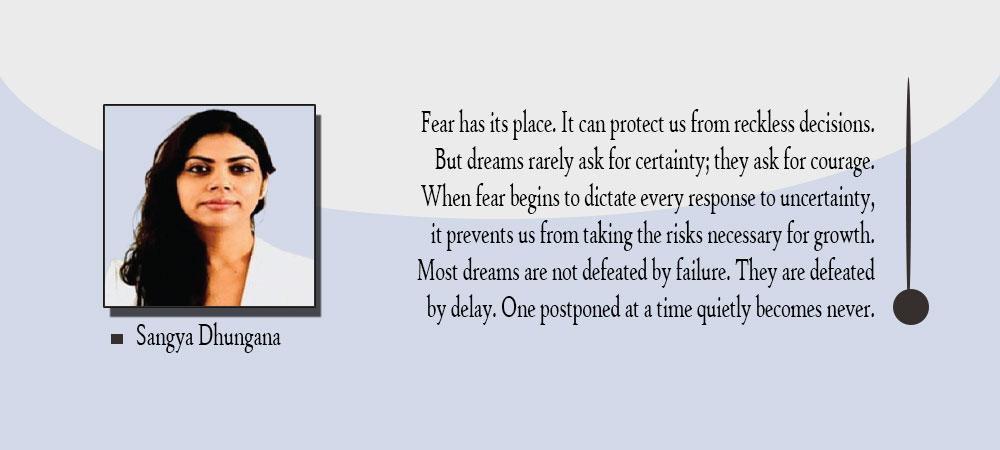
Ultimately, most dreams aren't defeated by failure but by the accumulation of delays. Postponement after postponement quietly transforms aspiration into inaction.
(With inputs from RN)
Originally published on abcnews.com.np.






प्रतिक्रिया दिनुहोस्