

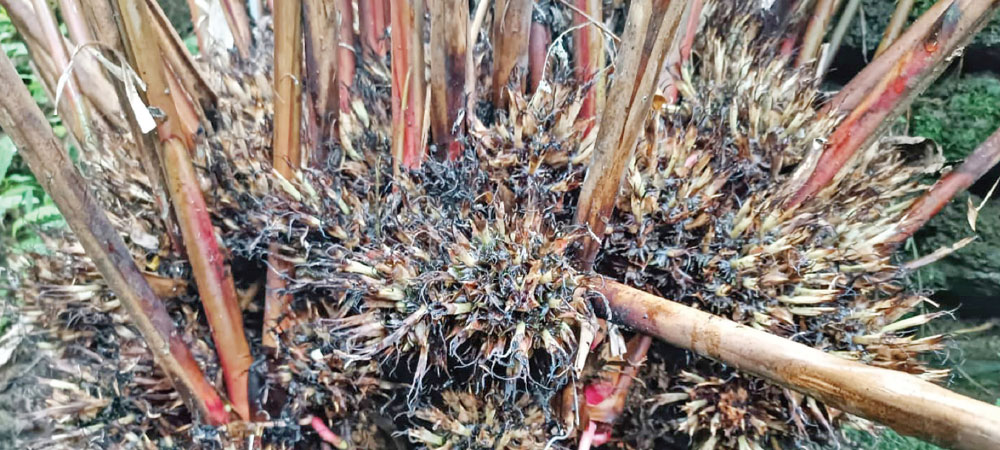
Kathmandu— The new large cardamom harvest in Nepal’s Taplejung district has begun trading at an encouraging Rs. 95,000 per man (40 kg), according to local traders and farmers. The crop started arriving in markets two to three days ago, offering a positive outlook for producers as the peak season approaches. This initial price represents a substantial increase over last year’s opening rate, boosting hopes for even higher earnings throughout the harvest period. Taplejung is Nepal's largest cardamom-producing district, with cultivation occurring across most of its local levels.
Attractive Opening Price Boosts Confidence
Local farmers and traders are encouraged by the strong start to the season. Bhadra Bir Regmi, a trader in Phungling and chairman of the Cardamom Entrepreneurs Association, Taplejung, described the opening price as “a very good sign.” He noted that this year’s initial rate is Rs. 13,000 higher than the Rs. 82,000 per man seen last year. Transactions have reportedly increased over the past few days with the new crop being traded at the current rate.
Price Trends and Potential for Growth
While last year’s price began at Rs. 82,000 per man before rising to over Rs. 105,000, farmers are optimistic about exceeding those figures this season. In the previous year, high-quality cardamom reached as much as Rs. 114,000 per man during peak trading. Traders anticipate that large-grained and high-quality cardamom will fetch an additional Rs. 5,000 to Rs. 7,000 per man compared to ordinary produce.
Expansion of Cardamom Cultivation
Taplejung remains the leading district in Nepal for both area under cultivation and overall production of cardamom, serving as a major cash crop for many local farmers. The spice is grown throughout most wards within the district’s nine local levels, with the exception of Ward No. 7 of Phaktanglung Rural Municipality. To further support this key agricultural sector, Phaktanglung Rural Municipality recently distributed approximately 445,000 cardamom seedlings to farmers in six wards.
Seedling Distribution Program
The distributed seedlings included the Bharlang, Dambarsai and Ramsai varieties, sourced from Ilam. Rajan Limbu (Mukti), chairman of Phaktanglung Rural Municipality, explained that the distribution was part of the ‘One Ward, One Product’ program, with 317,600 seedlings belonging to the Bharlang variety.
The main cardamom harvesting season in Taplejung is expected to peak in October and November, offering further opportunities for price increases and economic benefit to local farmers.
(With inputs from RN)
Originally published on abcnews.com.np.




प्रतिक्रिया दिनुहोस्