

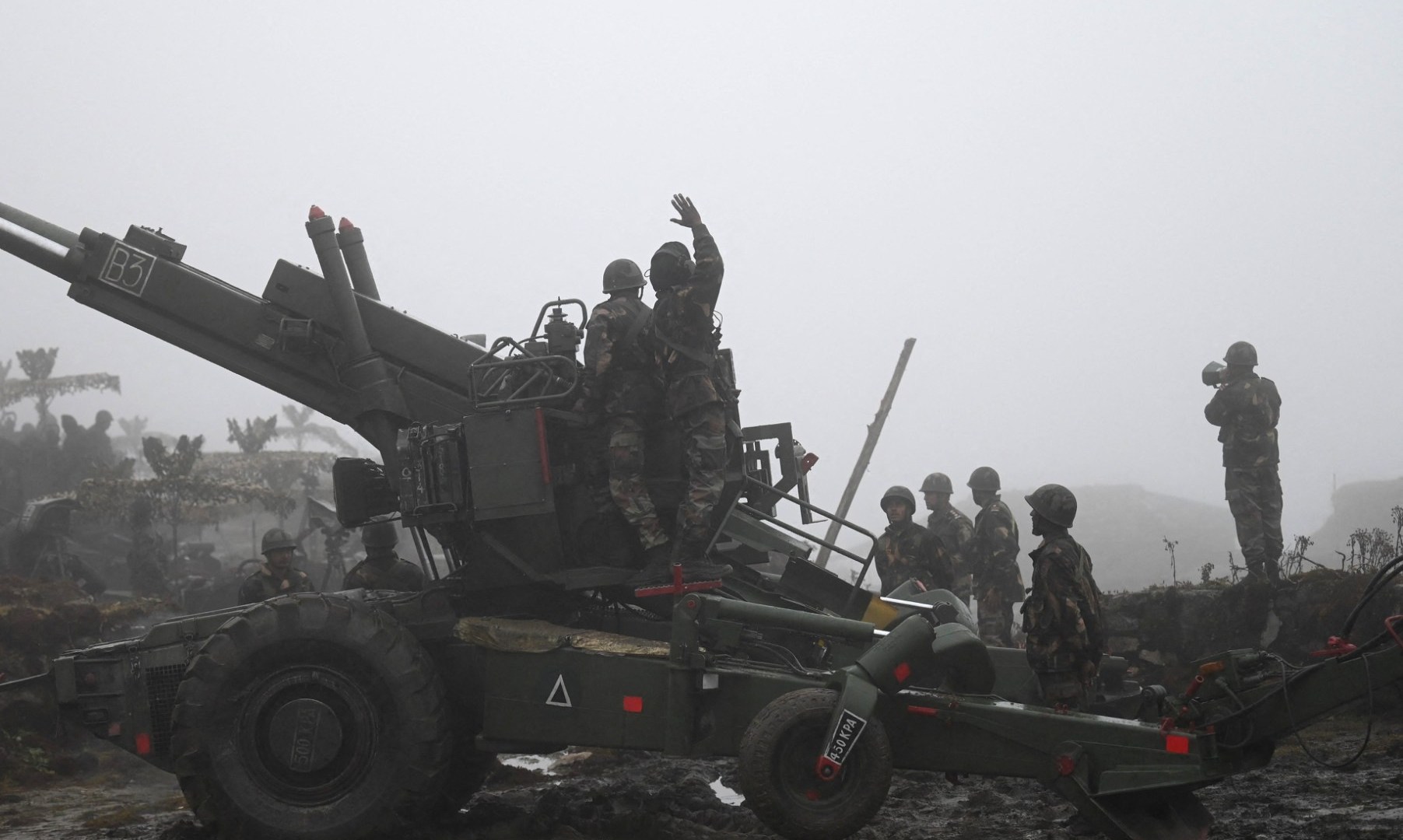
Kathmandu— India and China are facing renewed tensions along their 3,488-kilometer border after a report alleged Chinese encroachment into India’s northeastern state of Arunachal Pradesh. A team of regional politicians allied with Prime Minister Narendra Modi’s government claims that Beijing is denying Indian forces access to key patrolling points and gradually expanding its presence in the area, sparking political criticism within New Delhi. The allegations come weeks before Chinese President Xi Jinping is expected to visit India for the BRICS summit and amidst ongoing disputes over the Line of Actual Control (LAC), the de facto border between the two nations.
Findings of the Fact-Finding Team
Following reports of alleged encroachment, the People’s Party of Arunachal Pradesh (PPA) dispatched a four-member team to investigate the situation in the remote Taksing area. The team found that Indian armed forces are hampered by inclement weather – including floods and landslides – from patrolling the region between April and October. Conversely, they reported that Chinese forces “continue to remain active throughout” this period, raising concerns about India’s defensive capabilities.
The report also claims local residents informed the team that Indian forces abandoned a border patrol point, Shera 5, following a confrontation with China’s People’s Liberation Army (PLA) in 2023. Kaling Jerang, Vice President of the PPA, stated that locals are angered by the loss of ancestral hunting grounds and described the encroachments as gradual but persistent, accusing both national and state BJP governments of inaction.
Official Responses from India and China
The Indian army has dismissed media reports of Chinese encroachment as “incorrect and without any basis.” However, the Indian Foreign Ministry offered a more cautious response. Randhir Jaiswal, spokesperson for the ministry, emphasized that New Delhi considers border issues “most serious” and that maintaining peace and tranquility in these areas is paramount. He also stated that the state of border affairs will impact overall bilateral ties.
Beijing has similarly responded with caution, neither confirming nor denying the new tensions. Foreign Ministry spokesperson Guo Jiakun said the China-India border situation is generally stable, noting that both countries recently held their 36th meeting on Border Affairs and agreed to maintain communication through diplomatic and military channels.
Historical Roots of the Border Dispute
The current dispute stems from differing interpretations of the border between India and China. In 1914, British India and Tibet signed the Simla Convention, establishing the McMahon Line as their boundary. However, China, which came under communist rule in 1949, rejects this line, arguing it wasn’t involved in the negotiations and claims the entire state of Arunachal Pradesh as “South Tibet.”
The two countries agreed in 1962 to recognize the Line of Actual Control (LAC) as a de facto boundary while negotiating a broader settlement. However, they haven't even been able to agree on where the LAC lies, leading to frequent patrols entering areas claimed by the other side. Tensions have flared up in recent years along multiple sectors of the LAC, including clashes in Ladakh and Sikkim.
Economic Ties Amidst Tension
Despite ongoing border disputes, bilateral trade between India and China has significantly increased over the past decade, reaching $151.1 billion in the 2025-26 financial year – more than double the amount in 2016-17. This growth is largely driven by Indian imports from China, which have risen sharply while exports remain comparatively low.
The United States recently identified India as a potential participant in a “shadow transhipment network” allegedly used to circumvent American sanctions and tariffs on China. Experts note that despite the tensions, economic engagement continues alongside strategic competition, characterizing the relationship as ‘managed competition’ rather than genuine normalization.
The situation remains fluid, with both sides emphasizing the need for continued dialogue through diplomatic and military channels. The upcoming BRICS summit in India may provide an opportunity for further discussions between New Delhi and Beijing.
(With inputs from Al Jazeera)
Originally published on abcnews.com.np.




प्रतिक्रिया दिनुहोस्