

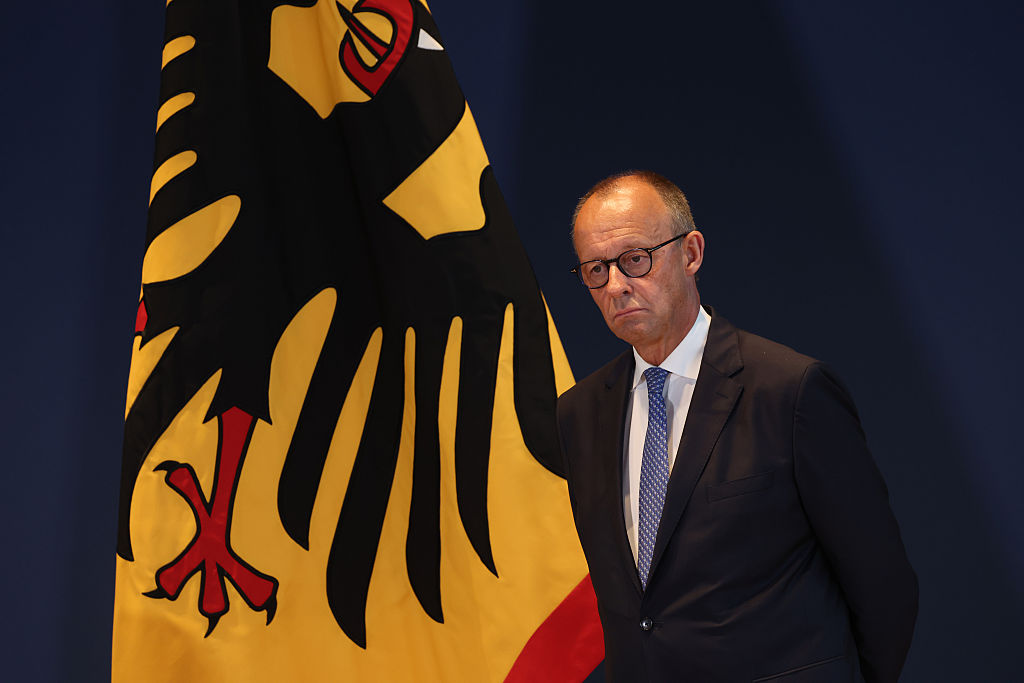
Kathmandu— Germany is bracing for a potential political shift as next month's state elections in Saxony-Anhalt, Mecklenburg-Western Pomerania, and Berlin could see the far-right Alternative für Deutschland (AfD) gain significant power – potentially even leading a government for the first time since 1945. The ruling Christian Democrats (CDU), led by Chancellor Friedrich Merz, are struggling to counter the AfD’s rising popularity, facing internal divisions and increasingly mirroring some of their rival's policies in an attempt to regain lost ground. This comes as polls indicate a widening gap between the CDU and the AfD nationally, raising questions about the future of Germany’s traditional political alignment.
Erosion of the Political Center
The challenge facing the CDU stems from a broader trend in German politics: the hollowing out of the center. For much of the last two decades, the CDU has frequently governed in “grand coalitions” with the center-left Social Democratic Party (SPD), leading to compromises that have alienated voters on both sides. This dynamic, mirrored in other European countries like Britain and France, has created an opening for extremist parties by weakening traditional mainstream forces. As the CDU and SPD lean on each other to govern, they’ve lost support not only to the AfD but also to Die Linke, a democratic socialist party gaining traction among younger voters.
The ‘Firewall’ Under Strain
Traditionally, Germany's main conservative force has maintained a strict “firewall” against any cooperation with the AfD. However, this principle is now under increasing pressure, particularly at the local and state levels in eastern Germany. While federal leaders remain hesitant, a growing number of CDU representatives are openly discussing the possibility of working with the AfD to avoid political deadlock. This shift reflects the uncomfortable reality that the two parties occupy similar positions on the political spectrum – the center-to-far right – making coalition building with other traditional partners increasingly difficult.
Leadership Challenges and Internal Divisions
Chancellor Merz’s leadership is also facing scrutiny, as his disapproval ratings remain high and his strategy of moving the CDU further to the right has failed to curb AfD support. Some within the party are calling for a change in leadership, with Hendrik Wüst, the state premier of North Rhine-Westphalia, emerging as a potential successor. Wüst represents a more centrist wing of the CDU, aligned with former Chancellor Angela Merkel, and advocates for a course correction away from Merz’s approach.
AfD's Radical Platform
Should the AfD gain power in Saxony-Anhalt, it promises a radical shift in policy. The party’s platform includes abolishing public television and radio, ending mandatory school visits to concentration camps, segregating schools based on disability and nationality, and replacing Christian holidays with pagan-Germanic ones. While such proposals are incompatible with the CDU's values, the party is known for its adaptability when it comes to maintaining power.
Implications for Germany’s Political Landscape
Analysts warn that an AfD victory in Saxony-Anhalt would be more than just a symbolic win. It would grant the far-right party representation in the Bundesrat, the federal chamber representing the states, and further normalize its presence ahead of future elections. The Berlin vote adds another layer of complexity, testing whether the AfD’s appeal can extend beyond its traditional base in eastern Germany.
The upcoming state elections will serve as a critical test for German democracy, potentially reshaping the country's political landscape and forcing the CDU to confront its internal divisions and strategic failures. The outcome could determine whether Germany maintains its postwar consensus against governing with the far right or enters a new era of political polarization.
(With inputs from Jacobin)
Originally published on abcnews.com.np.





प्रतिक्रिया दिनुहोस्