

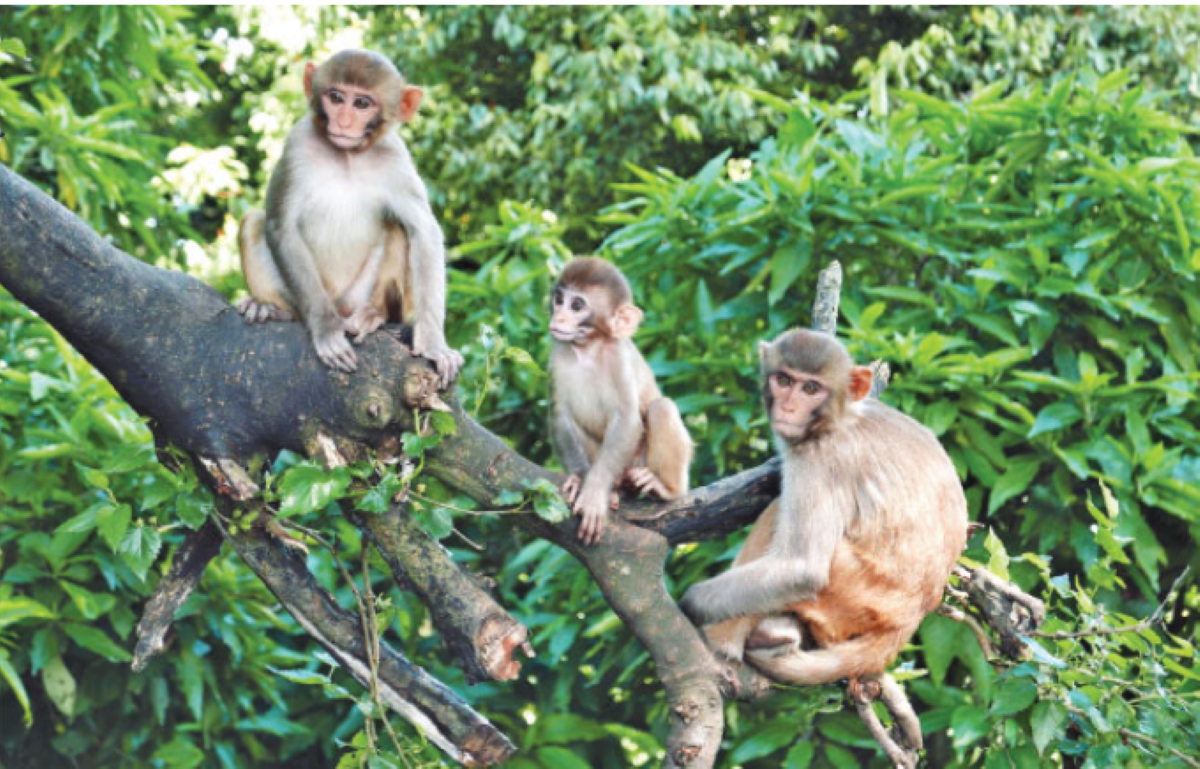
Kathmandu— Farmers in the Bhojpur district of Nepal are struggling with a growing monkey population that is causing substantial damage to crops and fruits throughout the year. The simians readily destroy fields of maize, vegetables, and ripe fruit, leading to significant financial hardship for agricultural families. Areas near forests and remote from settlements experience the most severe invasions, forcing farmers to dedicate considerable time and resources to protecting their livelihoods.
Persistent Crop Raids
Monkeys are causing alarming damage to crops ready for harvest, with maize fields being particularly vulnerable. Once a troop enters a field, it is difficult to save the plants from destruction. Farmers report that monkeys quickly consume and ruin entire harvests, impacting their annual yields.
Farmers’ Response and Concerns
Kumar Raut, a local resident of Bhojpur Municipality-4, emphasized the need for a long-term solution to control the monkey population, stating that immediate measures are insufficient. He explained that farmers must constantly monitor their fields, often requiring multiple family members to stand guard and chase away the animals. Raut also expressed frustration with what he perceives as a lack of government attention to the plight of local farmers.
Limited Mitigation Efforts
Khudrus Minya, Chief of the Division Forest Office in Bhojpur, stated that devices for chasing away monkeys have been distributed to local levels and farmers. However, Minya acknowledged these are only temporary solutions and more effective long-term strategies are needed. The current situation is so dire that some farmers are considering abandoning their settlements due to the continuous crop damage.
Economic and Social Impact
The monkey menace is increasingly becoming both an economic and social problem, disproportionately affecting families reliant on agriculture for their livelihoods. Crop losses are not only impacting income but also threatening food security in affected areas.
Local governments and concerned bodies have been urged to coordinate efforts and develop a long-term plan to control the monkey population, minimize crop damage, and ensure farmers’ sustainable livelihood.
(With inputs from RN)
Originally published on abcnews.com.np.





प्रतिक्रिया दिनुहोस्