

Kathmandu— The promise of improving the quality of life for Nepali citizens is a recurring theme in the nation's political landscape. Successive governments, from those led by BP Koirala and later communist parties, have articulated visions for national betterment, ranging from agrarian self-sufficiency to scientific socialism. However, these ambitions have consistently fallen short due to various challenges, creating a cycle of unmet expectations that the newly elected government now seeks to break with promises of delivering 100 key improvements following their recent parliamentary majority.
Historical Promises and Unfulfilled Dreams
BP Koirala, a prominent leader of the Nepali Congress, envisioned a democratic socialist society centered around the well-being of the common farmer – a secure home, land for farming, livestock, education for children, and access to healthcare. This vision, however, was cut short by a royal overthrow. Later, communist parties proposed a more radical agenda of ‘scientific socialism,’ aiming to eliminate social inequalities and establish a proletariat dictatorship. Despite their differing ideologies, both approaches ultimately failed to deliver lasting improvements in the lives of ordinary Nepalis.
A New Government, Renewed Hope
Following recent elections, a new political force has emerged with an absolute majority in parliament, generating considerable optimism among the population. The new government has pledged to accomplish 100 major tasks aimed at enhancing quality of life, and many citizens are hopeful that this time will be different. This optimism is so strong that questioning the sincerity of these promises often invites immediate backlash from party supporters.
Challenges of Realistic Expectations
Despite the lofty ambitions, there's a sense of confusion regarding what constitutes an achievable quality of life within Nepal’s constraints. Some aspire to European or American living standards, while others look to neighboring India and China as benchmarks. However, the author argues that Nepal’s limited resources make reaching these levels unrealistic. A key dilemma lies in balancing socialist ideals with the realities of a consumer culture driven by capitalist principles.
Economic System and Mode of Production
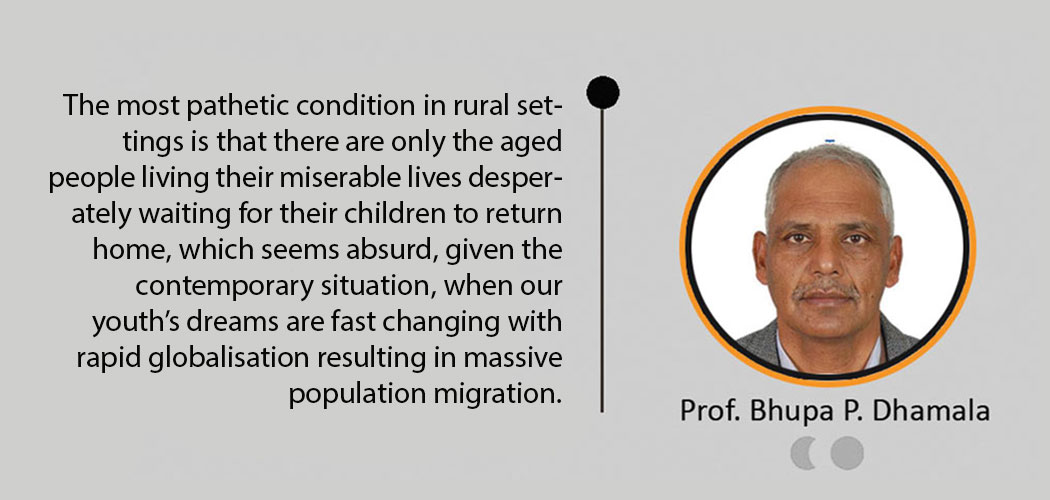
The article highlights confusion surrounding Nepal's economic path – whether to prioritize capitalism, where living standards are tied to capital ownership, or socialism, reliant on state intervention. Furthermore, there’s uncertainty about the future mode of production: a modernized agricultural system or an industrialized urban economy. The author points to a concerning trend of rural depopulation as young people migrate in search of opportunities, leaving behind aging populations and abandoning traditional ways of life.
Improving quality of life is presented not as a fleeting ambition but as a complex undertaking requiring careful planning and consistent implementation, a challenge the new government must address to avoid repeating past failures.
(With inputs from RN)
Originally published on abcnews.com.np.





प्रतिक्रिया दिनुहोस्