

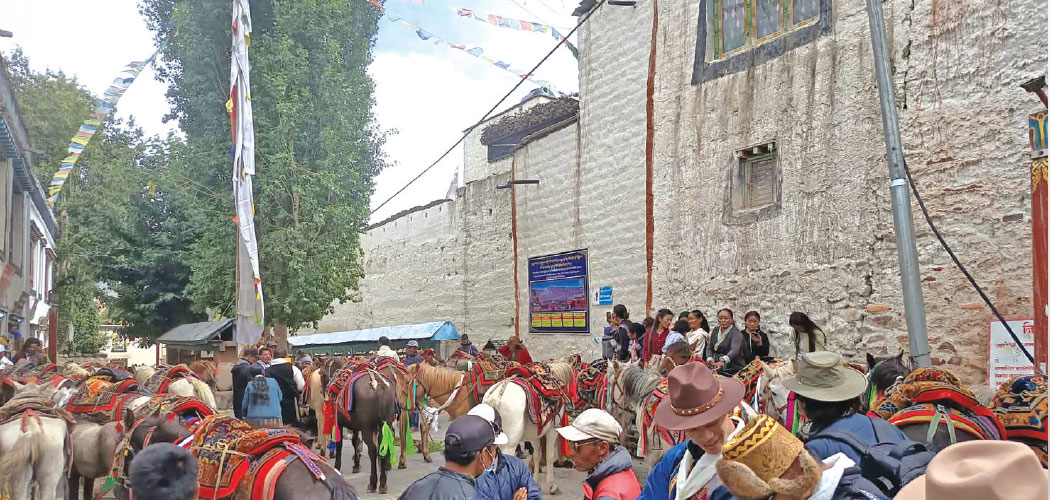
Kathmandu— A vibrant celebration of culture and agriculture is underway in Lomanthang Rural Municipality, Upper Mustang, as the historical Yartung Festival commenced on Monday. Organized by the Rural Municipality in collaboration with the Annapurna Conservation Area Project (ACAP), the festival features traditional horse racing, cultural displays, and religious ceremonies intended to ensure a good harvest and peaceful winter season. The event, which began with a parade led by Jigme Sigme Parawal Bista, the 26th successor to the Mustang throne, is expected to conclude on Wednesday.
Festival Origins and Meaning
The Yartung Festival’s name reflects its connection to the end of the monsoon season; “Yar” signifies rain, while “Tong” indicates its cessation. The date for celebrating Yartung is determined by a Lama Guru following the rainy season, ensuring alignment with agricultural cycles. Locals believe that observing this festival will bring peace and prosperity in the coming winter months and ensure good crops.
Horse Racing as Central Attraction
The Kadam horse racing competition remains the main draw of the Yartung Festival. Held on Tuesday, the race attracts enthusiastic participation from both competitors and spectators. Winners are awarded substantial cash prizes – Rs. 250,000 for first place, Rs. 200,000 for second, and Rs. 100,000 for third. A separate Bharka competition also offers significant rewards: Rs. 150,000, Rs. 100,000, and Rs. 50,000 for the top three finishers.
Community Unity and Tourism Promotion
Tassi Norbu Gurung, Chairperson of Lomanthang Rural Municipality, emphasized the festival’s importance in preserving Upper Mustang's cultural heritage and fostering community bonds. Umesh Poudel, head of the ACAP office in Lomanthang, noted enthusiastic participation from residents of Lomanthang and neighboring rural municipalities. The event also serves as a boost to local tourism, attracting visitors eager to experience the unique traditions of the region.
The Yartung Festival continues to be a significant cultural event for the people of Upper Mustang, with its fifteen-century history deeply interwoven with their identity and way of life.
(With inputs from RN)
Originally published on abcnews.com.np.


प्रतिक्रिया दिनुहोस्