

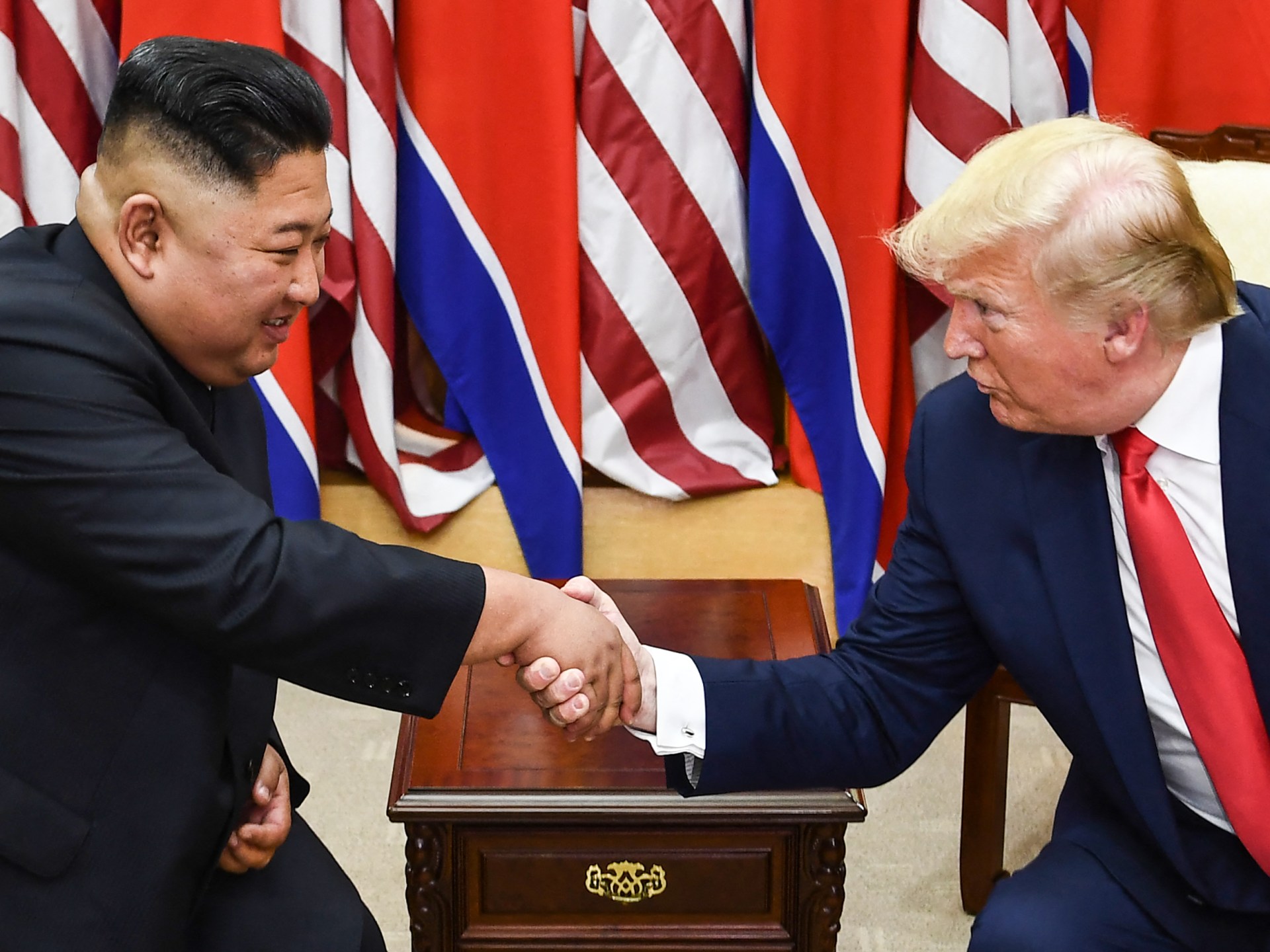
Kathmandu— US President Donald Trump has once again signaled interest in engaging with North Korean leader Kim Jong Un, praising him and scaling back military drills with South Korea—a move analysts say is designed to pressure Seoul over its stance on Iran and potentially secure economic concessions. The shift comes as Trump seeks a foreign policy win ahead of the midterm elections, despite unresolved conflicts regarding Iran and Ukraine, and follows a pattern of transactional diplomacy characterized by leveraging alliances for perceived benefits. Experts suggest this renewed outreach to Pyongyang could be an attempt to demonstrate diplomatic flexibility while simultaneously exerting influence over South Korea's financial commitments and strategic alignment.
A History of Engagement and Setbacks
Trump’s initial foray into North Korean diplomacy began in 2017 with threats of “fire and fury,” but culminated in a historic first meeting with Kim Jong Un in Singapore in 2018. The two leaders agreed to pursue the “complete denuclearisation” of the Korean Peninsula, though subsequent talks in Hanoi and at the DMZ failed to yield further progress. Despite these setbacks—and North Korea’s continued development of its nuclear arsenal—Trump maintains a positive view of his relationship with Kim, describing it as “unthreatening and respectful.” Yong-Chool Ha, director of the Center for Korean Studies at the Henry Jackson School of International Studies, believes Trump may now see an opportunity to succeed where he previously failed, free from what he perceives as undue criticism from advisors like John Bolton.
Leverage and Alliances in Question
The decision to scale back joint military exercises with South Korea—Ulchi Freedom Shield—has raised concerns in Seoul, which relies on the drills for deterrence against North Korean aggression. Trump publicly linked this move to South Korea’s reluctance to support US policy towards Iran, stating that Washington “can’t go around and protect all of these countries” without reciprocal assistance. Analysts suggest this reflects a broader pattern of transactional diplomacy, where Trump seeks tangible benefits from allies in exchange for security guarantees. Rachel Minyoung Lee, senior fellow for the Stimson Center’s Korea Program, noted that Trump may be using the drills as leverage to expedite South Korean investment and potentially increase its contribution to defense costs.
Shifting Strategic Priorities
Eugene Park, a historian of East Asia at the University of Nevada, points to changing geopolitical realities influencing Washington's approach. “The United States today faces greater demands on its military resources than it did during Trump’s first term,” he explained, citing ongoing commitments in the Middle East and concerns about force readiness. The conflict involving Iran has further complicated the strategic landscape, prompting the US to prioritize avoiding additional crises. This shift in priorities may explain the willingness to potentially reassess long-standing alliances and military postures on the Korean Peninsula.
North Korea's Conditions for Engagement
Despite Trump’s overtures, significant obstacles remain to a renewed dialogue with North Korea. Pyongyang does not trust Washington and has consistently criticized US foreign policy, particularly following recent events in Iran. Kim Jong Un has also made clear that any resumption of friendly ties hinges on the US recognizing North Korea's nuclear status—a demand that appears unlikely to be met. According to Minyoung Lee, even for Trump, acknowledging North Korea’s nuclear capabilities would be a “very tall order.”
While Trump seems intent on re-engaging with Kim Jong Un and pressuring South Korea simultaneously, the prospects for substantive progress remain uncertain given North Korea's firm stance and existing geopolitical complexities.
(With inputs from Al Jazeera)
Originally published on abcnews.com.np.


प्रतिक्रिया दिनुहोस्