

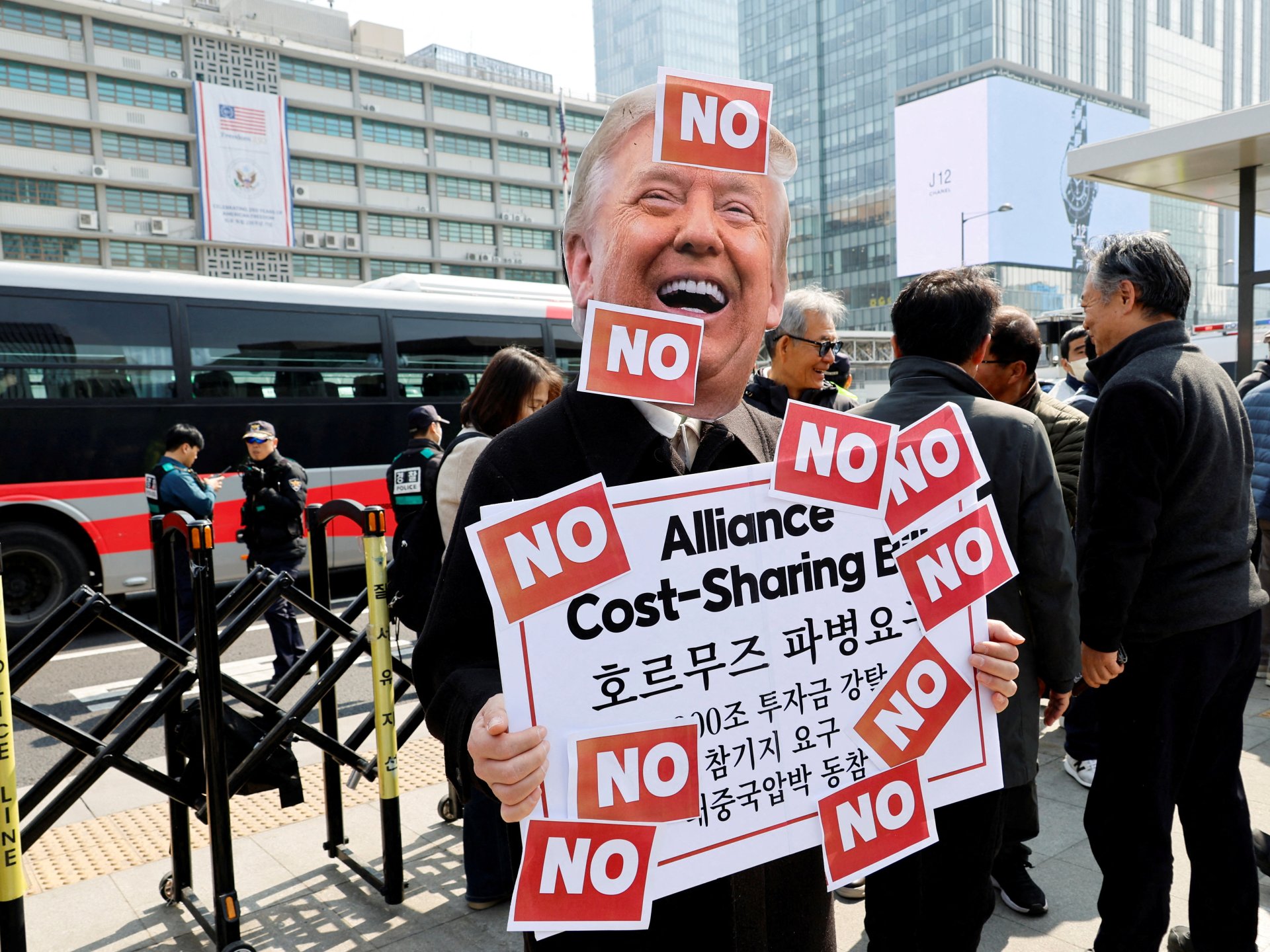
Kathmandu— The long-standing alliance between the United States and South Korea is facing a new test after President Donald Trump unexpectedly ordered a reduction in planned joint military exercises, announcing the move via social media. The decision, made without prior consultation with Seoul, has triggered alarm in South Korea, reviving doubts about Washington’s commitment to its defense and prompting calls for a reassessment of Seoul's position on the US approach to Iran. The abrupt shift occurred as South Korea marked its liberation from Japanese colonial rule and prompted emergency meetings between military officials in both countries, ultimately resulting in a shortened and scaled-back exercise.
Sudden Shift Sparks Confusion
The order to reduce military drills arrived not through diplomatic channels but via a post on President Trump’s Truth Social platform. He described the exercises as sending an “inappropriate and hostile” signal to North Korea, adding that Seoul had declined to support the US and Israel's stance regarding Iran. This announcement caught South Korean officials off guard, prompting a scramble for clarification in both Washington D.C. and Seoul. The Pentagon stated it was working to implement the directive, while General Xavier Brunson, commander of US Forces Korea, met with Defense Minister Ahn Gyu-back at the Ministry of Defence.
Reignited Debate Over Security Guarantees
The developments have sparked anxiety and anger in South Korea, reigniting a debate over the reliability of a security guarantee that has been central to the country’s defense strategy since the 1950-53 Korean War. President Lee Jae Myung attempted to project calm, reaffirming the importance of the US-South Korea alliance while also calling for “strengthening” South Korea’s “self-reliant defence capabilities.” He later signaled a willingness to contribute to restoring freedom of navigation in the Strait of Hormuz, hinting at potential “practical contribution measures.”
However, lawmakers expressed concerns. Foreign Minister Cho Hyun told Parliament that Seoul received no advance notice of Trump's decision, and aides indicated the National Assembly’s defence committee was preparing a formal response. Social media users voiced frustration and anger, with some questioning the US commitment to its allies.
Policy on Iran Fuels Tensions
Trump openly criticized South Korea for not joining the US and Israel in taking action against Iran, stating that the US provides security from North Korea while Seoul declines to offer support on a “very easy military operation.” Public opinion in South Korea is divided on the issue of Iran, with recent polling showing roughly 38 percent supporting backing the US, 36 percent advocating neutrality, and 16 percent opposing US involvement. Opposition leader Jang Dong-hyeok accused Lee’s administration of causing a “diplomatic disaster” and potentially dismantling the alliance, warning that Trump could even push for a full withdrawal of US troops.
Historical Precedent and Future Outlook
This situation echoes past instances during Trump's first term when joint exercises were scaled back following his 2018 summit with North Korean leader Kim Jong Un. Experts suggest the predictability Seoul once assumed from Washington can no longer be taken for granted, noting that South Korea’s willingness to align with US expectations will influence future security commitments. Cha Du Hyeogn, vice president of the Asan Institute for Policy Studies, pointed out unresolved trade negotiations may also be contributing to the strain in relations.
The episode has revived a longstanding debate over whether South Korea should pursue its own nuclear weapons, though experts caution against an immediate overreaction and suggest compromise may be necessary to maintain a reliable US security commitment. Many remain hopeful that a potential thaw between Trump and Kim Jong Un could lead to a more stable peace on the Korean Peninsula.
(With inputs from Al Jazeera)
Originally published on abcnews.com.np.



प्रतिक्रिया दिनुहोस्