

Kathmandu— Tuberculosis (TB), a widespread bacterial infection caused by the Mycobacterium tuberculosis complex (MTBC), remains a significant public health challenge globally and within Nepal despite advances in diagnostics and clinical care. While traditionally considered a human disease, growing evidence reveals that TB can transmit between animals and humans – a phenomenon known as zoonotic TB – with potentially serious consequences for both populations. Studies have detected various MTBC members in species like Asian elephants, rhinoceroses, cattle, and buffaloes within Nepal, highlighting the complex interplay of infection across species and the need for improved surveillance.
Complexities Of Zoonotic Transmission
The MTBC encompasses a range of Mycobacterium species, some of which exhibit host specificity while others demonstrate zoonotic potential, spilling over from animals like livestock and wildlife to humans. This is particularly concerning in Nepal’s dairy sector, where cattle and buffaloes are primary sources of milk production. Ill-managed slaughterhouses with inadequate monitoring reveal that as many as 14 percent of buffaloes show signs of tuberculosis lesions. The presence of both *M. tuberculosis* and *M. bovis* in both human and livestock populations underscores the risk of transmission between species.
Diagnostic And Treatment Challenges
A critical gap in Nepal’s TB control efforts is the lack of a system to distinguish between human TB caused by *Mycobacterium tuberculosis* and that caused by *M. bovis*. This matters because *M. bovis* exhibits natural resistance to pyrazinamide, a key drug used in standard first-line anti-TB treatment regimens. Consequently, patients may receive suboptimal therapy leading to delayed recovery and reduced effectiveness. Furthermore, zoonotic TB often manifests in extrapulmonary sites where drug penetration is limited, complicating diagnosis and management.
Need For Enhanced Surveillance And Collaboration
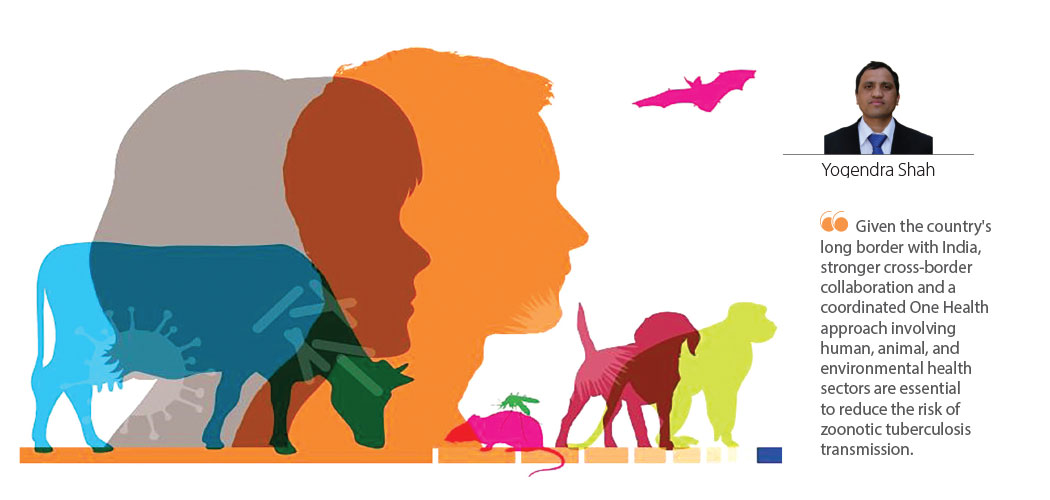
Researchers emphasize the need for comprehensive surveillance incorporating both active and passive approaches, alongside biological investigations, to clarify epidemiological patterns and transmission dynamics of zoonotic TB. Strengthening Nepal’s National Tuberculosis Control Programme and expanding access to affordable molecular diagnostic tools like LAMP and Truenat are crucial steps towards early detection and monitoring. Given Nepal's extensive border with India, stronger cross-border collaboration is also essential for a coordinated One Health approach – integrating human, animal, and environmental health sectors.
One Health Approach Gains Momentum
The concept of “One Health,” where professionals from human and animal health work together to address global health challenges, is gaining traction worldwide. Implementing a similar capacity within Nepal would be timely, given that approximately 75 percent of emerging or re-emerging diseases affecting humans originate in animals. Early identification and response to dangerous pathogens in animals before they pose significant threats to human health are paramount.
Addressing the threat of zoonotic TB requires a multi-faceted approach encompassing improved surveillance, accurate diagnostics, tailored treatment strategies, and strengthened collaboration between public health and veterinary authorities.
(With inputs from RN)
Originally published on abcnews.com.np.






प्रतिक्रिया दिनुहोस्