

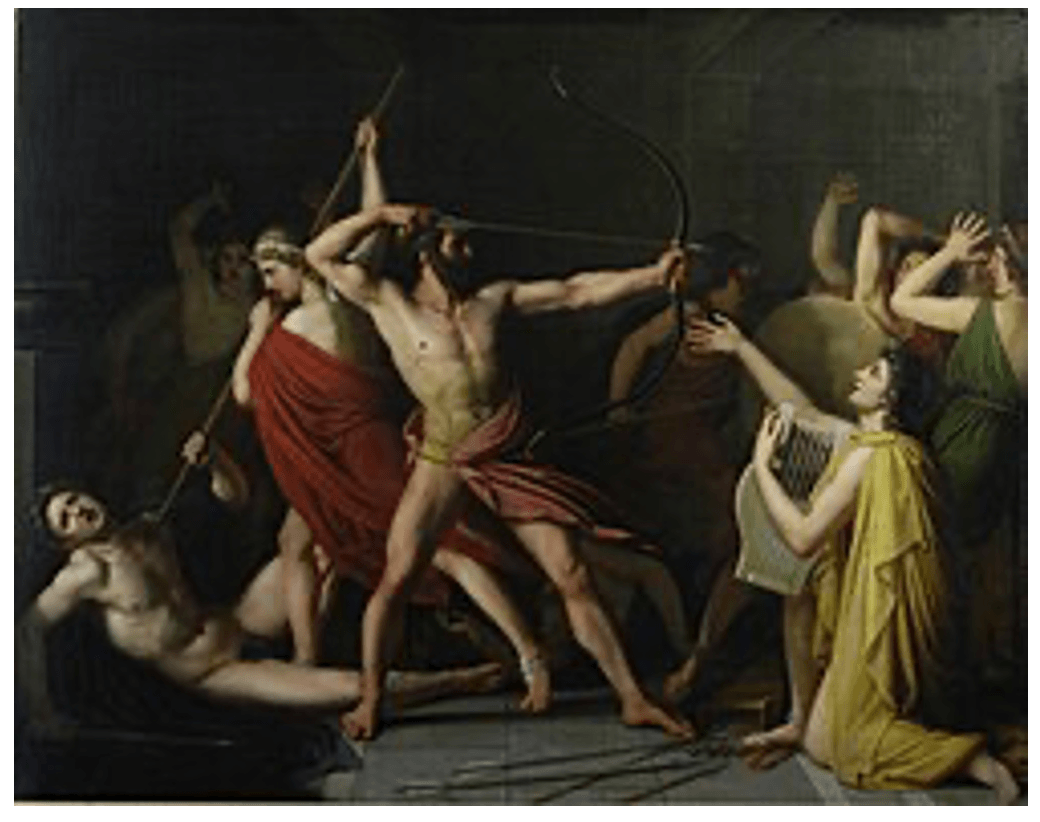
Kathmandu— The epic poems of Homer, the 'Iliad' and the 'Odyssey,' are foundational texts of Western literature, long believed to be products of purely Greek origin. However, growing historical evidence suggests a significant influence from ancient Mesopotamian civilization – particularly Babylon – on these cornerstone works. From linguistic roots in Akkadian to potential origins for character names and even plot elements, recent scholarship proposes that the story of Odysseus and the Trojan War may owe more to the East than previously understood.
The Eastern Cradle of Greek Culture
For centuries, European scholars championed a notion known as the “Greek Miracle,” positing that ancient Greece arose almost spontaneously as the birthplace of Western civilization. This view is increasingly challenged by historians who recognize the profound impact of older civilizations like Mesopotamia, which flourished in Sumer and reached its zenith under Babylonian rule around 1792–1750 BCE. The idea that ‘light’ emanated from the East to illuminate Greece—encapsulated in the aphorism *Ex Oriente Lux*—is gaining traction as researchers uncover deeper connections between the two cultures.
Linguistic Echoes of Mesopotamia
The transfer of Mesopotamian culture to Greece wasn't solely through material goods or grand architectural designs; it also occurred on a linguistic level. Akkadian, an Afro-Asiatic language, significantly influenced Greek vocabulary, particularly during the period when Ionian Greece served as a conduit for Eastern influences. This influence is evident not just in general lexicon but specifically within the names and terms used throughout Homer’s epics.
Unpacking Names: From Odysseus to Penelope
Giovanni Semerano, an Italian paleolinguist specializing in Mesopotamian languages, has meticulously demonstrated potential Akkadian origins for key figures and places in the 'Odyssey.' The name “Homer” itself may derive from *zammeru*, the Akkadian word for ‘singer’ or ‘bard,’ fitting given the oral tradition surrounding the epic poems. Similarly, Odysseus's name appears to combine Akkadian terms signifying ‘wise person,’ ‘experienced one,’ and ‘guide.’ Even Penelope, Odysseus’s faithful wife, potentially has roots in Akkadian words denoting ‘true heart.’ The very name “Ionia,” historically used to refer to Greeks living along the Aegean coast of Anatolia, originates from the Akkadian *uwanu*, initially a somewhat pejorative term for people from Anatolia.
Troy and Its Mesopotamian Connections
The city of Troy, central to the 'Iliad,' also reveals potential Mesopotamian influences. Ilion, another name for Troy, connects to the Akkadian noun *ilum*, meaning ‘upper part of a city’ or ‘citadel,’ accurately describing its fortified hilltop location. The name “Troy” itself may stem from the Akkadian verb *tarum*, signifying ‘to circle with a wall,’ highlighting the city's defensive structure. These linguistic connections suggest that the very foundations of the Trojan War narrative might be rooted in Mesopotamian terminology and concepts.
These findings offer a compelling re-evaluation of the origins of Greek literature, suggesting that the 'Odyssey' and 'Iliad,' while undeniably Greek in their expression, were shaped by a complex interplay of cultures stretching back to the ancient civilizations of Mesopotamia. Further research continues to illuminate these connections, deepening our understanding of the shared heritage of Western civilization.
(With inputs from CounterPunch)
Originally published on abcnews.com.np.






प्रतिक्रिया दिनुहोस्