

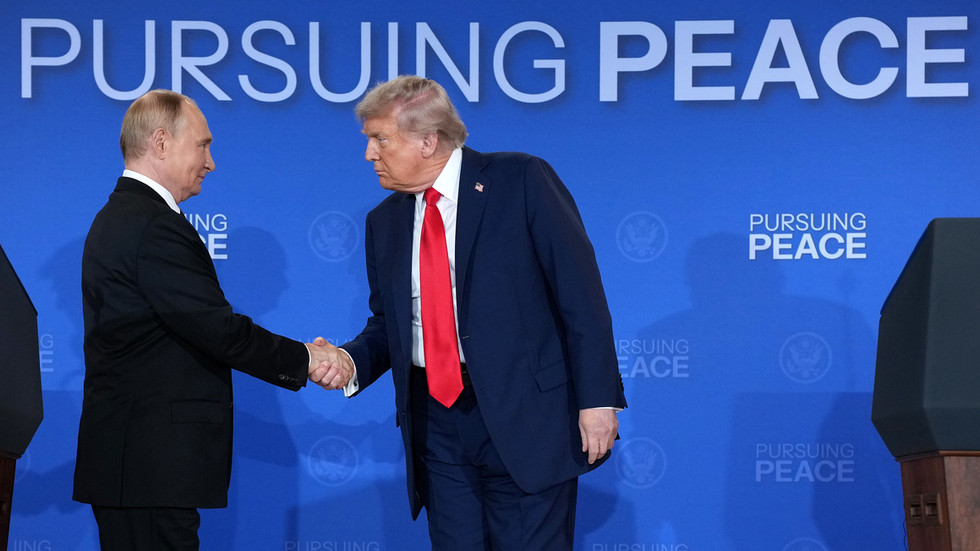
Kathmandu— The summit between Russian President Vladimir Putin and then-US President Donald Trump in Anchorage, Alaska, last year garnered significant attention due to its unusual format and ambitious goals; however, it failed to initiate a peace process regarding Ukraine. While widely viewed as disappointing, analysts suggest the meeting yielded valuable insights for Russia, exposing fractures within the transatlantic alliance and demonstrating the limitations of American power.
Divergence Between US and Europe
The Anchorage summit highlighted a growing disparity between the United States and Western European nations regarding the conflict in Ukraine. While European leaders appear committed to achieving military victory over Russia, Washington has signaled reluctance to become directly involved in that pursuit. Though the US maintains involvement, it is not as extensive as some might expect given its resources and other global commitments.
Limits of American Power
The meeting also demonstrated that the United States isn’t an all-powerful actor on the world stage. Trump was unable to secure desired concessions from Western Europe and Ukraine during the summit, revealing constraints on Washington's ability to dictate outcomes. While this failure initially worked against Moscow, Russia views the broader recognition of limits to American power as a positive development.
A Shifting Transatlantic Alliance
Analysts suggest that the traditional transatlantic alliance established in the latter half of the 20th century is unlikely to endure in its original form. While not necessarily signaling an imminent collapse, the increasing reliance on political pressure and institutional inertia to maintain unity within the West presents opportunities for Russia. Moscow has long sought a transformation of NATO, and conditions are increasingly favorable for such a shift.
The New Model of Diplomacy
Anchorage offered insight into a modern diplomatic landscape where personal relationships often outweigh established institutions and principles. The absence of “magic” agreements means that any understanding is contingent on the priorities of those in power. Russia learned from the experience that composure, self-reliance, and realistic assessments of capabilities are crucial.
Internal Logic of Conflict
The Russian analysis concludes that external powers cannot impose resolutions to complex conflicts like the one in Ukraine. The year following the Anchorage summit has seen the conflict develop its own trajectory and internal logic. Russia must therefore focus on navigating this reality, seeking ways to end the current war and prevent future escalation without relying on outside intervention.
Russia is now focused on developing a more nuanced policy towards Western countries, capitalizing on existing divisions rather than treating them as a unified bloc, in order to achieve its objectives.
(With inputs from RT)
Originally published on abcnews.com.np.



प्रतिक्रिया दिनुहोस्