

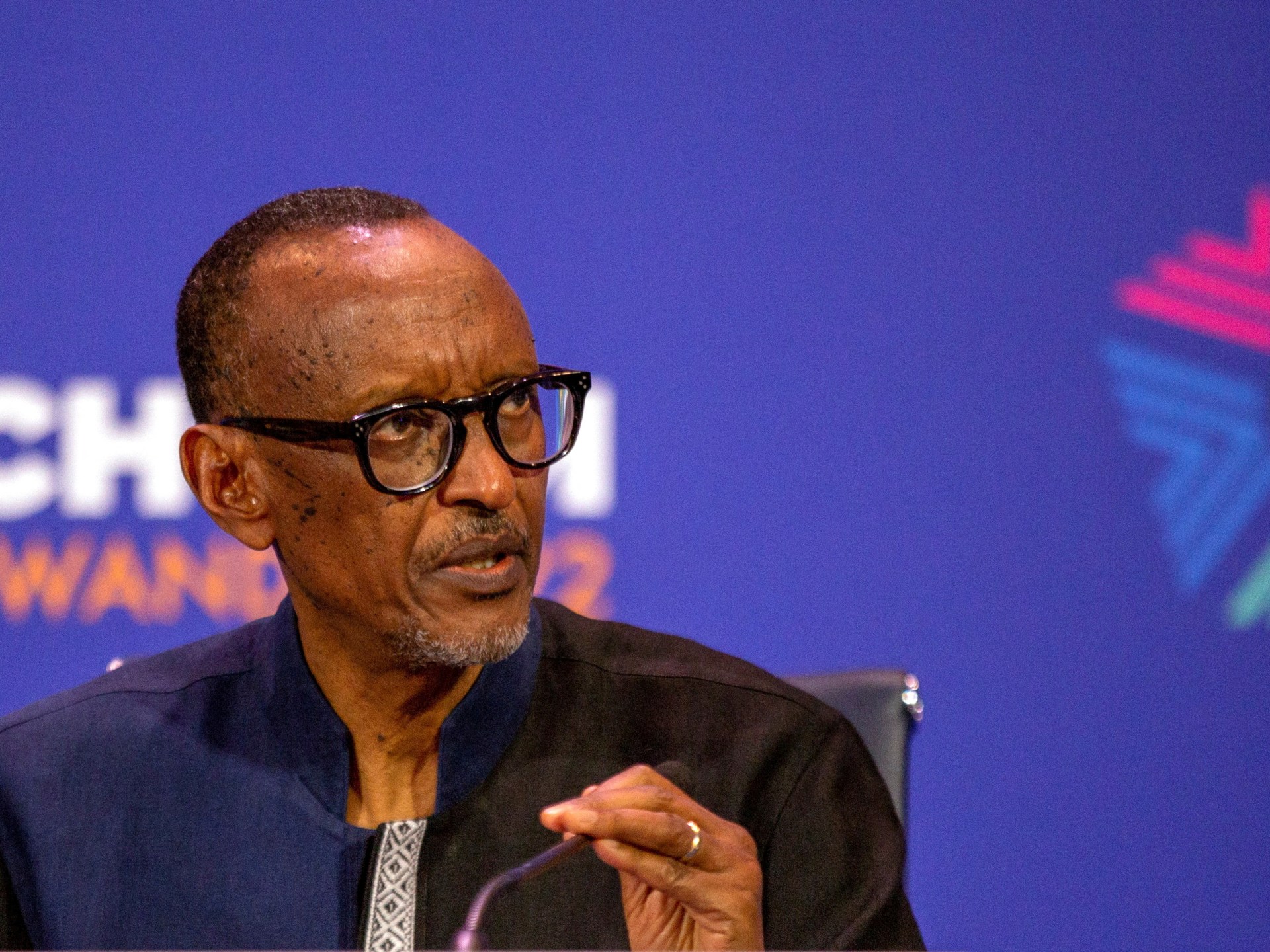
Kathmandu— Rwandan President Paul Kagame has reiterated accusations that the Democratic Republic of the Congo (DRC) supports the Democratic Forces for the Liberation of Rwanda (FDLR), a Rwandan Hutu armed group operating from Congolese territory, and stated this ongoing support necessitates continued Rwandan involvement in the conflict in eastern DRC. Speaking at a news conference in Kigali, Kagame asserted that Rwanda would take necessary measures to ensure its security, citing evidence gathered from former FDLR members who claim Congolese authorities are providing arms and integrating them into their own forces. These accusations come as regional efforts advance to verify a recent ceasefire agreement aimed at de-escalating the long-running conflict.
FDLR Presence Fuels Rwandan Concerns
Kigali maintains that the FDLR, formed from remnants of the Rwandan army accused of involvement in the 1994 genocide against the Tutsi, poses a direct threat to Rwanda’s security. Kagame stated that as long as the FDLR remains active within the DRC, Rwanda will feel compelled to intervene. He claims evidence supporting these accusations includes testimony from former FDLR members who have either voluntarily returned to Rwanda or been captured, all reportedly corroborating the claim of Congolese support.
Counter-Accusations and Regional Dynamics
The DRC, however, counters these allegations, accusing Rwanda of backing the M23 movement, another armed group active in eastern DRC, and deploying Rwandan troops across its border. Rwanda vehemently denies these claims. Kagame highlighted that United States and European missions, as well as those from the United Nations, have visited the Mutobo Demobilisation and Reintegration Centre in northern Rwanda to hear firsthand accounts from former FDLR fighters.
Demobilization Efforts Underway
The Mutobo centre operates under the supervision of Rwanda’s Demobilisation and Reintegration Commission, focusing on disarming ex-combatants arriving from eastern DRC – primarily members of the FDLR – and preparing them for reintegration into civilian life through training and financial assistance. Kagame criticized calls for Rwanda to withdraw from the crisis, arguing that addressing the root cause—the presence and support of the FDLR—should be prioritized.
Recent Peace Agreements and Verification
Efforts toward a peaceful resolution have seen some progress in recent months. On March 18, 2025, Qatar’s Emir Sheikh Tamim bin Hamad Al Thani facilitated a meeting between Kagame and DRC President Felix Tshisekedi, initiating two peace tracks: one focused on Rwandan-Congolese relations and another addressing the internal conflict within the DRC. This led to a peace agreement signed in Washington on June 27, 2025, outlining commitments to end support for armed groups, respect sovereignty, and enhance security cooperation. A separate framework, the Doha Framework Agreement for Peace, was signed on November 15, 2025, between the DRC government and the M23 movement, with Qatar, the US, and the African Union overseeing implementation. On August 20th, a field mission to verify the ceasefire began, supported by MONUSCO, and a delegation arrived in South Kivu province on August 24th.
Continued Focus on Security
Kagame emphasized that protecting Rwanda’s security remains paramount, stating, “The right thing to do is to protect ourselves, and we will do so without fear.” He also expressed Rwanda's willingness to collaborate with regional partners in pursuit of lasting peace.
A delegation tasked with verifying compliance with the Doha peace agreement has arrived in South Kivu province, marking a step forward in implementing the ceasefire, though underlying tensions remain due to ongoing accusations and counter-accusations between Rwanda and the DRC.
(With inputs from Al Jazeera)
Originally published on abcnews.com.np.

प्रतिक्रिया दिनुहोस्