

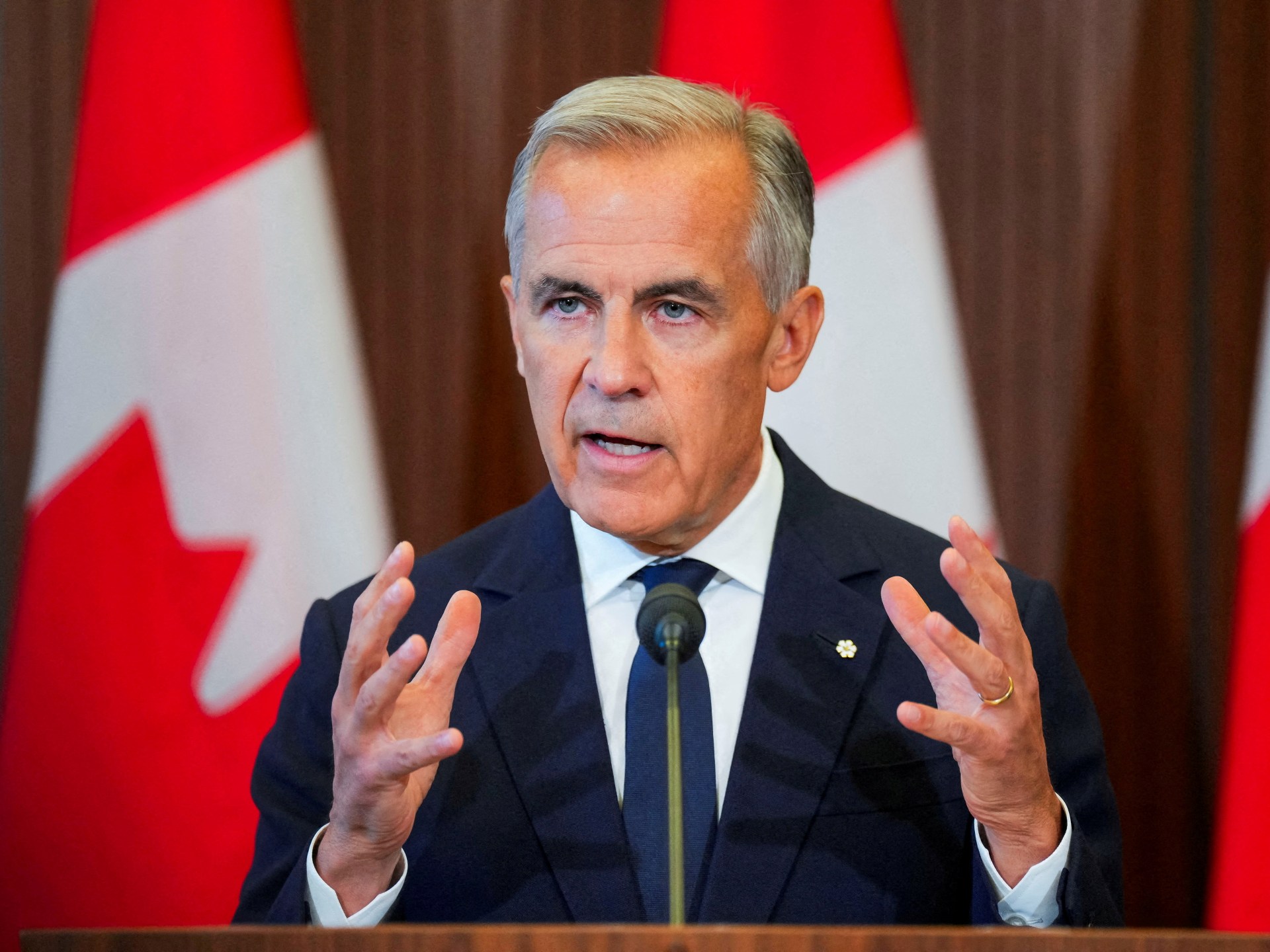
Kathmandu— Canada announced Tuesday it will impose counter-tariffs on $19.9 billion worth of United States goods starting September 8, mirroring new US duties and escalating a rapidly deteriorating trade war between the two nations. The move follows recent tariff hikes by President Donald Trump impacting Canadian products, including autos, and comes after negotiations between Washington and Ottawa collapsed. Canada is also providing $5.42 billion in financial support to businesses affected by the tariffs, targeting sectors like steel, aluminum, dairy, and electronics.
Escalating Trade Dispute
The Canadian government’s announcement matches “dollar for dollar” the new US duties imposed earlier this month, bringing the total value of retaliatory tariffs to $19.9 billion CAD (approximately $14.5 billion USD). Trump initially announced a 50 percent tariff on $20 billion worth of Canadian goods on Saturday, just days after suggesting a trade deal had been reached. He then announced further tariffs on Canadian automobiles set to take effect January 1st. The escalating tensions extend beyond economics, with President Trump reportedly considering renaming Lake Ontario “Lake America” and repeatedly referencing the possibility of annexing Canada.
Financial Support for Businesses
Alongside the imposition of counter-tariffs, the Canadian government unveiled a $7.5 billion CAD ($5.42 billion USD) funding package designed to mitigate financial risks for small- and medium-sized businesses impacted by the trade war. This support aims to help companies navigate the challenges posed by increased tariffs and maintain economic stability in affected sectors. The targeted industries include steel, aluminum, dairy, appliances, agricultural equipment, pulp and paper, plastics, and electronics.
Economic Impact and Market Reaction
The impact of US tariffs is expected to be felt by both American businesses and consumers, with potential price increases on a range of imported goods. Canada is the largest purchaser of US-made cars, potentially putting pressure on American automakers reliant on Canadian demand. A report from the Kiel Institute for the World Economy suggests that US importers and consumers will absorb approximately 96 percent of the tariff burden. Market reaction has been muted; gold prices are trending upwards as a safe investment, while both the US and Canadian dollars have remained relatively stable.
Disputed Trade Balance
President Trump claimed on Tuesday that the US loses $60 billion annually to Canada in trade, but Statistics Canada data indicates a Canadian trade surplus of $7.1 billion CAD with the United States. Al Jazeera reached out to the White House for clarification regarding President Trump’s claim but did not receive a response.
The implementation of these counter-tariffs marks a significant escalation in the US-Canada trade dispute, with uncertain implications for both economies and future negotiations.
(With inputs from Al Jazeera)
Originally published on abcnews.com.np.






प्रतिक्रिया दिनुहोस्