

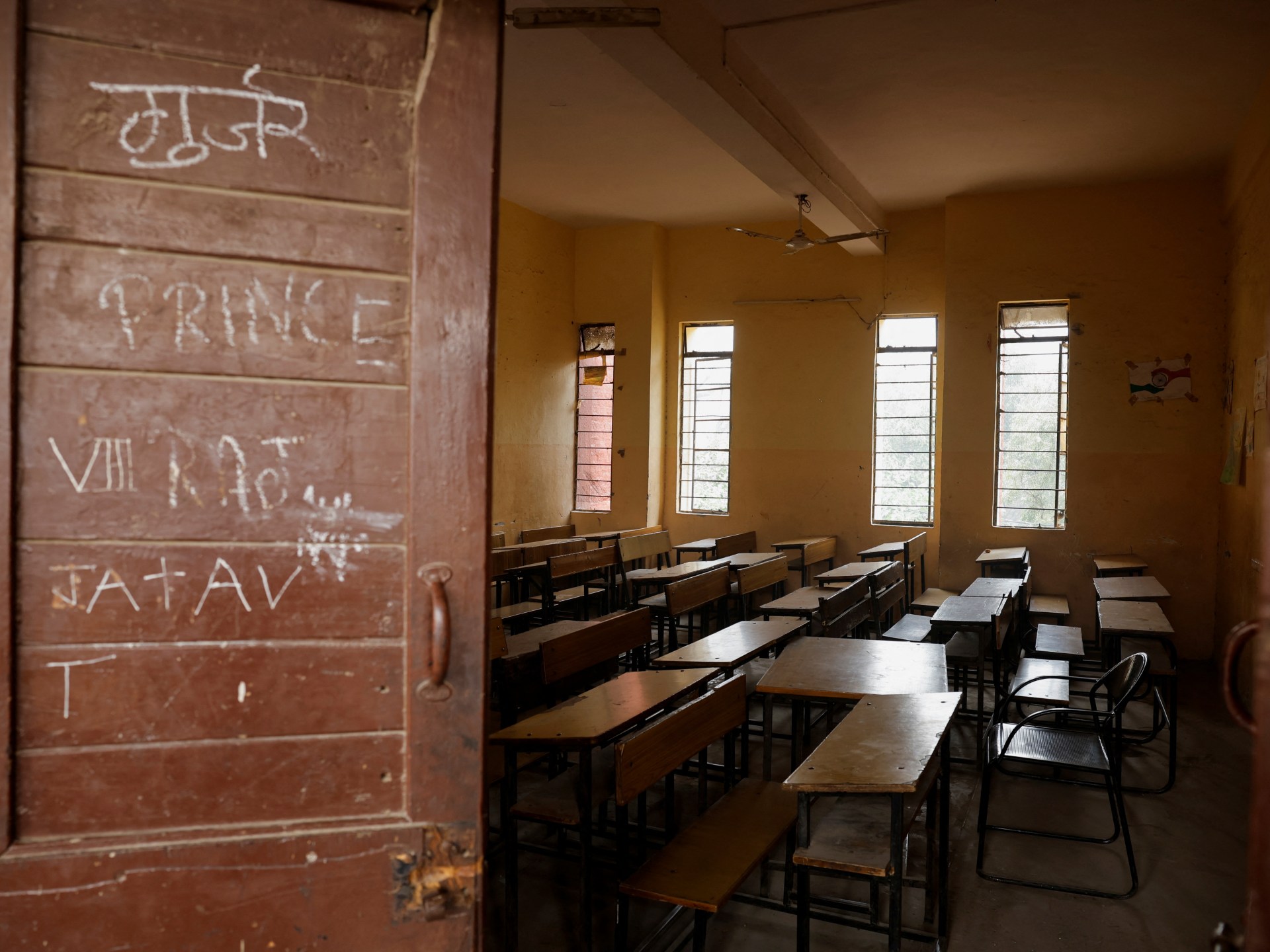
Kathmandu— Six-year-old Pranay Teja collapsed at school in Visakhapatnam, Andhra Pradesh, last Thursday after being reportedly slapped by his kindergarten teacher for not completing his homework. The incident, captured on grainy security footage showing the boy pleading before collapsing onto the teacher, has sparked outrage and renewed scrutiny of corporal punishment in India, more than a decade after it was officially outlawed. Teja’s family alleges a pattern of physical punishment at the private school, while authorities have launched an investigation into his death and formed a committee to examine the circumstances.
A Law Unfulfilled
India banned corporal punishment in schools with the Right of Children to Free and Compulsory Education (RTE) Act in 2010, explicitly prohibiting “physical punishment” and “mental harassment.” The Juvenile Justice Act of 2015 further criminalizes cruelty towards children by those in charge of them. Despite these legal frameworks, corporal punishment persists, particularly in schools serving low-income, rural, and marginalized communities. A 2018 study found that nearly 80 percent of schoolchildren surveyed in Gurugram city reported being beaten several times a week, with many parents approving of the practice.
Implementation Gaps and Legal Loopholes
New Delhi-based lawyer Kawalpreet Kaur points to shortcomings in the law’s implementation as a key issue. “The RTE Act clearly prohibits physical punishment and mental harassment, but it does not create a strong standalone criminal offence,” she said. Cases are often treated as minor incidents of ‘hurt’ or ‘discipline,’ with school authorities frequently protecting teachers and discouraging complaints. Kaur also noted instances where courts have shown reluctance to prosecute teachers, suggesting they “carry a cane” for psychological deterrence.
Historical Roots of Punishment
While many associate corporal punishment with British colonial rule in the 19th century, historian Ruchika Sharma traces its origins back centuries further, linking it to India’s rigid caste system. Ancient texts like the Arthashastra and Manusmriti prescribed punishments based on social hierarchy, with harsher penalties for lower castes. Sharma argues that the British did not invent corporal punishment but rather formalized and systematized it within the education system, building upon existing practices of control and discipline. The East India Company and subsequent British crown utilized flogging and caning as instruments of order, which were then integrated into schools.
Discrimination Amplifies Abuse
Recent incidents highlight how corporal punishment disproportionately affects marginalized communities. In August 2022, nine-year-old Inder Meghwal, a Dalit student in Rajasthan, died after allegedly being beaten for touching a water pot reserved for the teacher. Similarly, a Muslim boy in Uttar Pradesh was reportedly beaten to death by school staff accused of theft, with his mother claiming he was singled out due to his religion. In another case, a teacher instructed her class to slap a seven-year-old Muslim classmate, using derogatory language and inciting further abuse. Experts suggest that these incidents reflect a broader pattern of discrimination fueled by caste and religious biases.
Addressing Systemic Issues
Ratna Singh, a lawyer with the Gen Z-led Cockroach Janta Party (CJP), emphasizes the power imbalance between teachers and students, noting that children rarely complain due to fear of retribution. Kaur argues for mandatory reporting mechanisms, independent complaint systems, and greater attention to patterns of discrimination rather than isolated incidents. She stresses the need to recognize the structural and continuing nature of discrimination as it moves from classrooms to school administrations and courts.
The Andhra Pradesh Education Department has stated its inquiry into Teja’s death is ongoing, with plans for teacher sensitization programs focused on more humane student interactions. However, Teja's family continues to demand accountability and recognition that his death was not an isolated event.
(With inputs from Al Jazeera)
Originally published on abcnews.com.np.


प्रतिक्रिया दिनुहोस्