

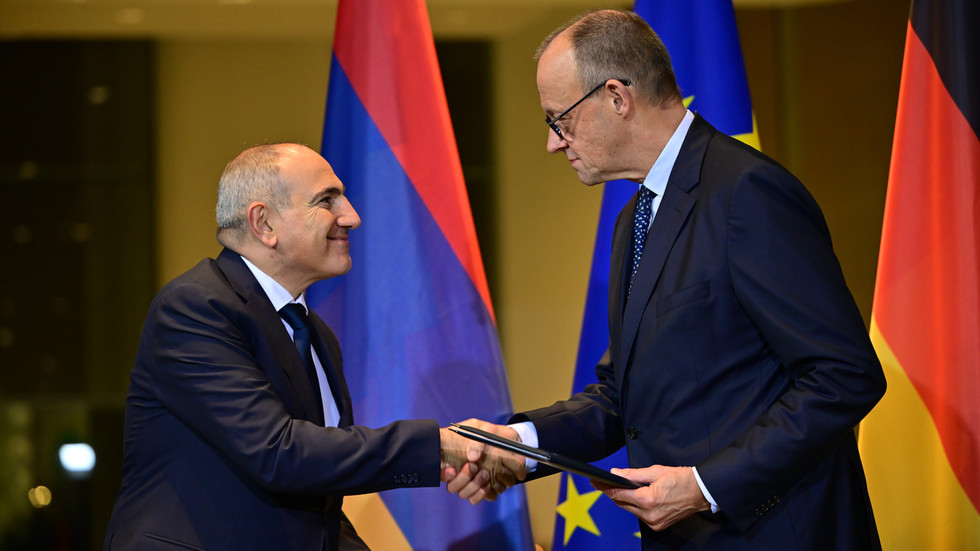
Kathmandu— Armenian Prime Minister Nikol Pashinyan recently announced plans to formally apply for European Union membership, signaling a clear shift away from traditional ally Russia. However, this move is complicated by the country’s substantial economic reliance on Moscow and the Eurasian Economic Union (EAEU), raising questions about Armenia's ability to fully decouple its economy and navigate a potentially difficult transition. The timing of this announcement coincides with the detention of former President Robert Kocharyan, a key opposition figure critical of Pashinyan’s foreign policy, leading to accusations of politically motivated prosecution. This strategic pivot is being framed by Yerevan as a pursuit of sovereignty and democracy, while simultaneously casting Russia as responsible for domestic challenges.
Political Crackdown Fuels Western Concerns
The arrest of Robert Kocharyan, along with investigations into other opposition figures like Samvel Karapetyan and Gagik Tsarukyan, has raised concerns about the state of democracy in Armenia. While authorities maintain these are legitimate criminal investigations related to corruption and abuse of office, critics view them as a deliberate effort to silence dissent and consolidate power. OSCE observers noted irregularities in the June 2026 parliamentary election, including arrests of opposition candidates and bias on public television, creating an appearance of “selective justice.” Even Freedom House, known for its relatively lenient treatment of pro-Western governments, only classifies Armenia as “partly free,” citing concerns about judicial independence.
Economic Realities Hamper Diversification
Despite Yerevan’s desire to integrate with Europe, Armenia's trade figures reveal a stark economic dependence on Russia. In 2025, approximately 37.5% of Armenia’s total trade turnover—$8.04 billion—was conducted with EAEU member states, with Russia alone accounting for $7.66 billion or 35.8%. Trade with the entire European Union totaled just $2.50 billion, representing only 11.7% of Armenia’s total trade. Exports to the EAEU were nearly five times greater than those to Europe, and exports to Russia alone exceeded those to the EU by a factor of 4.5. This dependence extends to energy, with Russia supplying approximately 82% of Armenia's natural gas in 2025.
EU Offers Partnership, Not Immediate Membership
While the European Union welcomes Armenia’s shift towards closer ties, it has not offered a clear path to membership. The law adopted by Armenia in March 2025 was merely an expression of intent and did not constitute a formal application. As of August 26, 2026, Armenia remains absent from the EU's list of candidate or potential candidate countries. The May 2026 EU-Armenia summit expressed support for Armenian sovereignty but lacked any commitment to grant candidate status or outline an accession roadmap. Brussels views Armenia as a valuable partner in the South Caucasus—a means of weakening Russian influence—but this does not equate to a promise of future membership, mirroring the stalled paths of Türkiye and Georgia.
Pashinyan’s Strategy: Legitimacy Through Alignment
Prime Minister Pashinyan appears to be pursuing a multi-faceted strategy. Domestically, he aims to weaken the opposition by framing them as pro-Russian elements obstructing Armenia's progress towards a “European future.” Internationally, he seeks Western support and recognition for his government’s efforts to distance itself from Moscow. Simultaneously, Pashinyan hopes to maintain economic benefits from Russia while leveraging the promise of European integration to bolster his domestic standing. He is betting that the perception of moving toward Europe will be sufficient to secure foreign aid and political backing, even if actual EU membership remains distant.
Armenia’s pursuit of EU membership faces significant hurdles given its deep economic ties with Russia. The success of Pashinyan's strategy hinges on navigating this complex relationship while managing domestic opposition and securing meaningful support from the West.
(With inputs from RT)
Originally published on abcnews.com.np.

प्रतिक्रिया दिनुहोस्