

Kathmandu— Catastrophic flooding triggered by a Himalayan glacier collapse in Tibet has resulted in at least 359 confirmed deaths and left more than 1,300 people missing across Nepal and China’s Tibet region as of Wednesday evening. The event, which occurred around 8:40 am local time, sent a surge of water, mud, and rock through border towns and valleys, destroying infrastructure and homes. Rescue teams are currently facing significant challenges accessing the affected areas due to damaged roads and bridges, with officials anticipating the death toll will continue to rise.
Glacier Collapse and Initial Impact
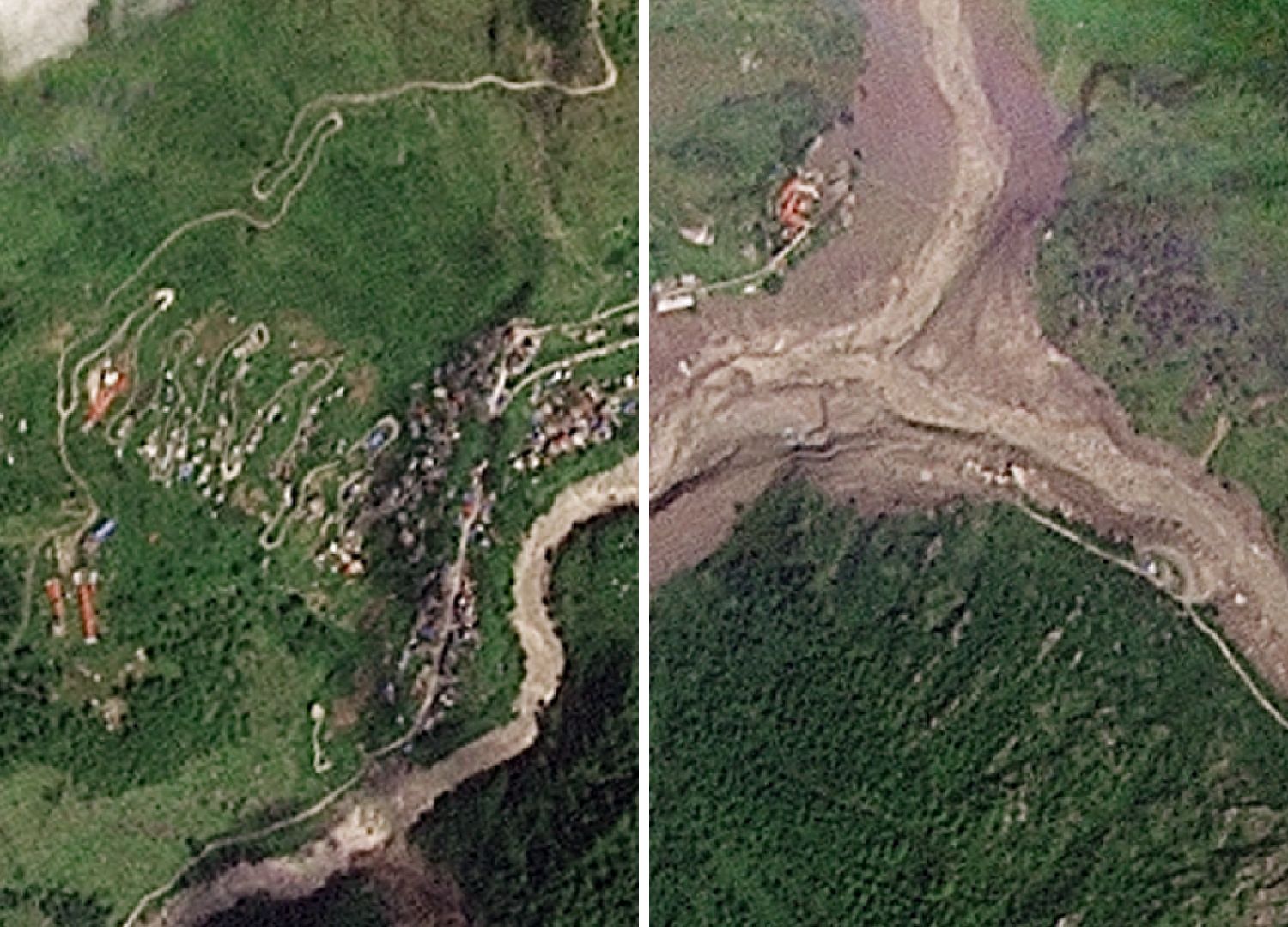
A large section of glacier broke away high above the Lhende river in Tibet on Wednesday morning. The falling ice and rock initially dammed the river before giving way, unleashing a powerful surge that tore through settlements in Nepal’s Rasuwa district. The resulting avalanche struck the river approximately 20 kilometers northeast of the Rasuwagadhi border crossing, causing widespread destruction to homes, hydropower plants, and critical border infrastructure.
Damage Assessment and Rescue Efforts
At least 19 bridges and roughly 40 kilometers of road have been destroyed by the flooding, severely hindering rescue operations. Nepal Police spokesperson Abi Narayan Kafle stated that authorities expect the number of fatalities to increase as search efforts continue in the difficult terrain. Satellite imagery from Planet Labs clearly demonstrates the extent of the devastation, showing buildings and roads washed away and large portions of Syapru Besi village submerged in mud.
Seismic Activity and Cause of Collapse
Initial reports suggested a magnitude 4.4 earthquake may have triggered the glacier collapse; however, the United States Geological Survey later determined that the seismic signal was actually caused by the landslide itself. The force of the landslide registered as a magnitude 5.2 seismic event, highlighting the immense power involved in the disaster.
Flooding Extent and Downstream Effects
The surge travelled down the Lhende Khola river into the Bhotekoshi and then the Trishuli river, causing water levels to rise by as much as 9 meters (30 feet) in just 30 minutes according to Nepali officials. Settlements including Timure and Syapru Besi in Rasuwa district were particularly hard hit, with flooding also reaching parts of Nuwakot and Dhading districts. Bodies have been recovered as far south as Gorkha, Tanahun, Chitwan, and the two Nawalparasi districts. In Tibet, mud and debris struck Gyirong Port in Shigatse. The Trishuli river eventually joins the Narayani, which flows into India’s Bihar state where it is known as the Gandak.
Rescue operations are ongoing, but hampered by damaged infrastructure and challenging terrain. Authorities continue to assess the full extent of the damage and anticipate further increases in the confirmed death toll.
Originally published on abcnews.com.np.



प्रतिक्रिया दिनुहोस्