

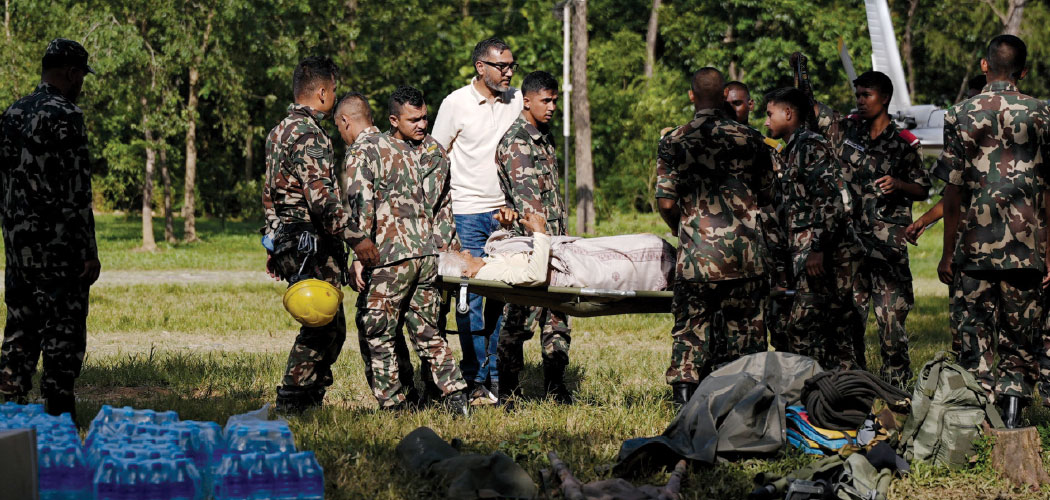
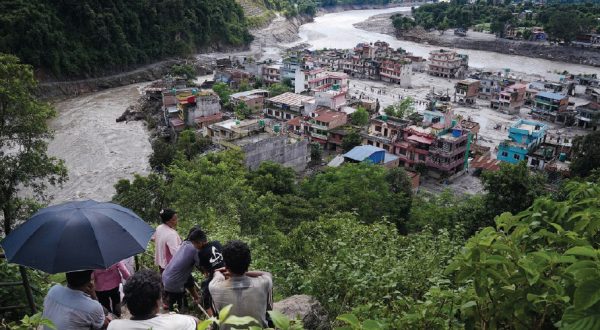
Kathmandu— A massive flash flood originating from a blocked river near the Nepal-China border has claimed the lives of at least 389 people and left 910 others missing across eight districts in Nepal, including Rasuwa, Nuwakot, Dhading, Chitwan, Gorkha, Nawalparasi East, and Tanahun. Preliminary analysis indicates that a snow-triggered landslide blocked the Lhende River, forming a temporary lake containing an estimated 3 million cubic metres of water which breached on Wednesday causing widespread devastation; authorities are now warning of another potential flash flood as a new body of water accumulates nearby.
Landslide and Lake Formation
Preliminary observations suggest that an ice-sheet landslide originating from the Nepali side, approximately 20 kilometres northeast of Rasuwagadhi near the Nepal-China border, blocked the Lhende River. This blockage created a temporary lake which subsequently breached, unleashing the devastating floodwaters on Wednesday. Information received from the Chinese side through Nepal’s Ministry of Foreign Affairs, along with satellite imagery, corroborates this initial assessment, indicating that the river was indeed blocked and a lake had formed at the location where the flood occurred.
Ongoing Risk of Secondary Flood
Authorities are now focused on preventing further loss of life as another water body continues to accumulate near the confluence of the Chhochen Khola and Purepu Tsangpo rivers. Hydrologist Binod Parajuli, from the Flood Forecasting Division under the Department of Hydrology and Meteorology (DHM), reported that a lake containing approximately 200,000 cubic metres of water had formed as of Thursday morning. While another flash flood is expected to be smaller in scale than Wednesday’s event, officials urge residents, travellers, and rescue personnel in downstream areas of the Bhotekoshi River to remain highly alert and stay away from high-risk zones.
Search Efforts and Missing Tourists
National Disaster Risk Reduction and Management Authority (NDRRMA) reports that 389 bodies have been recovered across the affected districts. The Nepal Tourism Board has identified missing individuals from 31 foreign nations, in addition to Nepali citizens. India accounts for the largest number of missing foreign nationals with 178, followed by the United States (65), Ukraine (53), Malaysia (51), Australia (35), the United Kingdom (33), Canada (25) and China (24).
Climate Change and Future Preparedness
Manjeet Dhakal, Director of Climate Analytics South Asia office in Nepal, emphasized the need for increased research into conditions in the Himalayan region. “It is necessary to better understand the impacts of climate change in these areas,” he said, noting that experts have warned similar events could occur again. He also highlighted the importance of strengthened cross-border collaboration and early warning systems. While a definitive link to climate change requires further study, Dhakal noted international studies suggest an increase in the intensity and magnitude of such events.
Uncertainty Surrounds Trigger
Researchers are still investigating the precise cause of the initial landslide. Some believe an earthquake may have triggered it, while others attribute it to heavy snowfall and a subsequent snow avalanche. “We will need to wait for some time to establish what actually happened,” said Dhakal, adding that a massive snow avalanche appears to be a common factor in all analyses – blocking water flow and creating the artificial dam that eventually failed.
Authorities continue to monitor the situation closely, urging caution and preparedness as they assess the ongoing risk of further flooding and work to account for all those missing.
(With inputs from RN)
Originally published on abcnews.com.np.





प्रतिक्रिया दिनुहोस्