

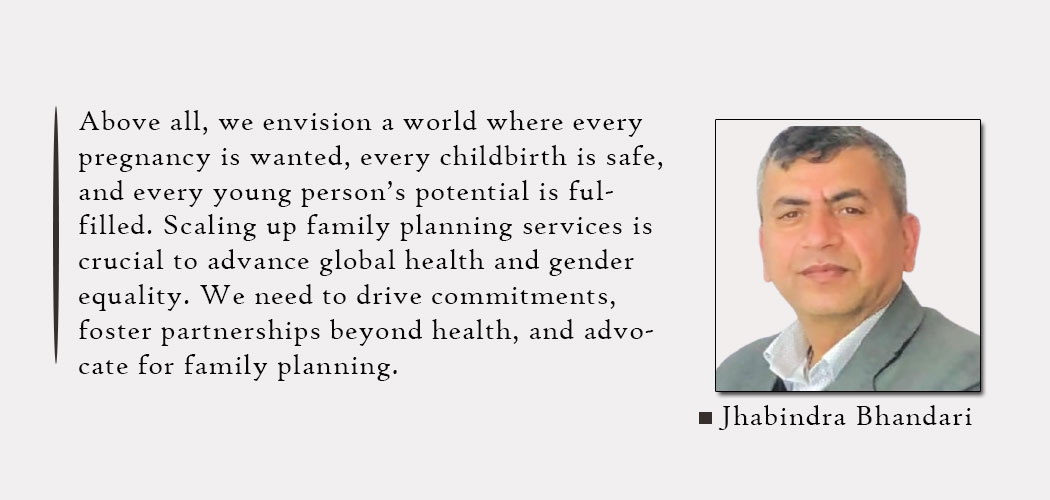
Kathmandu— The field of family planning has evolved from early civilizations to a modern focus on human rights and equity, driven by factors like climate change, pandemics, and shifting demographics. While progress has been made in ensuring access to voluntary family planning services worldwide, significant gaps remain between population science and individual behavior, requiring deeper understanding of the social, cultural, economic, and political contexts that shape reproductive choices. The global health community is now prioritizing a rights-based approach, emphasizing reproductive agency – the right to freely choose if, when, and with whom to have children – as central to gender equality, women’s empowerment, and poverty reduction.
A Historical Shift in Focus
Historically, family planning efforts often centered on demographic concerns. However, a major turning point came with the International Conference on Population and Development (ICPD) held in Cairo in 1994. This landmark event shifted the focus towards a human rights approach, advocating for universal access to reproductive health care, gender empowerment, family planning, and education. Despite this progress, strengthening local communities, social institutions, and governments remains crucial to foster inclusive policies that support informed choices.
Nepal Prioritizes Family Planning Access
Understanding the specific landscape of family planning in Nepal is vital for effective policy development and improved maternal and child health outcomes. The country has demonstrated a commitment to ensuring reliable access to quality contraceptives, resilient health systems, and policies that uphold reproductive agency. Recent data from the Nepal Demographic Health Survey 2022 indicates an average of 2.1 children per woman – a slight decline from 2.3 in 2016 – but also reveals that approximately 21 percent of married women still have unmet needs for family planning. By joining Family Planning 2030 (FP 2030), Nepal has formalized rights-based commitments and is mobilizing resources to support informed decisions about sexual and reproductive health.
Addressing Cultural and Social Barriers
Effective family planning requires acknowledging the complex interplay of cultural norms, social expectations, and individual beliefs. The role of men in these dynamics is particularly crucial, as their engagement is shaped by societal roles and traditions. Evidence suggests that historical, social, cultural, economic, and political factors all influence people’s decisions to seek family planning services. Social and behavioral change interventions are proving effective in addressing stigma, myths, and harmful norms to improve the uptake of these vital services.
The FP 2030 Global Partnership
Family Planning 2030 (FP 2030) serves as a global partnership uniting diverse stakeholders across disciplines and sectors. It positions family planning at the intersection of global health, development, and gender equality. The organization emphasizes that access to safe, voluntary family planning is a fundamental human right, essential for achieving gender equality and empowering women while simultaneously contributing to poverty reduction. Lack of access to such services can significantly hinder women’s ability to build better futures for themselves, their families, and communities.
By 2030, Nepal aims to ensure every individual and family can lead healthy, prosperous lives with full exercise of their sexual and reproductive health rights, emphasizing equitable access based on informed choices. Continued scaling up of social interventions will be crucial to meet these goals.
(With inputs from RN)
Originally published on abcnews.com.np.




प्रतिक्रिया दिनुहोस्