

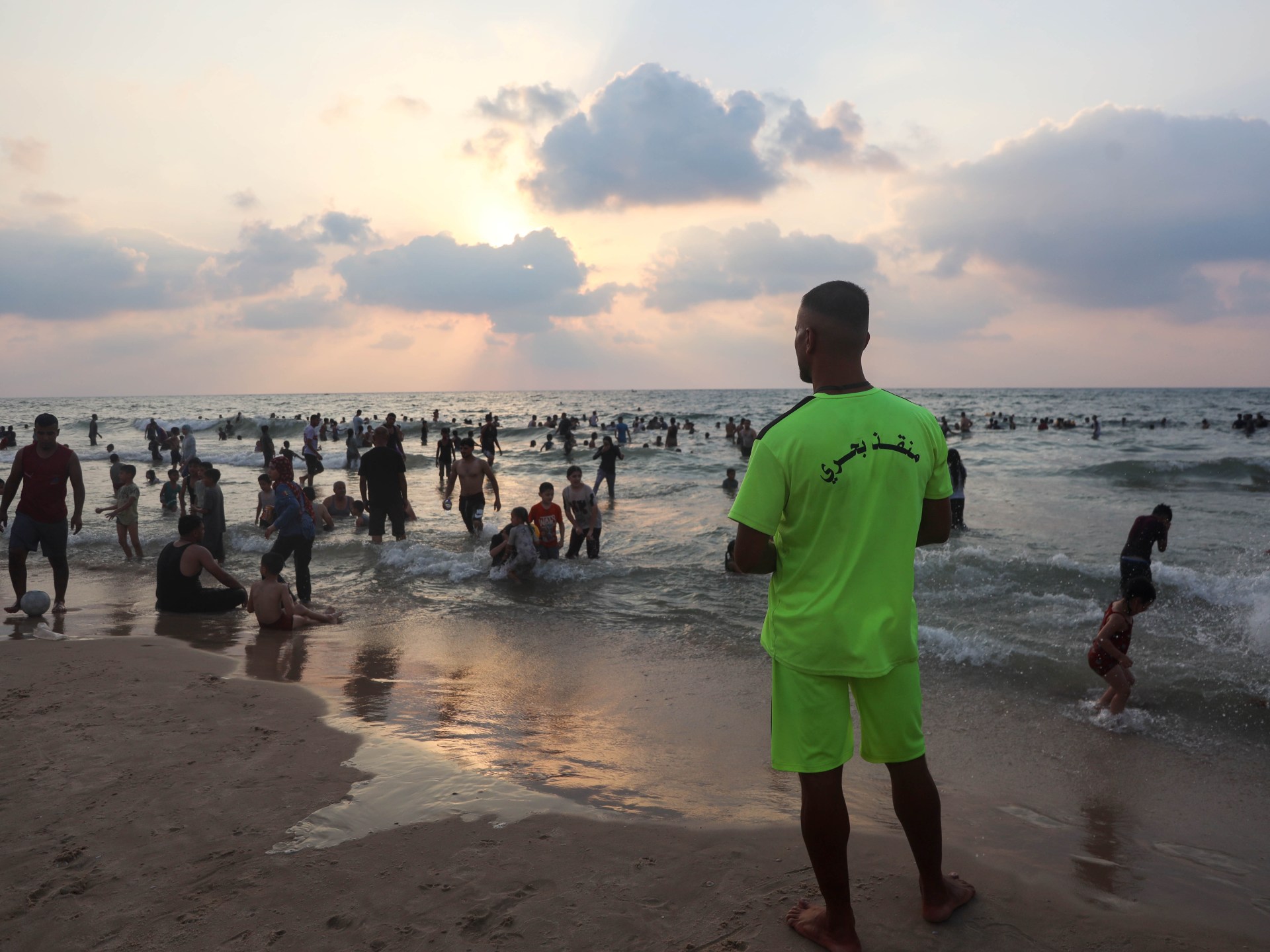
Kathmandu— Ahmed Abu Haseira scans the crowded waters off Gaza City, gesturing to swimmers and urging them away from danger – armed with only a shared whistle. Like his colleagues, Abu Haseira is part of a depleted marine rescue system struggling to keep pace with demand as Palestinians flock to the beaches for one of the few available leisure activities amidst Israel’s ongoing war on Gaza. The 33-year-old returned to work after losing his wife, three children, and father in an August 2024 Israeli attack that destroyed his home, finding solace in a job that offers a rare sense of purpose in a battered territory.
Shrinking Resources, Rising Demand
Approximately 120 lifeguards currently patrol Gaza’s beaches, down from 140 before the war, according to Ibrahim Shamlakh, head of the municipality’s marine rescue department. Despite the reduced numbers and significant loss of infrastructure, the team has attempted to increase its presence this summer. “This year we deployed more lifeguards and strengthened the areas where there are crowds,” Shamlakh says. “We organised our teams better with the resources available to us.”
Before the conflict, a network of lifeguard towers stood roughly every 200 meters along the coastline, equipped with communication systems and rescue gear. Most of these towers have been destroyed, forcing lifeguards to work from ground-level tents that severely limit their visibility. The boats used for offshore rescues are also gone, leaving them reliant on basic tools like whistles and hand signals.
A Makeshift System
Lifeguards now respond to between 20 and 50 rescue incidents daily, with numbers spiking during peak times; one Friday saw a staggering 165 cases. Despite these demands, essential equipment remains scarce. Rescue buoys are often insufficient, sometimes leaving teams responding to multiple drowning individuals without adequate flotation devices. “If four or five people start drowning at the same time, we don’t have enough buoys for all of them,” explains lifeguard Bilal Bakar.
The cost of even basic supplies has increased dramatically due to Israeli import restrictions; whistles now cost three times more than before the war. Lifeguards also face financial instability, with irregular payments and periods where they work for weeks without compensation.
Personal Loss Fuels Dedication
For many lifeguards, the job is deeply personal. Ahmed Abu Haseira’s return to the water followed a devastating loss in August 2024 when an Israeli attack destroyed his home and killed several family members. Despite his grief, he finds purpose in saving lives. “For me, saving a life is a great honour and gives me comfort,” Abu Haseira says. “When I save a life, I feel like I am saving myself.” He views his work as a tribute to those he lost.
Bilal Bakar, who has spent 15 years as a lifeguard, echoes this sentiment, noting the enduring commitment of his colleagues and the passing of responsibility from one generation to the next. “Every year, they ask us if we are ready to come back and work in rescue,” he says. “We tell them: yes, we are ready.”
Voluntary Efforts Extend Coverage
Despite the challenges, lifeguards are extending their hours whenever possible. Shamlakh notes that some, including himself, arrive before their official shifts to cover the early morning period, ensuring continuous monitoring of the beaches. This dedication underscores a commitment to public safety even in the face of overwhelming obstacles.
The Gaza Municipality continues to seek ways to support its marine rescue department, but significant challenges remain in restoring essential infrastructure and providing adequate resources for lifeguards who are committed to protecting swimmers despite immense personal and professional hardships.
(With inputs from Al Jazeera)
More from the source


Originally published on abcnews.com.np.



प्रतिक्रिया दिनुहोस्