

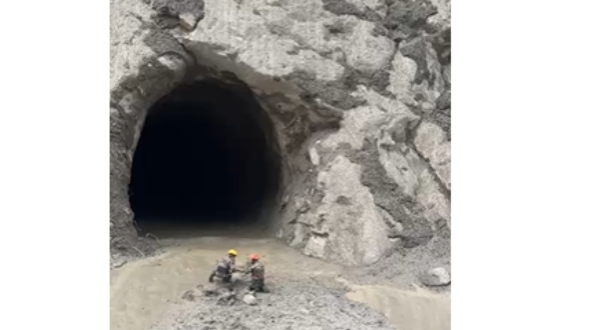
Kathmandu— Following a devastating mudslide that struck Gyirong County in southwest China’s Xizang Autonomous Region on Wednesday, Xi Jinping, General Secretary of the Communist Party of China (CPC), chaired a meeting of the CPC Central Committee to coordinate rescue and relief efforts. The disaster, which occurred at a border port near Nepal, caused heavy casualties and left many missing, prompting immediate instructions from Xi and dispatching high-level officials including Premier Li Qiang and Vice Premier Zhang Guoqing to oversee operations on the ground. The focus is now on locating all missing persons, preventing secondary disasters, and providing aid to affected areas in both China and neighboring Nepal.
Swift Response and Coordination
The CPC Central Committee immediately prioritized the situation after the mudslide hit Gyirong County, with Xi Jinping issuing instructions for rescue and emergency response. Premier Li Qiang traveled to the disaster-hit area to assess the damage, visit affected people, and supervise relief work. Vice Premier Zhang Guoqing was also dispatched to guide the on-site response. According to the meeting of the Political Bureau of the CPC Central Committee, emergency rescue operations have been carried out swiftly and in a coordinated manner under strong leadership.
Challenges of the Terrain
The disaster site presents significant challenges for rescuers due to its location in a severely cold plateau region characterized by steep valleys, unpredictable weather patterns, numerous glaciers and glacial lakes, and potential geological hazards. These factors complicate search efforts and increase the risk of secondary disasters such as landslides or outburst floods from unstable barrier lakes. The meeting stressed the need for scientific planning and comprehensive monitoring.
Preventing Secondary Disasters
Participants at the CPC leadership meeting emphasized the importance of preventing further incidents, including potential collapses of barrier lakes formed by the mudslide and instability in surrounding mountains. They called for strengthened multi-departmental consultation, enhanced monitoring and early warning systems, and effective measures to mitigate risks. On-site personnel management was also highlighted as crucial to ensure safety throughout the rescue process.
International Cooperation
China has pledged to provide emergency aid to the affected area in Nepal and engage in international rescue cooperation. The meeting underscored the need to strengthen collaboration on disaster management in border areas, aiming to jointly improve emergency preparedness, prevention, mitigation, and relief efforts. This includes enhancing real-time monitoring and early warning capabilities for potential disaster chains.
Authorities will continue to conduct comprehensive inspections to identify risks and hazards while strengthening rescue forces deployed to remote and disaster-prone regions, ensuring a coordinated approach to safety and stability.
(With inputs from Xinhua)
Originally published on abcnews.com.np.





प्रतिक्रिया दिनुहोस्