

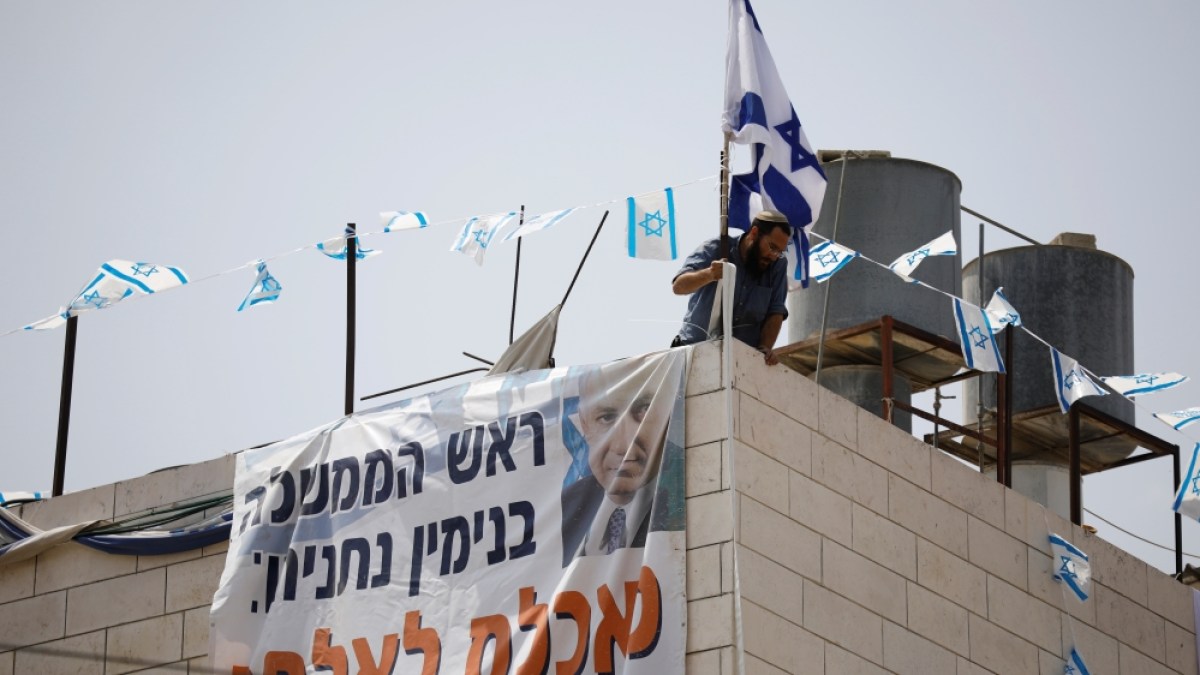
Kathmandu— A surge of coordinated attacks by Israeli settlers across the occupied West Bank over the weekend left dozens of Palestinians injured and properties damaged, prompting condemnation from Palestinian officials and international observers. While Prime Minister Benjamin Netanyahu publicly denounced the “criminal acts of violence” and blamed a “handful of rioters,” analysts suggest these statements mask a state-sponsored campaign of massive settlement expansion designed to annex Palestinian territory. The attacks occurred alongside incursions by Israeli forces into Palestinian communities, further escalating tensions in the region. Despite visual evidence of settler involvement, Israeli police have made no arrests.
Escalation of Violence
Dozens of settlers attacked a Palestinian home in Qusra village with tear gas and stones, injuring seven people, while an ambulance attempting to reach the area was also targeted. Simultaneously, Israeli forces fired tear gas into Far’a refugee camp, el-Bireh, and al-Mughayyir, and reportedly assaulted journalists in Hebron. A Palestinian family and an American NBC news crew were attacked in Jalud, and two Palestinians were beaten near the Mevo Dotan settlement, marking a weekend of widespread violence against local residents. The Palestinian Ministry of Foreign Affairs condemned what it described as a systematic policy of forced displacement and colonial expansion, particularly highlighting a 20-day siege on al-Mughayyir.
Political Damage Control
Netanyahu’s condemnation of the attacks, echoed by President Isaac Herzog and former US Ambassador Mike Huckabee, has been described by experts as a calculated political maneuver. Ehab Jabareen, a writer and analyst, explained that Netanyahu is attempting a “political surgical isolation process” to shield the broader settlement project from international scrutiny. He believes the prime minister aims to present the violence as an isolated incident committed by a few individuals in order to protect the wider settler enterprise. Opposition leader Yair Lapid called the weekend’s events a “moral stain” and criticized the government's failure to address Israeli violence in the West Bank, labeling it a “national disgrace.”
Military Assessments and Security Concerns
Recent security assessments by Major General Avi Bluth, head of the Israeli military’s Central Command, warned that such “nationalistic crime” could spark a massive Palestinian uprising. Jabareen noted that the army communicates with Netanyahu in terms of cost-benefit analysis, suggesting the prime minister's concern isn’t about targeting Palestinians but rather about the disruption to military operations caused by unchecked settler violence. Mamoun Abu Amer, an analyst on Israeli politics, dismissed claims that the state has lost control over settlers, emphasizing that the military consistently protects them during attacks while punishing Palestinians who defend themselves.
Systematic Settlement Expansion
Despite public distancing from individual attacks, the Israeli government is actively funding and expanding settlements. A report by Peace Now details how successive governments have prioritized settlement expansion since the 1993 Oslo Accords, increasing the settler population in the West Bank from approximately 110,000 to 465,000 and in East Jerusalem from 140,000 to 230,000. The current government has accelerated this process, approving the establishment of 54 new settlements in a single year and erecting 86 new outposts, with plans for an additional 63,311 housing units.
International Response
The United Nations Office for the Coordination of Humanitarian Affairs (OCHA) reported over 1,540 settler attacks causing Palestinian casualties or property damage this year alone, a record high. Despite this surge in violence and land theft, Western responses have largely been limited to rhetorical outrage. While European nations and the Organisation of Islamic Cooperation condemned recent settlement approvals, analysts note a double standard, pointing to the swift defunding of the UN agency for Palestinian refugees based on Israeli allegations while failing to impose meaningful economic sanctions on Israel.
The situation remains volatile as the Israeli government continues to pursue policies that facilitate settlement expansion and potentially undermine prospects for a two-state solution.
(With inputs from Al Jazeera)
Originally published on abcnews.com.np.



प्रतिक्रिया दिनुहोस्