

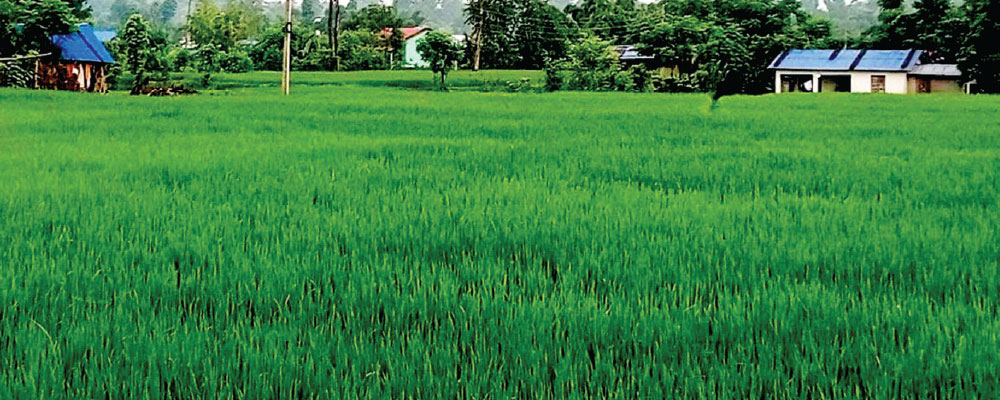
Kathmandu— Farmers in Banke, Nepal, have completed more paddy plantation this year than last but are now facing a severe shortage of fertiliser at a critical stage of the crop cycle. The absence of essential nutrients could lead to significant declines in rice production, threatening food security and livelihoods in the region.
Impact on Crop Yields
Farmers are increasingly concerned about lower yields because fertiliser is crucial when rice plants begin producing tillers. Sultan Khan from Raniyapur noted that paddy planted earlier has started producing tillers, and fertiliser is urgently needed at this stage. Without it, he fears that rice production will not match previous years' levels.
Border Restrictions
In the past, farmers could easily import fertiliser from across the border when local supplies were insufficient. However, tightened security checks have made it impossible to bring in fertiliser this year. Naresh Yadav from Kamdi expressed deep concern over the inability to obtain fertiliser due to these restrictions.
Official Warnings
The Agriculture Knowledge Centre in Banke has warned that production will decline if farmers do not receive fertiliser soon. Information officer Sujita Sharma stated that although 99.8% of the rice-growing area was planted this year, rice production is certain to be affected due to the lack of fertiliser at critical stages.
Fertiliser Shortage Details
Pushparaj Shrestha from the Agriculture Inputs Company Limited in Banke explained that there is a shortage because the company has not received enough chemical fertiliser to meet distribution targets. The current quantities of urea, DAP, and potash sent for local government distribution are far below farmers' demand.
(With inputs from RN)
Originally published on abcnews.com.np.




प्रतिक्रिया दिनुहोस्