

Kathmandu— The 81st session of the United Nations General Assembly is set to commence next week (September 8) at the UN headquarters. This annual diplomatic event brings together world leaders and diplomats to address pressing global issues, including climate change. Nepal's participation in this year’s assembly comes amid a backdrop of devastating floods that have affected the country, highlighting the urgent need for climate diplomacy.
UN History And Structure
The term 'United Nations' was coined by former US President Franklin D. Roosevelt during World War II to denote an alliance against Axis powers. The concept evolved through various conferences, including the Moscow meeting in October 1943 and the San Francisco conference in June 1945, where the UN Charter was signed. The UN officially came into existence on October 24, 1945, with three principal bodies: the General Assembly, Security Council, and Secretariat.
Nepal's Diplomatic Journey
Nepal’s diplomatic history dates back to the unification era over two centuries ago. Formal relations began in 1816 with Britain following the Sugauli Treaty. Nepal diversified its diplomatic ties by establishing relations with the United States, India, and France in the late 1940s. In 1955, Nepal became a UN member and has since actively contributed to global diplomacy through peacekeeping missions and leadership roles.
Climate Diplomacy
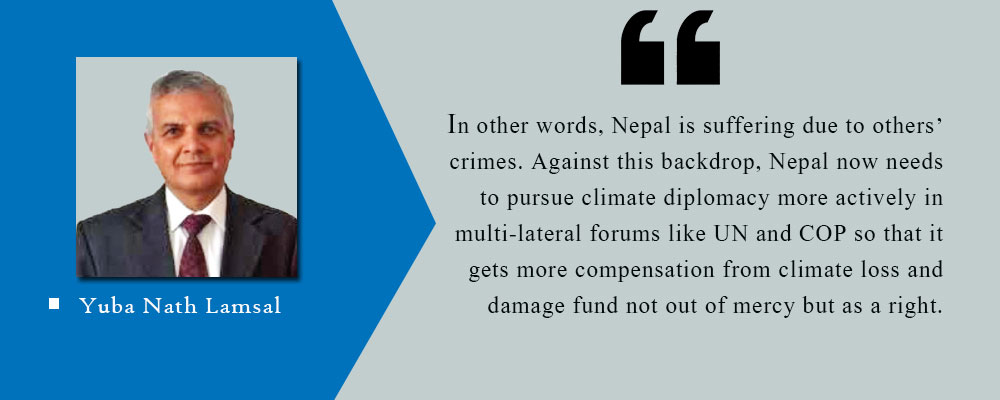
Nepal's participation in this year’s General Assembly is particularly significant given the recent devastating floods caused by climate change. Despite contributing only 0.1% of global carbon emissions, Nepal ranks among the most vulnerable countries to climate impacts. The country aims to pursue more active climate diplomacy at multilateral forums like the UN and COP to secure compensation from climate loss and damage funds as a right.
(With inputs from RN)
Originally published on abcnews.com.np.




प्रतिक्रिया दिनुहोस्