

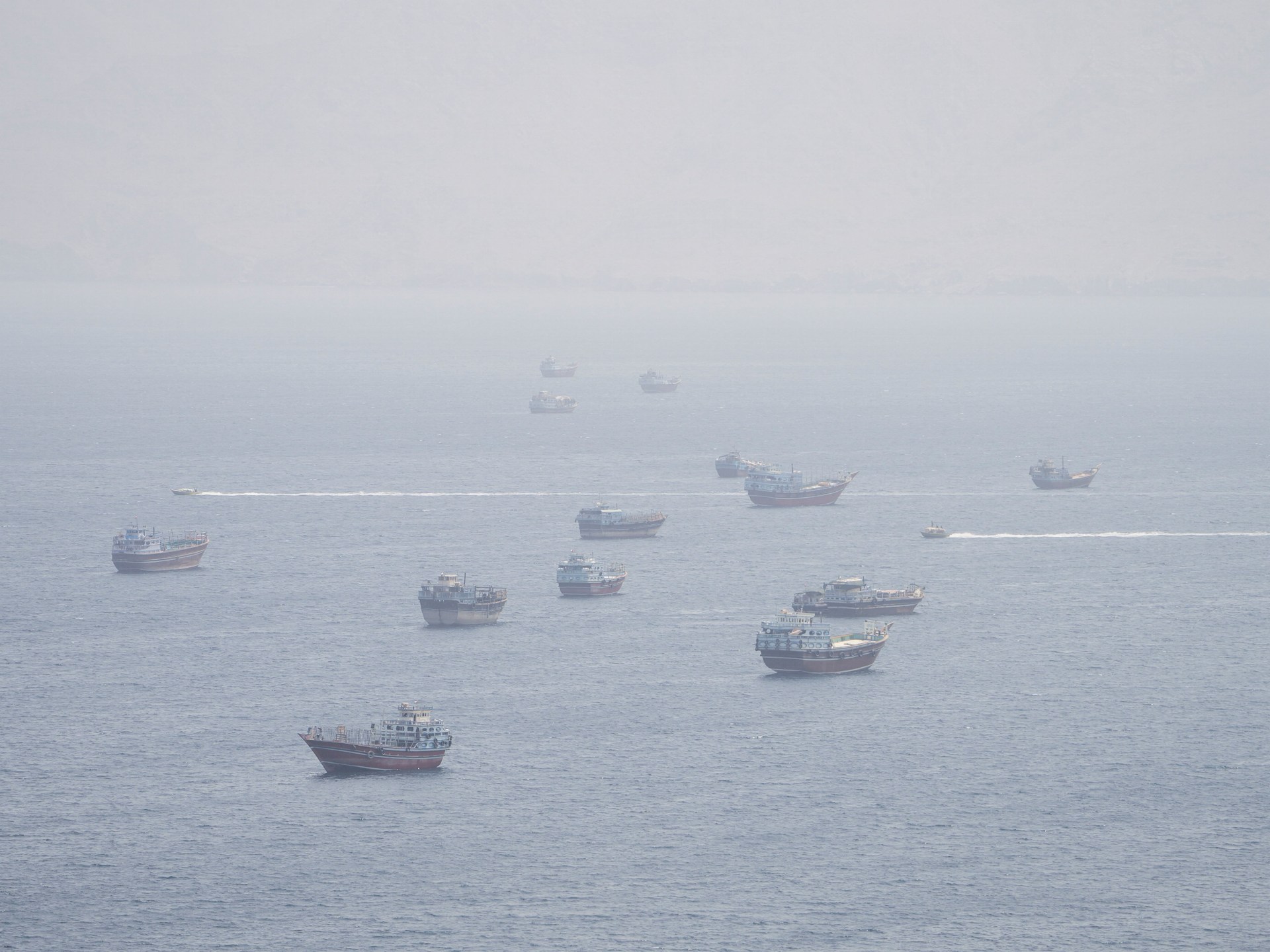
Kathmandu— The United States and Iran continue to make competing claims about control over the critical Strait of Hormuz. While Washington asserts that dozens of ships carrying millions of barrels of oil pass through each day under US military escort, ship-tracking data indicates a much lower number of transits. President Donald Trump has claimed the US is in “total control” of the waterway, but marine analytics firms report far fewer vessels crossing daily.
US Claims on Strait Traffic
The latest US claims suggest a significant increase in shipping through the Strait of Hormuz. Two US officials told CNN that 40 commercial ships carrying some 18 million barrels of oil passed through the strait under US military escort on Tuesday, which would be a new wartime record. President Trump also stated that the US Navy was helping around 30 ships pass through Hormuz every night and claimed the waterway was “under USA control.” According to US Treasury Secretary Scott Bessent, at least 10 million barrels of oil are getting through daily, with between 15 million and 17 million on Tuesday.
Iran's Control Assertions
In contrast, Iran maintains that the strait remains under its control. Iranian Parliament Speaker Mohammad Bagher Ghalibaf stated that while some ships have managed to pass through Hormuz, Iranian forces remain in “complete control of the strait and will not allow it to be opened.” He accused the US of giving ships false guarantees about crossing a southern route in Hormuz, warning that vessels attempting unauthorized transit would face targeting. The Islamic Revolutionary Guard Corps (IRGC) reported two oil tankers hitting mines while trying to cross an “illegal route” in the strait.
Discrepancies in Shipping Data
Marine analytics firm Kpler recorded just six vessels crossing the strait on Wednesday, 11 on Tuesday, and five on Monday. Lloyd’s List Intelligence reported an average of around 12 transits per day from August 26 to September 1, though some ships may be switching off their tracking beacons. These figures are significantly lower than US claims. Bridget Diakun, maritime intelligence and research director at Lloyd’s List Intelligence, noted that the discrepancy could stem from differences in how the US counts vessel transits versus ship-tracking firms.
(With inputs from Al Jazeera)
Originally published on abcnews.com.np.






प्रतिक्रिया दिनुहोस्