

Kathmandu— Once a thriving export-oriented industry in Nepal, the garment sector has seen significant decline since the expiration of the Multi-Fibre Agreement (MFA) with the USA in 2005. The country's exports to the US plummeted from over 83% in 2003 to just 16.97% in 2022, leading to factory closures and job losses.
Historical Context
During the early 1980s, Nepal followed an export-based import system that led to a surge in garment exports. By 1994, annual exports reached USD 1.2 billion. However, after the MFA expired, the industry faced severe challenges. The sector's growth rate declined from 12.15% annually between 1994 and 2003 to a significant downturn thereafter.
Current Challenges
The garment industry now struggles with high import dependency, particularly for raw materials sourced from India and China. According to recent data, Nepal recorded a trade deficit of Rs. 1,781.08 billion last fiscal year, with exports constituting only 13.07% of the total trade volume.
The government aims to establish a Textile and Clothing Development Council under the Ministry of Industry, Commerce and Supplies to promote domestic production using locally sourced raw materials.
Government Initiatives
To revitalize the garment industry, the government has outlined several initiatives. These include setting up a high-level National Export Council, expanding cash export incentives, introducing Export Credit Insurance, and establishing an international standard exhibition centre. The concept of green garment villages is also being explored to produce textiles in an eco-friendly manner.
However, these plans face practical challenges such as the lack of designated budgets and suitable sites for implementation.
E-commerce and Market Access
Nepal's trade sector lags behind in e-commerce adoption, which is crucial for modern trade. High postal costs, complex banking procedures, and policy ambiguity hinder Nepali products from penetrating international markets effectively.
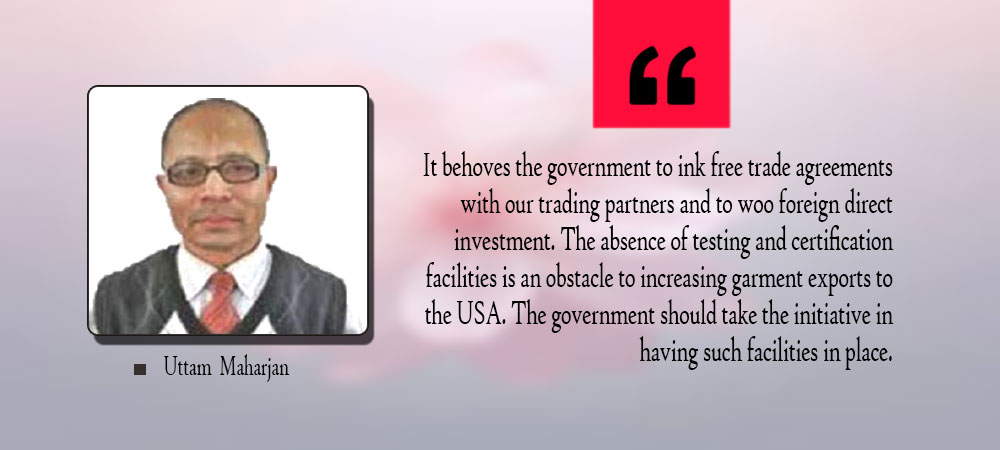
The absence of testing and certification facilities further complicates efforts to increase garment exports to the USA and other major markets.
While the government has outlined ambitious plans to revive the garment industry, significant challenges remain in terms of implementation and overcoming structural barriers.
(With inputs from Rising Nepal)
Originally published on abcnews.com.np.



प्रतिक्रिया दिनुहोस्