

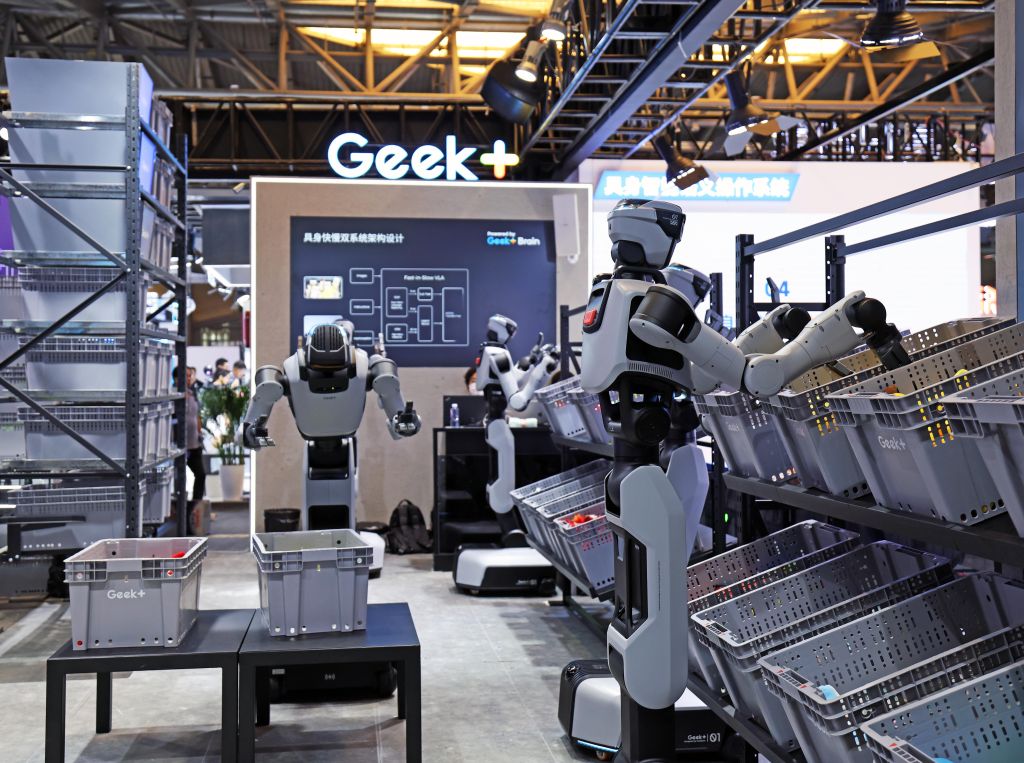
Kathmandu— China's AI industry is experiencing explosive growth, driving unprecedented demand for high-end printed circuit boards (PCBs) and other foundational hardware components. As the computing power demands of advanced AI models increase, top-tier PCB manufacturers are seeing orders booked through 2027, with prices quadrupling due to material shortages.
Rising Demand for High-End PCBs
The surge in demand for high-end PCBs is a direct result of the rapid expansion of China's AI industry. According to Wang Chen, an executive with the Greater Bay Area National Technology Innovation Center, top-tier PCB manufacturers are currently facing material shortages and price hikes as orders pour in from cloud vendors and computing power operators launching large-scale procurement of complete AI servers.
Gong Chao, a researcher at Tongji University's National Institute of Innovation and Development, notes that this trend indicates the transmission of AI-driven demand from chips to physical hardware construction. The surge in orders for premium circuit boards is expected to persist due to supply constraints and new supply cycle limitations.
Impact on Industrial Chain
The ripple effect of the AI boom has reached most segments of the industrial chain, with robust demand and strong growth across all components. As PCBs for AI servers are upgraded to 20-30 layers or more in 7-layer HDI boards, there is a shift towards high-speed high-frequency boards.
Data from the China Nonferrous Metals Industry Association shows that prices of nonferrous metals such as copper, aluminum, tin, tantalum, and indium have climbed sharply due to AI computing infrastructure construction. Tin prices jumped 40 percent within six months, while indium rose 60 percent and tantalum soared 158 percent.
Potential Risks Ahead
Despite the promising outlook, experts caution against potential risks in the AI computing chain. Many upstream players are aggressively expanding capacity to meet current demand. If large-scale AI model deployment falls short of expectations over the next two to three years, coinciding with the release of this new capacity, related sectors could face significant downside pressure.
Gong Chao warned that should the rapid expansion of AI models not materialize as expected, the industry could experience a downturn due to excess supply and reduced demand.
(With inputs from (manual retry))
Originally published on abcnews.com.np.




प्रतिक्रिया दिनुहोस्