

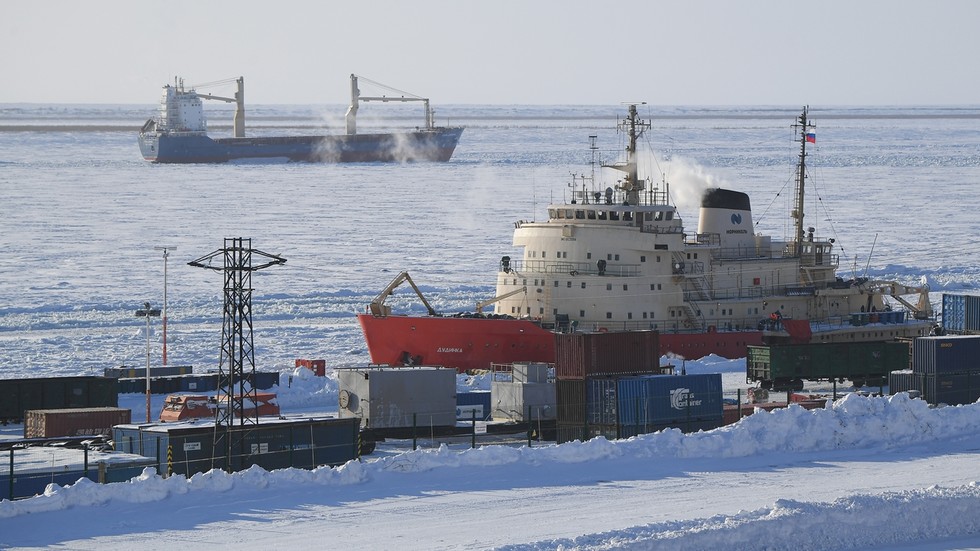
Kathmandu— China is set to begin regular container shipping services to Europe via Russia's Northern Sea Route this month, marking a significant expansion of Arctic maritime trade. The initiative, which includes eight planned voyages through October, seeks to utilize the shorter Arctic passage to connect the Asia-Pacific region with northern Europe, offering a faster alternative to traditional routes like the Suez Canal.
Expansion of Arctic Maritime Trade
The new program envisions weekly voyages from August to October, provided ice conditions permit. This move transitions the route from experimental or one-off shipments to a structured commercial service. Rosatom, Russia's state atomic energy corporation, has already issued permits for seven vessels to transit the Northern Sea Route (NSR) as part of this expansion.
Chinese firm Sealegend Shipping demonstrated the route's potential late last year by completing a shipment to Felixstowe Port in England in just 20 days. This voyage significantly outperformed the approximately 37 days required for a similar trip via the Suez Canal, according to Rosatom CEO Aleksey Likhachev.
Geopolitical and Economic Drivers
The growing demand for the Northern Sea Route is driven by increasing instability in traditional shipping lanes. Likhachev noted that the route is becoming more vital amid a "permanently difficult situation" in the Persian Gulf, where the Strait of Hormuz has remained largely closed since the US-Israeli attack on Iran in February.
Chinese container traffic through the NSR has seen rapid growth, more than tripling between 2023 and 2025. Currently, bilateral shipping between Chinese and Russian ports accounts for 15% of all traffic through the passage, and total cargo traffic between the two nations is projected to reach 20 million tons by 2030.
Russian Infrastructure and Global Ambitions
Russia is heavily investing in the NSR to transform it into a pivotal global trade artery. The route relies on Russian port infrastructure and the world's largest icebreaker fleet, which consists of more than 40 conventional and nuclear vessels.
Russian President Vladimir Putin previously characterized the route as the "safest, most reliable, and most efficient" path for trade, noting that Moscow is working to strengthen Arctic logistics on a "massive scale."
In addition to the Chinese initiative, India and Russia are currently working to finalize a pact regarding maritime cargo cooperation along the Northern Sea Route.
(With inputs from RT)
Originally published on abcnews.com.np.


प्रतिक्रिया दिनुहोस्