

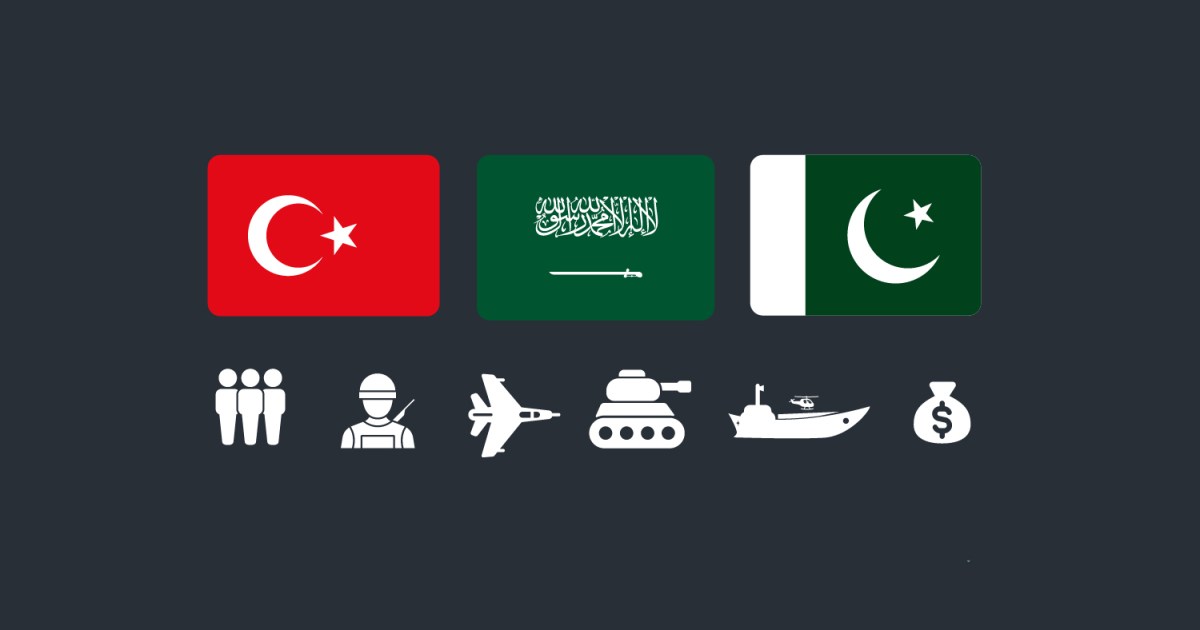
Kathmandu— Leaders from Saudi Arabia, Turkiye, and Pakistan signed the Mecca Joint Defence Agreement last Friday, establishing a pact where an attack on one nation would be considered an attack on all three. This alliance comes amid escalating regional tensions involving Israel and Iran, and combines significant military capabilities – Riyadh’s financial power, Ankara’s NATO-aligned forces, and Islamabad’s nuclear arsenal – to create a sizeable bloc with nearly 1.4 million active personnel, over 3,400 aircraft, and more than 340 naval assets.
Combined Military Strength
The emergence of this alliance is prompting discussion about its potential impact on regional power dynamics. Zaid M Belbagi, managing partner at Hardcastle Advisory, emphasized the implications for the United States, noting that Pakistan and Saudi Arabia are both significant recipients of US aid and military equipment, while Turkiye represents NATO’s second-largest army.
Egypt has been identified as a potential future member of the pact. Turkiye’s Foreign Minister Hakan Fidan suggested Egypt is a “natural partner,” with membership contingent on resolving technical issues. Analysts believe Egypt's strategic location and control of the Suez Canal would be valuable assets, but Cairo may proceed cautiously to avoid jeopardizing its existing relationships with Washington.
The Mecca Joint Defence Agreement represents a significant development in regional security architecture, potentially reshaping alliances and power dynamics as member states seek greater independence and collective deterrence.
(With inputs from Al Jazeera)
Originally published on abcnews.com.np.



प्रतिक्रिया दिनुहोस्